Where a person lives should not determine whether development reaches them. That conviction underpins the term spatially dispersed in my definition of inclusive growth in ModiNomics: A Journey of Inclusive Growth. The World Bank’s Poverty & Equity Brief: India, October 2026 offers a useful way to assess this ambition. India’s poverty story involves both convergence and concentration.
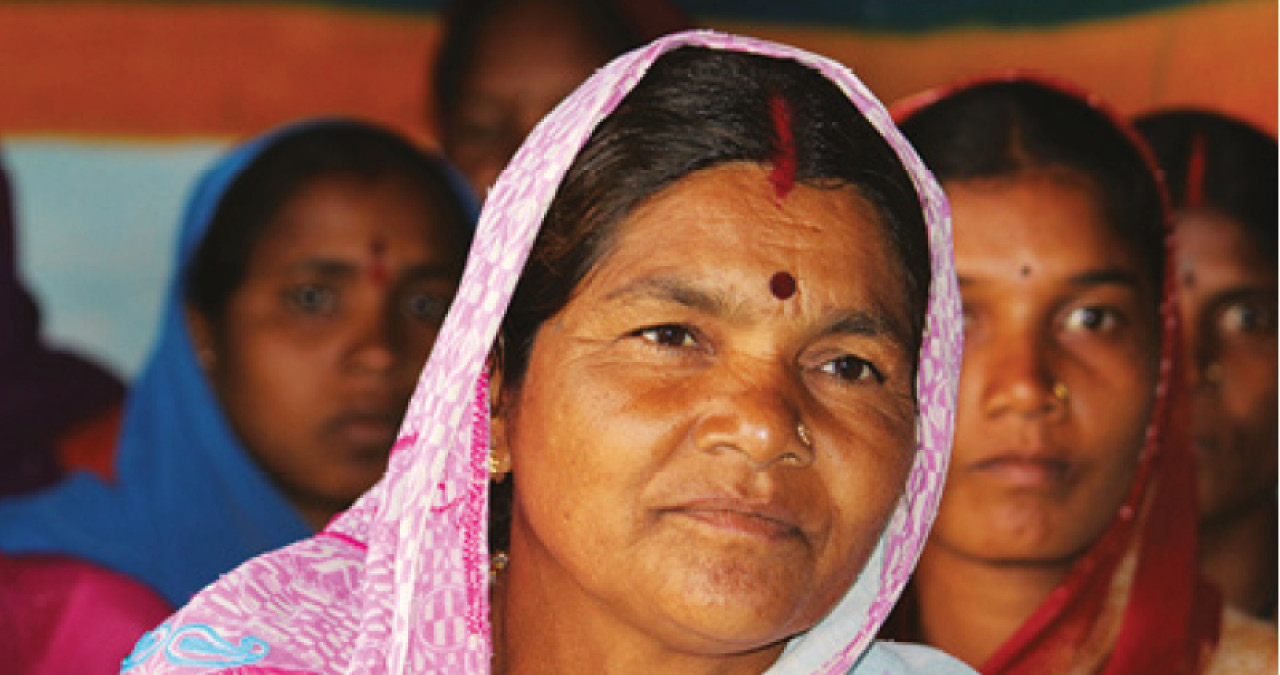
The Bank finds that both rural and urban households experienced welfare gains, with rural progress outpacing urban progress and narrowing the rural-urban gap. This supports the book’s argument that improvements have extended beyond metropolitan centres. Rural India cannot be understood solely as a passive recipient of transfers or as a reservoir of workers for distant cities.
Yet the same report says that households in the belt stretching from Uttar Pradesh to West Bengal account for about 57% of India’s poor population. It identifies lower rural productivity and limited access to better non-farm employment as persistent obstacles. Future poverty reduction will increasingly depend on productive opportunities in these regions.
I find no contradiction in those findings. A region can improve even while still housing a large share of the remaining poor. Progress elsewhere may be faster and initial disadvantages may be deeper. The sensible response is neither to dismiss the gains nor to declare regional disparities resolved. It is to make the next phase geographically precise.
In the book’s No State Left Behind chapter, I examine the roles of connectivity, financial access, state-level innovation and cooperative federalism. The argument is that development must reach places excluded from economic opportunity. The chapter also acknowledges persistent differences in incomes, human development and administrative capacity. The World Bank’s findings give those remaining differences policy significance.
They also require precision in discussing convergence. A narrowing rural-urban welfare gap is not proof that all states are converging in per capita income. Nor does growth in every state prove that the distance between richer and poorer states is shrinking. Different indicators answer different questions.
Consider rural infrastructure. ModiNomics highlights roads as links to schools, healthcare, markets and employment, while acknowledging maintenance and reliability issues. What economic activity develops around that connectivity? Can producers reach buyers affordably? Can young people commute to work? Can enterprises secure reliable electricity, finance and skilled employees?
These questions suggest moving beyond isolated construction targets. I would emphasise the link between infrastructure investment and locally viable production and services. A district with agricultural potential may need processing and storage facilities. Another may have opportunities in garments, tourism or repair services. Choices should be guided by evidence on local capabilities and demand, not a uniform template imposed everywhere.
Financial inclusion also has a geographical dimension. An account can facilitate transactions, but a growing enterprise needs a relationship with a lender. The book’s emphasis on financial deepening should prompt scrutiny of whether credit-starved locations are acquiring the finance and support required for productive investment, rather than merely recording more accounts.
Local opportunities should also complement mobility. The goal is not to prevent migration but to reduce the need to leave home when no viable livelihood exists nearby. People should be able to stay, commute or move on better terms. Inclusive development expands those choices rather than romanticising either village life or urban migration.
The World Bank’s assessment does not erase India’s regional achievements. It identifies where the next effort must be more focused. For ModiNomics, that is a challenge to advance the principle of spatially dispersed growth: from extending access across the map to building productive opportunities where deprivation persists. National prosperity will become more durable when geography no longer narrows people’s choices.
It is a story of executing ambition. And all this has been made possible due to the ‘Can Do’ approach of India's Prime Minister Shri Narendra Modi ji. The book...
Those efforts in Gujarat became the foundation for what is now India’s national framework of tribal inclusion. Under Modi’s leadership, Gujarat launched the Vanbandhu Kalyan Yojana (VKY) — a path...
"American roads are good not because America..
State Rankings Highlights -: Odisha scaled to number..
Step 1: Call for Project Submission Call for..
In the run-up to the elections, the most..

Inclusion is the first magazine dedicated to exploring issues at the intersection of development agendas and digital, financial and social inclusion. The magazine makes complex policy analyses accessible for a diverse audience of policymakers, administrators, civil society and academicians. Grassroots-focused, outcome-oriented analysis is the cornerstone of the work done at Inclusion.