In ModiNomics: A Journey of Inclusive Growth, I argue that development should be judged at the household’s doorstep, not just in national accounts. Does a family have greater security, better access to services and more opportunities to earn? The World Bank’s Poverty & Equity Brief: India, October 2026 provides evidence that this broader understanding of progress matters.
Between 2011 and 2023, poverty at the Bank’s lower-middle-income threshold of $4.20 a day fell from 57.7% to 16.1%. An estimated 496 million people moved above that threshold. Extreme poverty, measured at $3 a day, declined from 27.1% to 2.6%. These are purchasing-power-parity benchmarks based on 2021 price comparisons, not dollar amounts converted at today’s exchange rate.
The significance goes beyond headlines. The improvement at the higher threshold shows that progress was not confined to overcoming extreme deprivation. It represents a substantial broadening of material welfare, challenging the claim that India’s economic gains have reached only a privileged minority.
Precision remains essential. The period predates Narendra Modi’s tenure as Prime Minister and the report does not isolate the contributions of individual governments or schemes. It is evidence of substantial progress, not a certificate assigning every gain to a single administration. Recognising that distinction makes the argument more credible, not less compelling.
What explains the improvement? The Bank cites consumption growth, rising employment, especially among women and expanded social transfers, including food subsidies. This combination aligns with the central proposition of ModiNomics: inclusive economics and inclusive governance must work together. Neither growth without effective delivery nor transfers without expanding opportunity can complete the development task.
The book traces that proposition from Gujarat’s experiments with rural electricity, local services and women’s livelihoods to the national expansion of financial access and basic amenities. Its focus is on how these interventions connect. A road becomes more valuable when a producer can access finance. A house becomes more useful when water, sanitation and electricity make it habitable.
This is why welfare cannot be captured by a single label. Food support addresses immediate consumption needs. Housing creates a durable asset. Public infrastructure can improve access to work and markets. These serve different purposes but can reinforce one another. The question is whether their combination expands a household’s capabilities and choices.
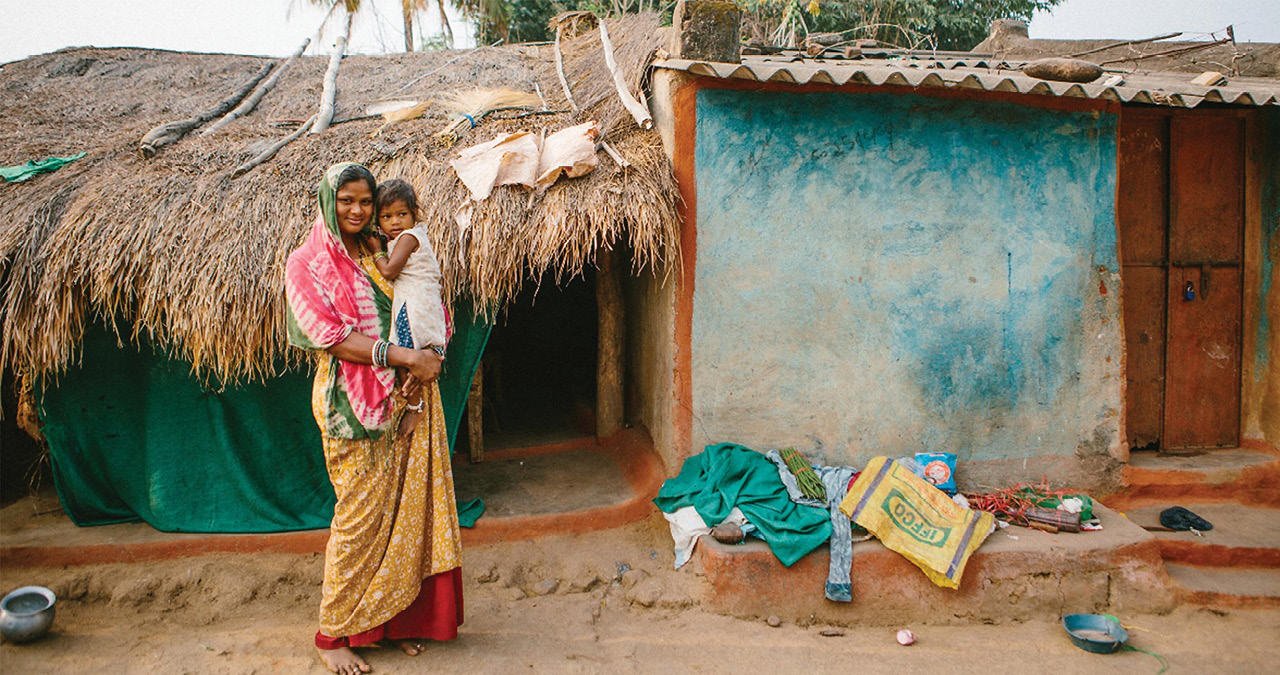
ModiNomics describes the convergence of rural housing with other services as an attempt to overcome several disadvantages simultaneously. That is the right direction for assessment: not just counting what separate departments delivered, but asking what changed for the family receiving those interventions. The household, rather than the scheme, should become the central unit of development review.
Yet reduced poverty must not be mistaken for permanent security. The Bank finds that remaining deprivation is increasingly linked to lower education, fewer assets and limited stable employment. Its methodological note cautions that recent measured welfare gains reflect both genuine improvements and better measurement. Such qualifications belong within the story, not outside it.
For the next phase, my emphasis would be on continuity with greater ambition. Preserve social protection, strengthen service quality and help families turn improved living conditions into dependable earnings. Assess whether businesses survive, children learn and households can manage illness or income interruptions without surrendering their gains.
The World Bank’s assessment strengthens the case that inclusion has delivered meaningful outcomes. ModiNomics offers a framework for understanding the relationship among governance, opportunity and outcomes. Together, they shift the debate beyond denial or premature celebration. Poverty reduction is a major achievement. Its lasting significance will depend on whether India makes the transition from escaping deprivation to building prosperity a dependable journey for ordinary families.

It is a story of executing ambition. And all this has been made possible due to the ‘Can Do’ approach of India's Prime Minister Shri Narendra Modi ji. The book...
Those efforts in Gujarat became the foundation for what is now India’s national framework of tribal inclusion. Under Modi’s leadership, Gujarat launched the Vanbandhu Kalyan Yojana (VKY) — a path...
The modernisation of coal mining—through mechanisation, improved logistics and environmental safeguards—has ensured that energy inclusion remains both viable and sustainable.
"American roads are good not because America..
State Rankings Highlights -: Odisha scaled to number..
Step 1: Call for Project Submission Call for..
In the run-up to the elections, the most..

Inclusion is the first magazine dedicated to exploring issues at the intersection of development agendas and digital, financial and social inclusion. The magazine makes complex policy analyses accessible for a diverse audience of policymakers, administrators, civil society and academicians. Grassroots-focused, outcome-oriented analysis is the cornerstone of the work done at Inclusion.