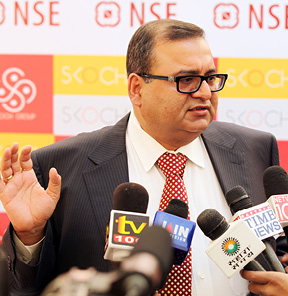
It is the first ever, national roll-out of financial literacy programme “Samavesh- Accelerating Inclusive Growth” as part of the financial inclusion initiative, led purely by private sector. Skoch Group – New Delhi based think-tank – is leading the initiative supported by National Stock Exchange. The project was rolled out on 30th November 2012 beginning with Dehradun, Uttrakhand. “It is our endeavor to create at least one financially and digitally literate resource person in each Gram Panchayat and Ward in urban areas, preferably a woman. Most financial inclusion schemes thus far have not adequately focused either on financial literacy or on women who have much more pronounced need to save,” says Sameer Kochhar, Chairman, Skoch Group “It is expected that in time, banking and financial services organisations would be able to use these resource persons for their outreach program on a commercial basis,” added Kochhar.
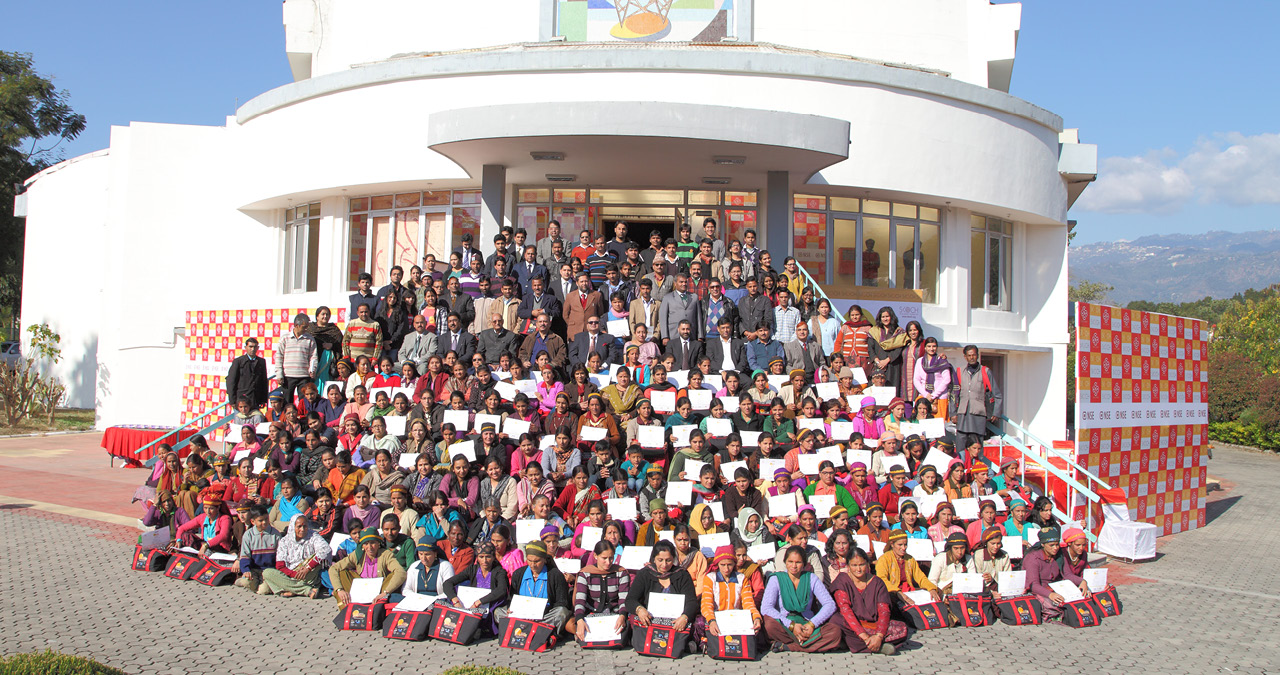
Organisations participating in the launch training program included Ministry of Panchayati Raj, Government of India; Unique Identification Authority of India (UIDAI); Reserve Bank of India (RBI); Securities and Exchange Board of India (SEBI); and, Pension Fund Regulatory and Development Authority (PFRDA) in addition to Punjab National Bank – the lead bank of the District. Led by National Stock Exchange (NSE), 150 Gram Panchayat representatives from Chakrata and Kalsi block – the most unbanked and excluded blocks of Dehradun district – participated. In addition, about 150 beneficiaries representing urban Wards of Dehradun; Small and Medium Enterprises (SMEs); and, small investors etc participated in the programme.
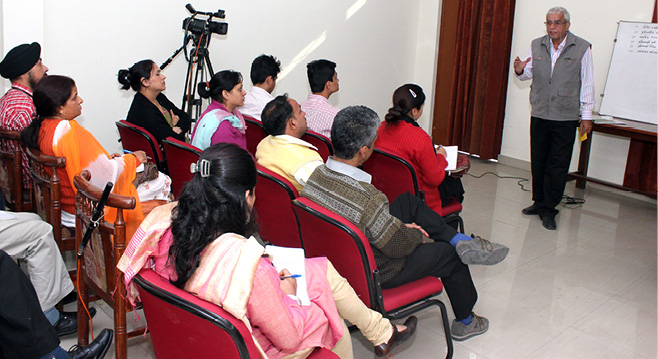
The participants were educated on the need for savings through bank account; demat account; banking products, i.e., loans, fixed deposits and recurring deposits; need for insurance and avenues for investment leveraging exchange traded funds (ETFs) that allow investor to purchase paper gold with as low as 100 rupees. Samavesh’s endeavor is that by the end of 2013, all the remaining 4 blocks of Dehradun will be covered. Dehradun district will then become nation’s first completely financially and digitally literate district covering all financial and relevant citizen services. The participants were also made aware of schemes like Aadhaar and MGNREGA, which also aim at financial inclusion.
Skoch group had created a resource base of Master Trainers who underwent an intensive training program on all financial products. They in turn converted the lessons into local language tool kit including games, skits, films, lessons and tests etc. These Master Trainers then conducted the community-training program through this first ever community-training toolkit covering all financial services. Skoch’s own teams had spent a considerable amount of time in rural Dehradun for nearly two months to get a first hand feel for local issues and felt needs.
Skoch Group chose the Rural Litigation Entitlement Kendra (RLEK), Dehradun, as its outreach partner and they contributed significantly in mobilisation and content development. Avdhash Kaushal, Chairman of RLEK, highlighted the importance of the choice of Chakrata and Kalsi blocks as there were still instances of bonded labour due to failure of financial services in reaching these areas.
Financial literacy is the starting point!
All financial inclusion initiatives in the country have been undertaken from the supply side, not the demand side. Therefore, livelihood promotion and credit needs of the people at the grassroots have largely remained unmet. Even the growth of Self-Help Groups (SHGs) has suffered in the last couple of years. Samavesh as an idea was born to bridge this lack of financial and digital literacy, which is one of the key precipitating factors for exclusion. Skoch propounded its model of inclusive growth way back in 2009 based on its learnings from over a decade through several field visits, studies, impact assessments, round table discussions and think-tank activities. The programme puts a high degree of emphasis on functional literacy with the objective of reaching direct financial services (without intermediaries) to the people who need them the most. It makes a case for micro products to address the financial needs of people at the bottom of the pyramid.
Planning and conceptualising Samavesh took over half a dozen field visits spanning five months. Initially, the Skoch team conducted a dip-stick survey of rural areas of Dehradun district, visiting Chakrata, Vikasnagar, Kalsi and Doiwala blocks. The team interacted intensely with business correspondents and bank managers from Punjab National Bank, Allahabad Bank, State Bank of India, Canara Bank and Union Bank in addition to NGOs. As a natural corollary, the team interacted with elected Panchayat members and citizens across 16 villages in these blocks to understand their felt needs including Bagwan – actively known for its work in forming SHGs and linking them with insurance.
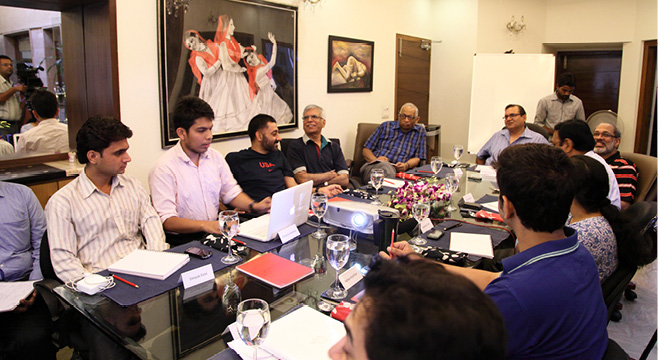
The results were quite encouraging and it was clearly understood that there people’s felt-needs are not being addressed, the basic reason for which was lack of financial literacy. Subsequently, Skoch teams spent over 320 man-days spanning over 2,800 man-hours surveying villages across all six blocks of Dehradun (Chakrata, Doiwala, Vikasnagar, Kalsi, Sahaspur, Raipur) interacting with elected Panchayat members, citizens, business correspondents, bankers, insurers, block level officer, and government functionaries, in order to assess penetration of financial services and do a felt-needs assessment.
It was an exercise during which one representative from each Gram Panchayat – 150 of them – in Kalsi and Chakrata blocks, to start with, were identified for financial literacy training. In addition, 56 elected representatives, one from each Ward in Dehradun urban area, were also identified. Another 100 small entrepreneurs, Small and Medium Enterprises and other interested individuals were also shortlisted.
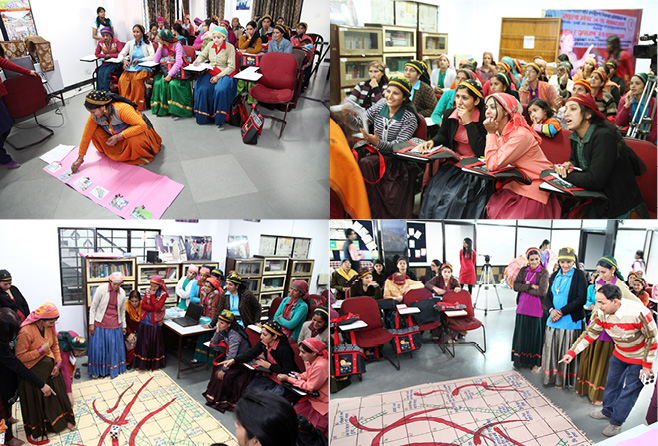
Creating training modules and material was an uphill task, as there existed none. What has been recommended by RBI or prepared by banks for use at Financial Literacy and Credit Counseling Centres (FLCCC) was found to be not only inadequate but also incomprehensible by even most of urban literate youth. Skoch took upon itself the task of filling up this vacuum and with the help of Punjab National Bank (lead bank for the district); Oriental Insurance Company; Life Insurance Corporation; National Stock Exchange; and, NGOs, organised a three-day intensive training workshop for preparing 15 Master Trainers, including Skoch volunteers. Skoch teams worked relentlessly with these Master Trainers to create the curriculum that was to be imparted using play-way methods, games like snakes-and-ladders, skits, audio-visuals, and group discussions keeping in mind trainees’ grasping capacity. The financial inclusion training for Panchayat and Ward representatives was concluded with recognition of their efforts by distribution of certificates during a congregation that announced the completion of Leg-1, while kicking-off Samavesh for the rest of the Dehradun district.
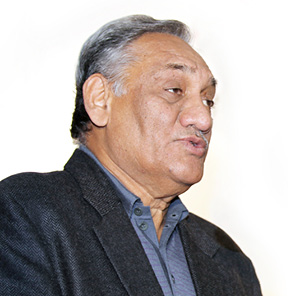
Chief Minister of Uttarakhand, Vijay Bahuguna, was the chief guest for the convocation function in which the participants received their financial literacy certificates. Speaking on the occasion, Bahuguna welcomed the initiative taken by the Skoch Group. While hailing the role of women in the state’s development process, he said that they have played an important role in accelerating inclusive development of the state and their participation is pivotal for the success of any government development programs. There is also an immediate need to take the benefits to women from marginalised sections from Scheduled Castes and Scheduled Tribes, backward areas, hilly regions and border areas. He also accepted the recommendation made by the Skoch Group and the National Stock exchange to introduce financial inclusion topic in the curriculum at high school level in the state.
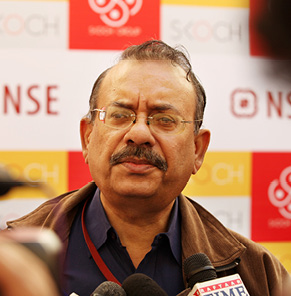
The Chief Minister also asserted that the state government is going to pay subsidy amount directly to the beneficiaries account and it will be mandatory for everybody to have a bank account. “Stress would be given to financial inclusion considering it one of the important aspects of inclusive development,” said Bahuguna. He even stated that central government had agreed to adopt cluster approach to extend banking services in the hilly terrain of the state. The chief minister also highlighted that fact that the state government has made provision of separate funding for development of backward areas. The state has already constituted Horticulture marketing boards for marketing of produces of mountainous areas, he added.
The Chief Minister also requested that the recommendations of the conference be forwarded to him so that the state government can provide help in implementing the recommendations.
While highlighting the advantages of savings, K Kamala, Senior Vice President, National Stock Exchange, said, “Saving has a very important role to play in our life and people should be made aware of different forms of investments through which they can save and create wealth.”
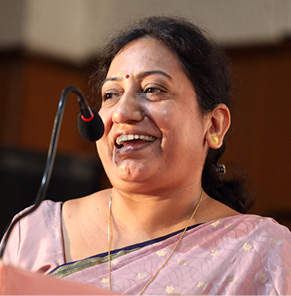
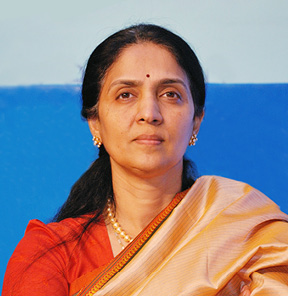
“The NSE is a market infrastructure institution with the intent not just to service the very rich investor or only big institutions. The small retail investor is an equally important customer for us,” maintains Chitra Ramkrishna, Joint Managing Director, NSE. She is sensitive to gender needs pertaining to savings and running the households and believes that they understand the need to save and invest easily. “We hold regular workshops, awareness programmes and seminars on investor education. But reaching out to women at grassroots through Samavesh is unique and is likely to touch a chord with them,” she added.
Congratulating Skoch Group for such a novel initiative among marginalised sections, especially women, Hrushikesh Panda, Additional Secretary in the Union Ministry for Panchayati Raj said, “There is a need to strengthen Gram Sabha and women’s participation in Panchayats to facilitate gender empowerment. Integration of financial services with the Panchayat system is a must to achieve financial inclusion.”
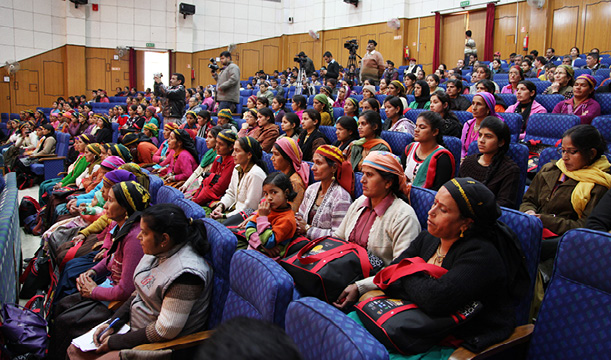
A G Das, Chief General Manager, PFRDA introduced the new pension scheme and its benefits for unorganised workers. Gyan Bhushan, Chief General Manager, SEBI highlighted SEBI’s role in investor protection and Shishir Kumar, Assistant General Manager, RBI spoke about RBI’s framework for financial inclusion. Ashutosh Ojha, Assistant Director General, UIDAI conducted a session on how digital technologies coupled with the Aadhaar number can be used for better accessing social services and spending.
Various other distinguished speakers and experts addressed the gathering and threw light on diversified issues related to financial literacy and need of inclusive development. It is noteworthy that financial literacy is the cornerstone of any financial inclusion program. Kochhar further said, “our objective is to reach directly to the people who need financial services the most and to apply over a decade of learning from our field visits, conferences and workshops on inclusive growth in the programme.”
India is supposed to become a developed economy by 2047 with a GDP size of $30 Tn. While there is largely a consensus on the feasibility of this, it is...
India is supposed to become a developed economy by 2047 with a GDP size of $30 Tn. While there is largely a consensus on the feasibility of this, it is...
India is supposed to become a developed economy by 2047 with a GDP size of $30 Tn. While there is largely a consensus on the feasibility of this, it is...
"American roads are good not because America..
State Rankings Highlights -: Odisha scaled to number..
Step 1: Call for Project Submission Call for..
In the run-up to the elections, the most..

Inclusion is the first magazine dedicated to exploring issues at the intersection of development agendas and digital, financial and social inclusion. The magazine makes complex policy analyses accessible for a diverse audience of policymakers, administrators, civil society and academicians. Grassroots-focused, outcome-oriented analysis is the cornerstone of the work done at Inclusion.