India’s next phase of rural development must go beyond credit. It must build enterprises that endure, incomes that last and households that withstand economic shocks. The core task is to integrate finance, livelihoods, markets and social protection into a framework that supports lasting economic mobility. With an extensive network of community institutions, public investment and digital infrastructure already in place, the focus must now shift to responsible lending, enterprise growth and resilient rural prosperity.
Resilient growth cannot be measured merely by the financial strength of lending institutions or the quality of their loan portfolios. Its true test lies in whether finance makes households and enterprises more resilient.
For rural India, income generation and protection must go hand in hand. Higher earnings alone are insufficient unless households can build productive assets, sustain livelihoods, withstand shocks and continue investing in their future.
India has built a robust institutional foundation for this transition. Under the Deendayal Antyodaya Yojana – National Rural Livelihoods Mission (DAY-NRLM), more than 10 crore rural women are organised into over 93 lakh Self-Help Groups (SHGs).
Initially centred on savings and credit, these groups have evolved into platforms for livelihoods, enterprise development, financial inclusion and collective economic action. Equally important, their greatest strength is the trust they have built within communities.
Public investment has been instrumental in this transformation. Approximately ₹66,500 crore invested through Revolving Funds and Community Investment Funds has leveraged more than ₹13.8 lakh crore in formal finance. This demonstrates how catalytic public investment can strengthen community institutions and mobilise financial capital on a larger scale.
The broader rural-development framework reinforces this foundation. Housing provides security; employment programmes and productive public assets support livelihoods; roads improve market connectivity; and social assistance protects vulnerable households. Together, these interventions create conditions for economic resilience.
Financial inclusion depends on more than just credit availability. Identifying viable enterprises, preparing business plans, completing documentation, navigating digital systems and securing timely bank approvals are equally important.
Sa-Dhan’s partnership with NRLM and selected State Rural Livelihood Missions to train Vitta Sakhis and mission officials underscores the importance of strengthening last-mile capabilities. Vitta Sakhis help rural women access formal credit and enterprise finance. The introduction of Pension Sakhi extends this community-based architecture towards pension awareness and long-term financial security.
This marks an important evolution in rural financial services. It shows how trusted community institutions can support households throughout their financial life cycle, from savings and borrowing to enterprise finance, insurance and pensions.
Income without protection remains fragile. A secure home, productive assets, insurance and pension coverage give households the confidence to invest and take on productive risks. Protection is therefore not merely a response to distress. Rather, it is an economic asset that makes income growth and mobility more sustainable.
For rural enterprises to survive and expand, access to credit must be accompanied by five essential conditions: Capability includes technical skills, entrepreneurship and managerial competence. Capital means timely and appropriate financing. Connectivity links enterprises with markets, digital platforms, logistics and infrastructure. Competitiveness arises from productivity, technology, quality and scale. Confidence lets entrepreneurs invest without fearing that a single economic shock could destroy their progress.
These Five Cs highlight the difference between extending a loan and building a sustainable enterprise. They define what rural growth requires beyond credit alone. The financing needs of rural businesses also differ considerably.
A nano-enterprise may need working capital aligned with its cash cycle, while another business may require equipment finance. Seasonal enterprises may need flexible repayment arrangements. Businesses with confirmed orders may benefit from receivables-linked finance. First-generation entrepreneurs without collateral may require guarantees or risk-sharing arrangements. Enterprises may need patient or growth capital.
The financial system must therefore develop a continuum of financial instruments rather than simply offer progressively larger loans.
This is particularly relevant for nano-enterprises, which often fall between microcredit and conventional MSME lending. Although their activities may be economically viable, informal accounting, seasonal cash flows and limited collateral often restrict their access to institutional finance.
The Grameen Credit Score marks an important step towards recognising the financial discipline demonstrated by women in the SHG ecosystem.
Many rural women have built up years of regular savings, responsible borrowing and timely repayments through their groups. Yet this history often goes unnoticed when they seek individual credit from formal financial institutions.
The Grameen Credit Score aims to convert this established financial behaviour into an economic asset. Its underlying principle is that borrowers should be assessed based on the financial record they have built, rather than solely on the collateral they lack. This does not imply relaxing lending standards. Instead, it strengthens underwriting by incorporating relevant information into credit decisions.
Digital systems and institutional data offer an opportunity to transform how financial services reach households. Traditionally, borrowers must identify suitable products, locate institutions, establish eligibility and navigate application processes.
Traditionally, borrowers must identify suitable products, locate institutions, establish eligibility and navigate application procedures. The emerging approach reverses this relationship: instead of beneficiaries searching for solutions, suitable solutions should increasingly find beneficiaries.
By understanding a household’s livelihood, enterprise stage, financial history and risk exposure, institutions can determine whether it requires working capital, equipment financing, market access, insurance, pension coverage or additional skills. This is how data can become actionable economic intelligence.
Economically viable enterprises do not always meet conventional lending criteria. Limited collateral, informal financial records and insufficient individual credit histories can prevent them from accessing finance.
The answer lies in better risk assessment and more effective risk allocation, rather than in weaker underwriting. Appropriately structured guarantees and risk-sharing mechanisms can bridge the gap between economic viability and conventional bankability. In addition, blended finance and other innovative instruments can address specific financing constraints.
Such mechanisms must expand commercially viable lending without compromising financial discipline. Equally important is the relationship between finance and markets. Production alone cannot guarantee prosperity. Enterprises need reliable buyers, repeat demand, quality standards, aggregation, logistics and access to larger markets.
Financial institutions possess valuable information about enterprises operating across sectors and geographies. Their lending and repayment experience can reveal successful business models, emerging financial stress and areas of rising demand for productive credit.
This intelligence can help identify promising economic activities and direct capital towards enterprises with credible growth potential. Finance can then accelerate economic development rather than merely respond to existing demand.
Rural economic activity is organised around clusters, value chains and local markets. Therefore, sustainable development requires looking beyond individual enterprises to the economic potential of entire districts and clusters.
This involves identifying viable sectors, market opportunities, infrastructure gaps, capability gaps and the investments needed to unlock local growth.
The Rural Prosperity and Resilience Programme seeks to advance this approach by connecting institutions, infrastructure, enterprises, markets and investment to credible local economic opportunities. The government provides enabling infrastructure and catalytic investment. Community institutions contribute trust, local knowledge and last-mile reach. Banks bring credit expertise, while microfinance institutions understand borrowers and their circumstances.
Investors contribute risk and growth expertise, markets provide demand signals and development institutions offer innovation and new financing approaches. Bringing these capabilities together can transform rural development from separate interventions into an investable local economic system that advances resilient growth.
The objective is to ensure that public investment, community institutions and financial capital reinforce one another across locations and sectors with genuine growth potential.
Three priorities define the next phase of resilient rural development. The first is to measure outcomes rather than merely financial activity. Borrower numbers and loan volumes must be complemented by indicators such as enterprise survival, productivity, income progression and household resilience. The second is to create a continuum of capital that responds to different stages of enterprise and financing requirements. The third is to bring finance and protection closer to households through simpler products, faster processes and trusted community institutions.
India has already built an extensive foundation of women’s collectives, public investment, productive assets, digital systems and social protection.
The challenge now is to use this foundation to recognise the economic records rural women have built, finance emerging enterprises appropriately, allocate risk intelligently and connect capital to viable markets.
Responsible lending must ultimately deliver more than credit expansion. It must create stronger enterprises, more stable incomes and households capable of sustaining progress despite economic uncertainty.
The measure of rural prosperity is not simply how much a household can earn, but how much it can build, retain and withstand adversity.
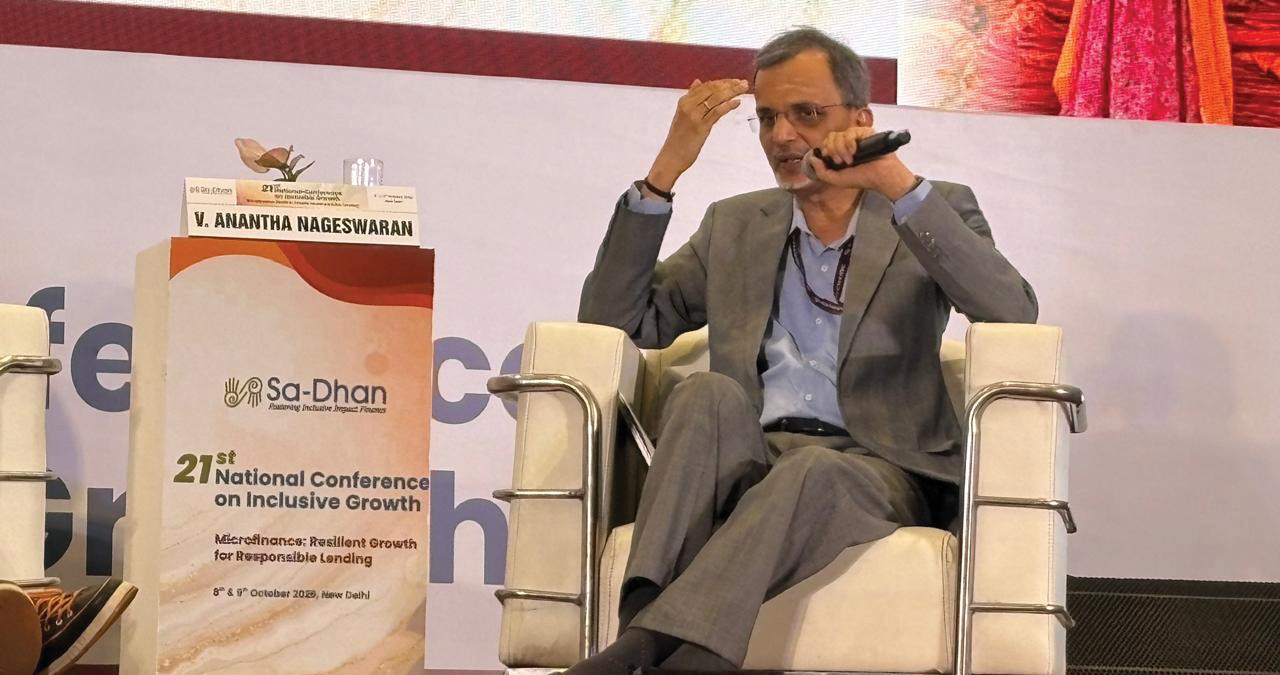
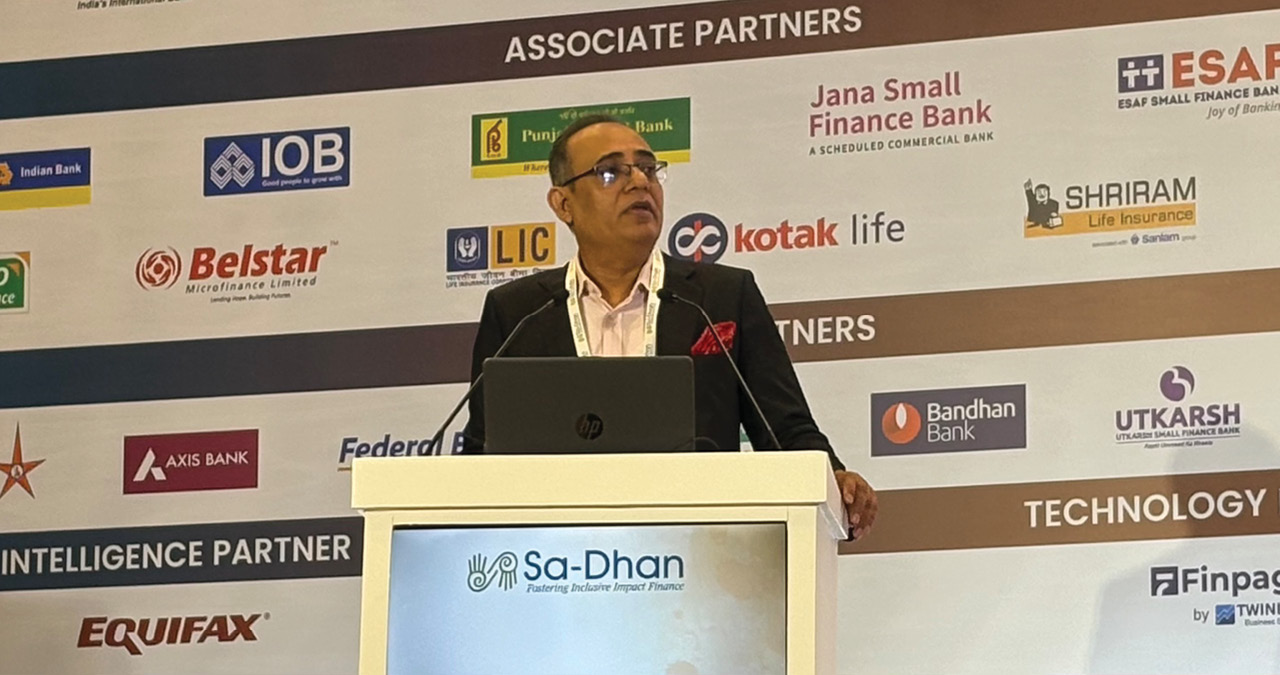
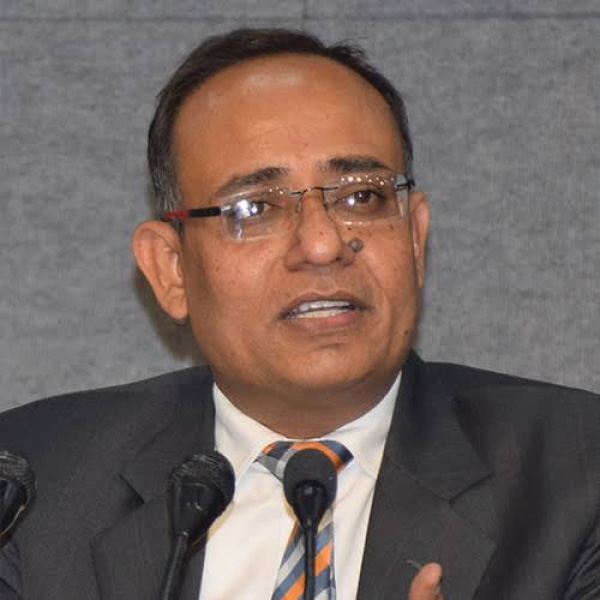
Based on his address at 21st Sa-Dhan National Conference on Inclusive Growth – Microfinance: Resilient Growth for Responsible Lending, New Delhi
"American roads are good not because America..
State Rankings Highlights -: Odisha scaled to number..
Step 1: Call for Project Submission Call for..
In the run-up to the elections, the most..

Inclusion is the first magazine dedicated to exploring issues at the intersection of development agendas and digital, financial and social inclusion. The magazine makes complex policy analyses accessible for a diverse audience of policymakers, administrators, civil society and academicians. Grassroots-focused, outcome-oriented analysis is the cornerstone of the work done at Inclusion.