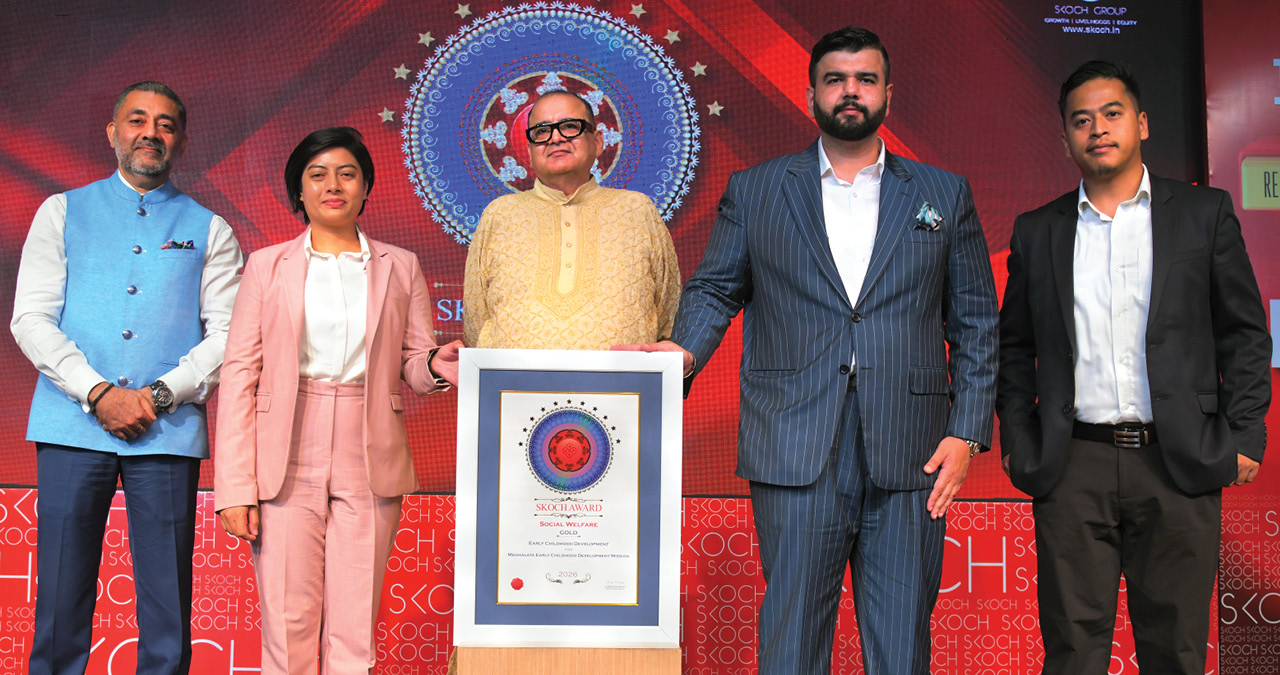
In Meghalaya, development policy begins with a simple question: what happens to a child before school and why does that stage matter?
The answer matters in a state where 25% of the population is under nine years old. Nearly 46.5% of children under five are stunted and 41% of Class III children are below basic learning levels. Meghalaya calls itself a “Children State.”
The Meghalaya Early Childhood Development Mission, launched in 2022, aims to break the link between poor nutrition, inadequate early stimulation and later learning deficits. Its central claim is clear: bring health, nutrition and education together around the child, rather than treating them as separate programmes.
At its heart is a reimagining of the Anganwadi Centre, shifting its role from a nutrition-delivery point to a hub for learning, play, childcare and parental engagement. The Mission integrates good health, adequate nutrition, early childhood education, safety, responsive caregiving and parental well-being, engaging health workers, Anganwadi workers, self-help groups and community institutions. The transformation is substantial. 2,148 Anganwadi Centres, 40% of the state’s total, are being upgraded into climate-resilient, child-friendly crèches and learning centres. Opening hours are being extended from six to eight, with crèche workers drawn from self-help groups.
Nutrition is addressed more locally. Hot cooked meals for children under three are introduced through community models, with eggs added across Anganwadi Centres. Meanwhile, frontline workers are trained in breastfeeding, responsive caregiving and early stimulation. What makes the Mission distinctive is its attempt to make childhood development a community movement. Self-help groups become champions of early childhood development. Fathers are encouraged to participate. Faith-based institutions help shape behaviour. Learning materials are available in Khasi, Garo and English.
Early results include increased institutional deliveries, reduced anaemia among women and higher Anganwadi enrolment. However, the Mission says nutrition and developmental outcomes need more time to mature.
That caution is important. Meghalaya is not claiming that a generation has already been transformed. Its point is more basic: it is redesigning the environment in which that generation will grow.
"American roads are good not because America..
State Rankings Highlights -: Odisha scaled to number..
Step 1: Call for Project Submission Call for..
In the run-up to the elections, the most..

Inclusion is the first magazine dedicated to exploring issues at the intersection of development agendas and digital, financial and social inclusion. The magazine makes complex policy analyses accessible for a diverse audience of policymakers, administrators, civil society and academicians. Grassroots-focused, outcome-oriented analysis is the cornerstone of the work done at Inclusion.