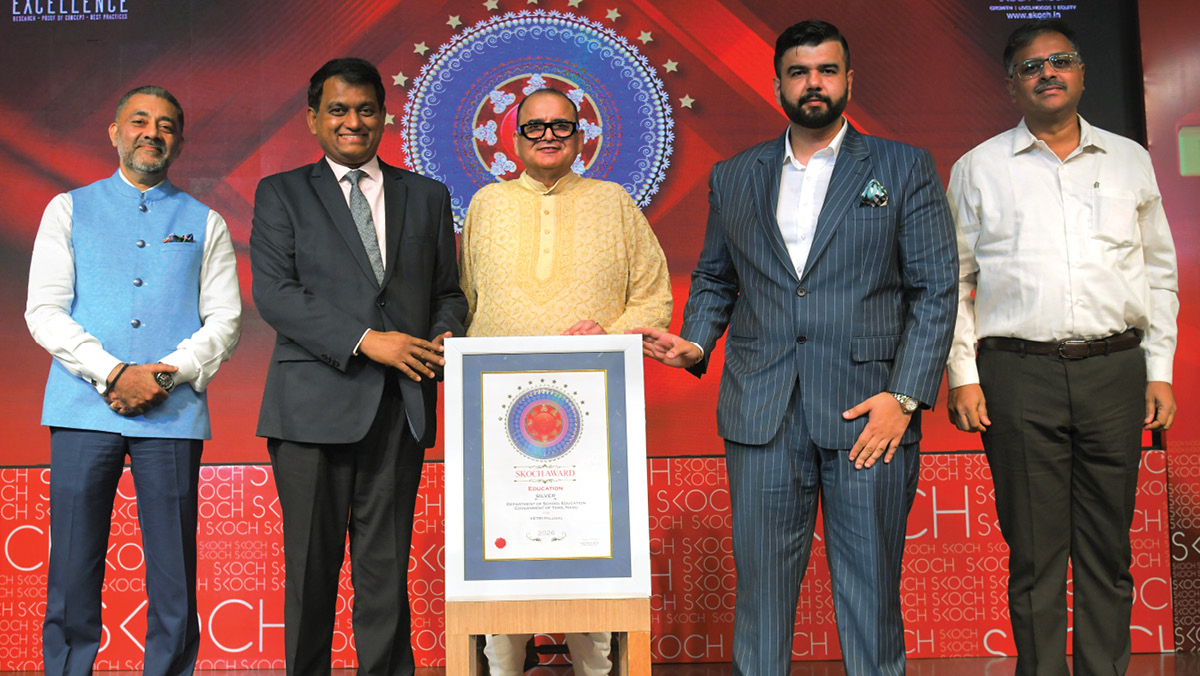
Education is often measured in enrollment and examination results. Its deeper purpose, however, lies in expanding opportunity. In Tamil Nadu, three initiatives suggest that this shift is underway. By extending access to frontier technologies, competitive pathways and high-quality learning, the state is narrowing the distance between privilege and potential. The story is not simply one of better schooling, but of a state using public education to reshape life chances: one classroom, one student and one aspiration at a time.
TNSpark set out to make future-ready learning accessible to students in rural government schools. The programme was born from a simple still urgent concern: as AI reshapes industries and careers, students without exposure to emerging technologies risk being left behind before they even enter the workforce. The challenge was about ensuring access, opportunity and equity for an entire generation.
To bridge this gap, TNSPARK introduced a structured curriculum in Artificial Intelligence, Coding, Robotics and digital tools for students in Classes 6 to 9. Learning was made practical and engaging through hands-on activities, projects, digital resources, hi-tech labs and trained teachers. Continuous monitoring and assessments ensured that progress could be measured and improvements made along the way.
The results have been remarkable. More than 5,000 government schools and over 3.5 lakh students were brought into a technology-enabled learning ecosystem. Assessments showed that 61 percent of students scored above 80 percent in AI and critical-thinking competencies, while 91 percent achieved digital competency. Many of the well performers came from rural and first-generation backgrounds, showing what government school students can achieve.
Beyond academic achievement, TNSPARK has helped nurture confidence, curiosity and problem-solving skills among students who previously had limited exposure to advanced technologies. By enabling young learners to create, experiment and innovate, the programme is fostering a generation that sees itself not merely as users of technology, but as future creators and leaders in a digital world.
For thousands of government school students, the biggest barrier to success was not a lack of ability but a lack of access. Many had never heard of examinations such as JEE, CLAT, NIFT or other gateways to elite institutions.
Quality coaching was concentrated in cities, career guidance was limited and students often chose their futures based on awareness rather than aptitude.
VETRI Palligal was designed to change that equation. Rather than waiting for exceptional students to find opportunities, the programme set out to find the students first. Using a planned approach, it identifies aptitude, maps students to suitable career pathways and then provides targeted academic support.
Weekend coaching sessions, regular assessments, mentoring, application assistance and career guidance is delivered through a network of block-level centers located within government school infrastructure, making support available close to home.
The impact has proved transformative. What began as a pilot involving just over 2,000 students has expanded to nearly 59,270 students across hundreds of hub schools.
More than 10,400 students appeared for national competitive examinations in a single academic year and admissions to premier institutions rose from 84 to 151 within a year.
Students are now securing places in engineering, law, design, hospitality and maritime institutions that once seemed beyond reach.
Perhaps the programme’s greatest achievement is its clear message to every child in a government school: your future should be determined by your potential, not your postcode, family background or ability to pay for coaching.
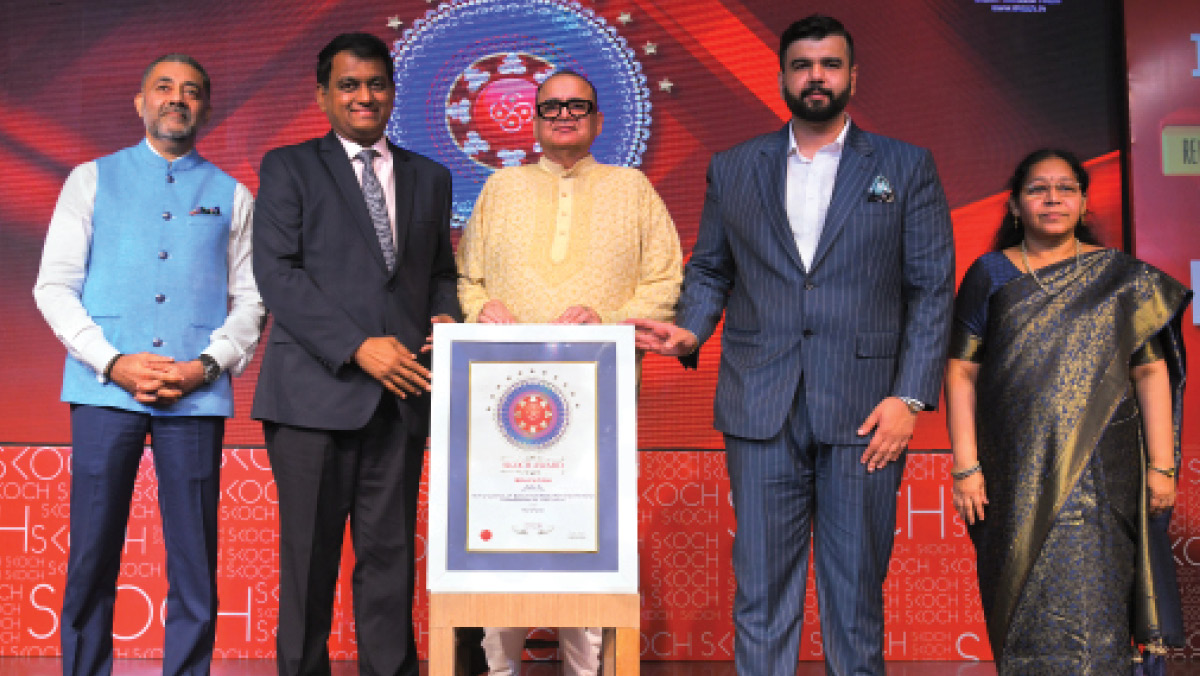
For generations, the journey out of a rural government school classroom to an IIT, NIT, AIIMS or an international university seemed almost impossible. The barrier was not intelligence; it was opportunity. Students from low-income families faced costs they could not afford, lacked access to coaching, had few role models and often had no roadmap for navigating competitive examinations.
Government school students, who comprise nearly half of Tamil Nadu’s Class 12 cohort, had almost no representation in the country’s most elite institutions. Tamil Nadu Model Schools were created to change this reality. Built on a fully government-funded residential model, the programme removes every financial obstacle. Tuition, accommodation, books, uniforms and academic support are provided at no cost.
The schools recreate the ecosystem of opportunity traditionally available only to elite institutions, combining rigorous academics, competitive examination preparation, mentoring, sports and mental-health support.
What began in 2021 with schools in 10 districts has expanded to all 38 districts. Admissions to premier institutions rose from 75 students in the first year to 1,340 annually within four years.
Cumulatively, 2,317 students have secured admission to 93 premier institutions, including 41 students studying in IITs and 17 students receiving fully funded international scholarships. Equally significant, 77 students with special needs have entered premier institutions, showing that merit and inclusion can advance together. Yet the most enduring impact lies beyond statistics.
"American roads are good not because America..
State Rankings Highlights -: Odisha scaled to number..
Step 1: Call for Project Submission Call for..
In the run-up to the elections, the most..

Inclusion is the first magazine dedicated to exploring issues at the intersection of development agendas and digital, financial and social inclusion. The magazine makes complex policy analyses accessible for a diverse audience of policymakers, administrators, civil society and academicians. Grassroots-focused, outcome-oriented analysis is the cornerstone of the work done at Inclusion.