
There are three goals for 2047. One is to become a developed nation, second is inclusiveness in terms of employment, human development to everyone so that inequalities can be reduced. Third is to achieve these two goals with sustainable and climate resilience practices.
As we move toward the aspiration of becoming a $10 trillion economy and eventually a $35 trillion economy by 2047 and to achieve inclusive and sustainable growth, our legal and regulatory architecture must evolve in tandem. The law is not merely a support system for economic growth; it is its very foundation. Predictable institutions, enforceable contracts and efficient dispute resolution systems are essential for sustaining high growth and attracting global capital.
Regulatory framework design is a primary macroeconomic variable not secondary administrative consideration. For achieving Viksit Bharat goal of becoming a developed country, we need 7 to 8 % growth per annum. There are many sources of growth to achieve this objective. But two important engines of growth are investment and exports.
Investment rate presently is about 32 to 33%. We need to increase in investment rate and reduce capital output ratio to achieve higher productivity and growth. Similarly export growth is important. No emerging market of India’s size has grown at 7 or 8% for a decade or more without strong export growth.
Private investment for both domestic and foreign capital have to improve further. India’s growth challenge today differs from that of the early reform period. The focus is on efficiency. India today is among the world’s fastest-growing major economies, has a large domestic market, substantial public investment and a growing manufacturing base. The next phase of growth depends increasingly on how efficiently economic activity can take place. The Atmanirbhar Bharat and Swadeshi advocated by the Prime minister does not mean we are going back to import substitution of pre-1991 days. It means improving competitiveness and improving quality for exports and competitiveness. Also in some of the products we have to be self sufficient because of the geopolitical situation. Some of the items like semi-conductors, chips, rare earths we have to increase their production. Government is also identifying some 100 items of imports where India can produce domestically and export them. India has signed lot of FTAs. There will be lot of opportunities for exports and imports. MSMEs also will benefit. So we need to have efficient regulatory framework to achieve these goals. Exchange rate is also important for exports. The dollar-rupee exchange rate is determined by market forces of demand and supply. Regulations and interventions are made by the RBI only if there is excess volatility.
In public discourse, economic reform debates often gravitate toward what may be termed “big reforms” tax overhauls, free trade agreements and privatisation. These are undoubtedly important structural reforms. However, there is a quieter yet equally transformative category of reforms that deserves greater attention-what we may call process reforms. A lot of work is already underway pertaining to process reforms. Process reforms are the nuts-and-bolts changes in governance. These involve re-engineering administrative procedures, rationalising regulations. Individually, these reforms may appear incremental or technical. But collectively, they have the potential to dramatically improve efficiency, reduce transaction costs and enhance both the ease of doing business and the ease of living.
By documenting the flow of procedures, from start to finish, policymakers can uncover inefficiencies that are otherwise invisible. Importantly, process mapping shifts the perspective from that of the regulator to that of the user – be it a business or a citizen.
Encouragingly, India has already embarked on a significant reform journey anchored in trust-based governance. This shift recognises that excessive regulation imposes what has been described as “regulatory cholesterol”, clogging the arteries of economic activity and constraining innovation. The government’s efforts in this direction are noteworthy. Several obsolete Laws, many dating back to the colonial era-have been repealed. Further, the amendment of more than 700 provisions of 79 Central Acts, particularly through the Jan Vishwas Act, has replaced criminal penalties for minor procedural lapses with monetary or administrative sanctions. This has reduced the fear of prosecution and fostered a more business-friendly environment. RBI and SEBI have also undertaken several reforms to simplify regulations.
Investment decisions are influenced by the predictability of the operating environment. Simplifying procedures and improving regulatory clarity reduces these uncertainties and improves the investment climate. The gains are particularly significant for micro, small and medium enterprises. Large firms can often absorb compliance costs through specialised teams dealing with legal, regulatory and administrative matters. Reducing compliance burdens allows entrepreneurs to devote more time and resources towards expanding operations, hiring workers and entering new markets. Excessive regulations reform also affects productivity. Simplified processes reduce the overhead costs and allow firms to focus on their core business activities.
Process reforms improve the ability of public institutions to deliver services, process applications and respond to citizens in a timely manner. The experience of Direct Benefit Transfer, the National Single Window System demonstrates that better-designed regulatory processes can significantly improve outcomes.
EAC-PM has done a case study on reforms in Investor Education Protection Fund Authority where unclaimed corporate shares and dividends will be restored to rightful owners. EAC-PM has found that we have to three portals and process takes two to three years to claim them and there are 25 steps to claim them. The fund officials have taken several process reforms to resolve the inefficiencies. Now there is only one portal and the number of steps has dropped from 25 to 15. Under the new system once approvals are granted transfers now occur immediately instead of waiting for three years.
In order to achieve $30 trillion economy, India needs domestic and foreign capital. Foreign capital is important as domestic savings are not enough. In order to have trust in India’s judicial system India needs to have a legal reform roadmap to achieve higher investment in the economy. Several legal reforms maybe needed. Among others, efficient contractual enforcement and faster dispute resolution are essential for an investor. Enforcing a commercial contract through Indian court takes 1,500 days, nearly four times the duration in Singapore. Dispute resolution in India takes several years; almost three times the average in OECD countries. It is essential to have the confidence for investors that contract will be honoured in letter and spirit across decades. We need a legal reform roadmap and efficient judiciary system required b y a modern economy like India. May be a group of economists and judiciary can be created to look at the legal reform needed for India’s economic growth and well-being of population.
Ultimately, the vision of a Viksit Bharat cannot be realised through isolated reforms. It requires a comprehensive transformation of our legal ecosystem. Simplified regulations and predictable legal outcomes will directly translate into higher investor confidence, faster dispute resolution and enhanced global competitiveness. Of course, some regulations are needed. During global financial crisis, everyone praised Dr YV Reddy, the then RBI governor for the regulations of RBI which saved the country. Similarly, on Al also some regulations may be required while improving productivity. Some of the regulations on orange economy and future’s markets are also based on government’s views and discussions on pros and cons.
Lastly, India is a federation. The efficient regulatory framework has to be undertaken at State level and local councils. A study shows spending at the discretion of local governments are 51% in China, 27% in the US and Brazil and a distant 3% in India. Decentralisation should not stop with states.
In conclusion, as we strive toward Viksit Bharat, the law and regulations must lead the way, not follow economic growth. The future of India’s economy will be determined not only by what reforms we undertake, but by how effectively we implement them. What we want to achieve Viksit Bharat by 2047 is not unique. In the history o f a nation, there comes a turning point. Some nations, which have developed themselves leveraging a turning point are: Japan, Germany, Singapore, South Korea and other Asian countries. Now it is India’s time.
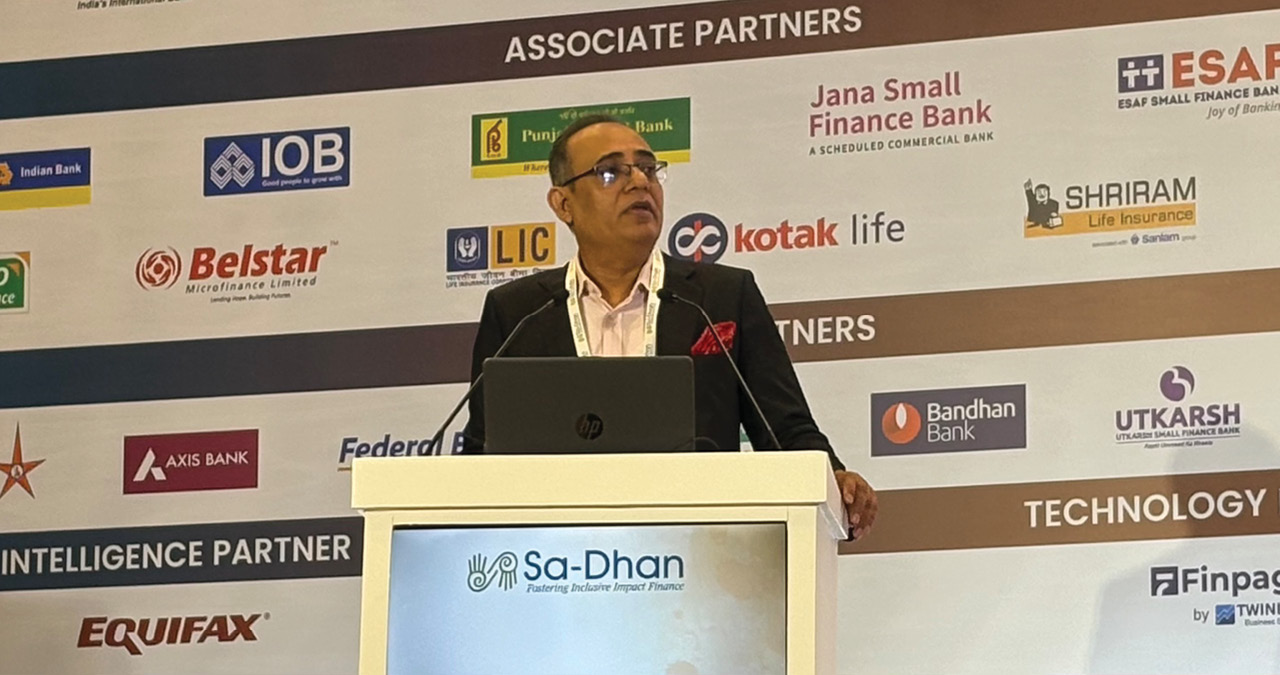
Excerpted from his address at 108th SKOCH Summit
"American roads are good not because America..
State Rankings Highlights -: Odisha scaled to number..
Step 1: Call for Project Submission Call for..
In the run-up to the elections, the most..

Inclusion is the first magazine dedicated to exploring issues at the intersection of development agendas and digital, financial and social inclusion. The magazine makes complex policy analyses accessible for a diverse audience of policymakers, administrators, civil society and academicians. Grassroots-focused, outcome-oriented analysis is the cornerstone of the work done at Inclusion.