

The SKOCH State of Governance Report 2025 presents a clear and evidence-backed picture of how governance in India is evolving from intent-driven policymaking to outcome-oriented execution. The findings underscore that governance leadership today is defined not by the number of schemes or reforms announced, but by the ability of states to translate policy intent into measurable, on-ground results through strong institutions, district-level execution and integrated service delivery.
A key insight of the 2025 assessment is the centrality of District Governance, which has emerged as the fulcrum of governance performance. States that have empowered district leadership, improved inter-departmental coordination and strengthened last-mile implementation are consistently outperforming others. This reinforces the conclusion that effective governance is increasingly bottom-up, rooted in frontline administration rather than top-down directives.
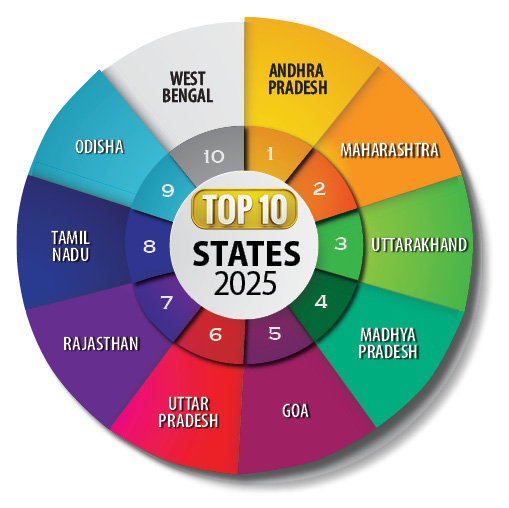
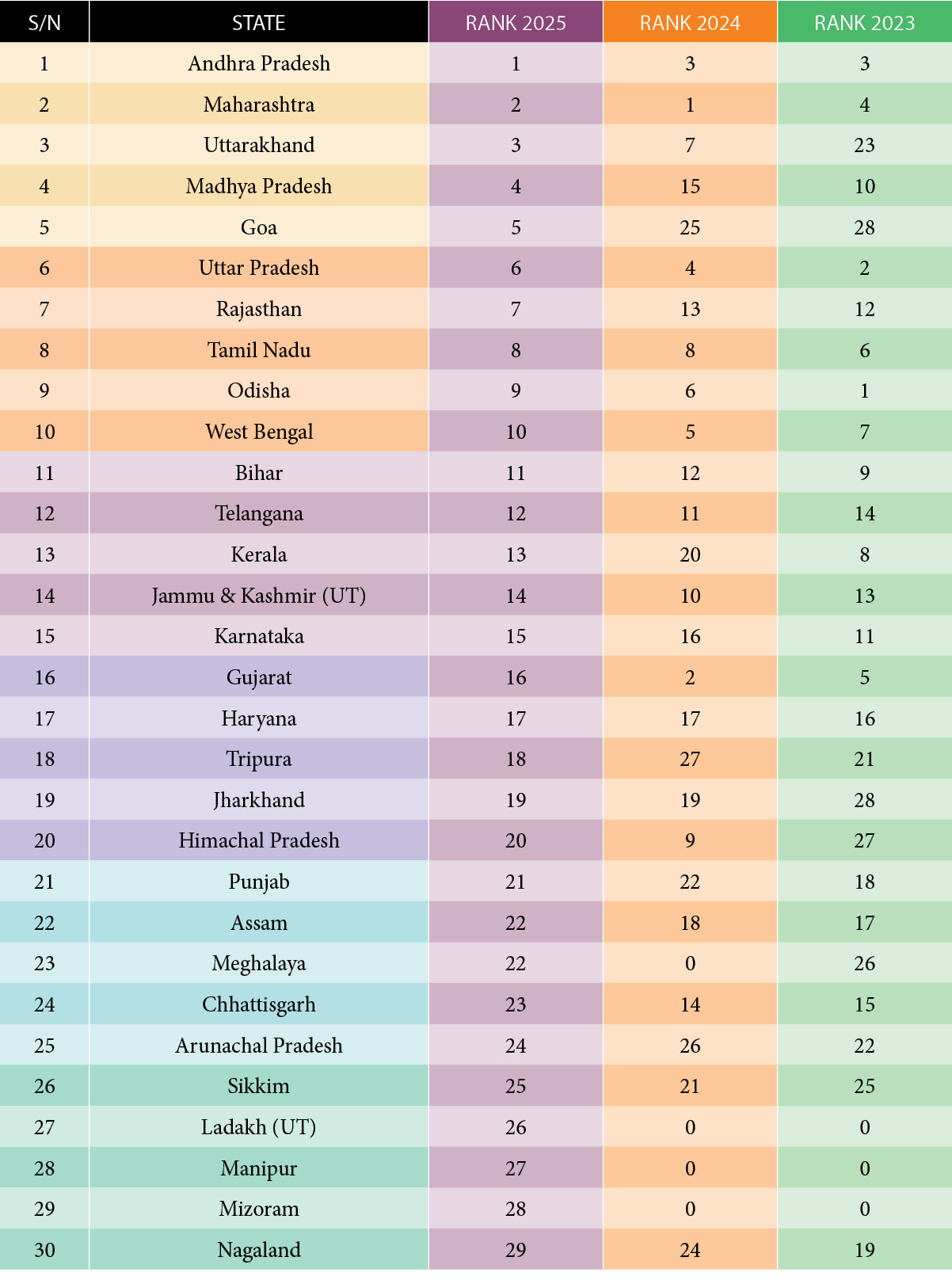
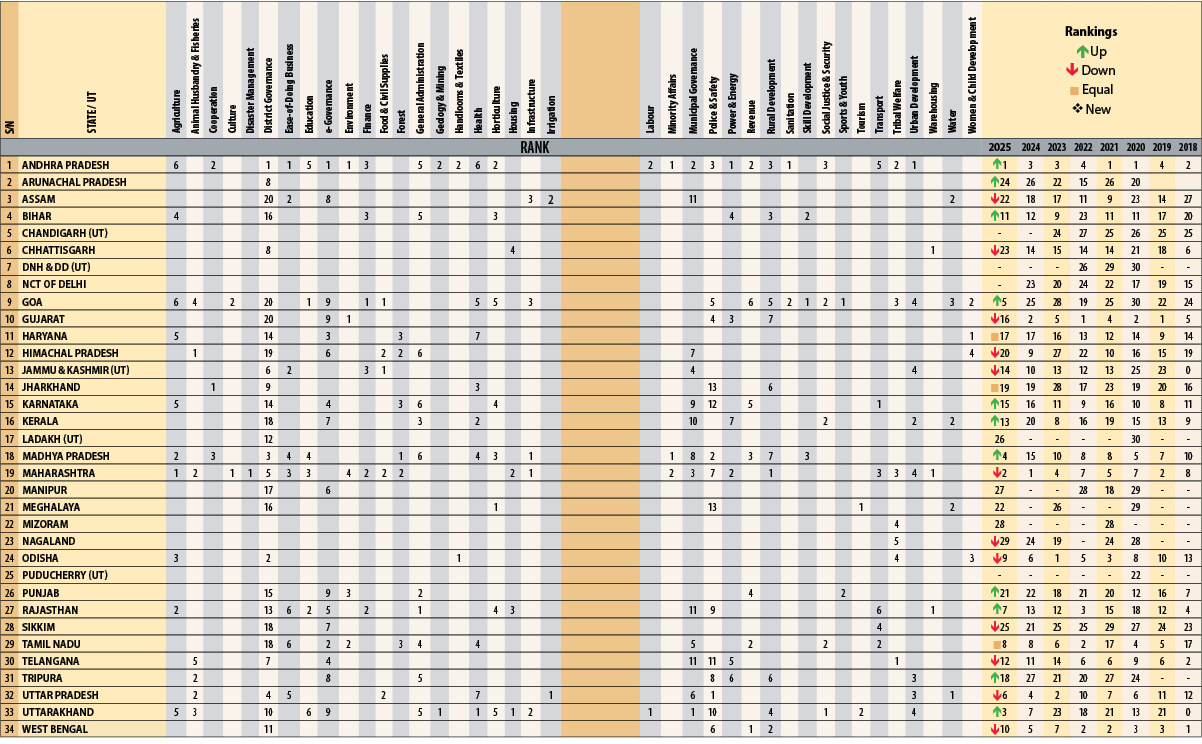
At the overall state level, Andhra Pradesh has emerged as the top-ranked state in 2025, rising from third position in 2024 to reclaim the number one rank for the third time. Its leadership reflects sustained, outcome-oriented reforms across Welfare Delivery, District Governance, e-Governance, Power & Energy and Municipal Governance.
Maharashtra, which topped the rankings in 2024, follows closely at second position, continuing to demonstrate strong institutional maturity and balanced performance across multiple sectors. Uttarakhand’s sharp rise to third place and Goa’s leap into the top five highlight how focused reforms, even in smaller states, can yield rapid and substantial governance gains.
Sectoral trends reveal a clear clustering of governance priorities. Alongside District Governance, Police & Safety and Municipal Governance feature prominently, reflecting the growing importance of citizen safety, urban management and trust in public institutions. Policing is increasingly preventive, technology-enabled and community-oriented, while Municipal Governance is becoming a decisive factor in overall governance.
A second major trend cluster comprises e-Governance and Power & Energy, underscoring the role of technology and infrastructure as governance multipliers. Digital platforms are now core administrative systems, enabling transparency, speed and scale, while energy reforms underpin economic activity, service reliability and sustainability. States that have successfully integrated digital governance with infrastructure strengthening are establishing durable governance advantages.
Social sectors including Health, Education, Rural Development, Agriculture and Transport continue to form the backbone of inclusive governance. The 2025 assessment highlights a shift from scale to effectiveness, with states being recognised for quality improvements, convergence across sectors and long-term impact rather than coverage alone.
The credibility of these findings is anchored in the SKOCH Assessment methodology, which is grounded in primary data, field validation, expert evaluation, peer review and citizen feedback. Rankings are derived from the cumulative, weighted performance of evaluated projects, ensuring that outcomes not intent determine governance standing.
Collectively, the SKOCH State of Governance Report 2025 demonstrates that governance in India is becoming more competitive, evidence-driven and execution-focused. It reinforces the message that sustained reform, institutional capacity and responsiveness to citizens are now the notable features of governance leadership.
Both at the District and Municipal level the delivery of citizen services has become more visible and notable. This has also been reflected in the electoral outcomes.
India’s governance story in 2025 is best understood not through intent, announcements or policy volume, but through outcomes that can be measured, verified and experienced by citizens. Evidence emerging from the SKOCH State of Governance Assessment makes one reality unmistakably clear: governance performance today is being shaped by the quality of execution rather than the ambition of design. States that have invested in institutional capacity, district-level leadership and integrated service delivery are demonstrating sustained gains, while those relying on legacy administrative approaches are facing increasing competitive pressure.
The findings from the 2025 assessment confirm that governance excellence is no longer episodic or sector-specific. It is cumulative, layered and systemic, built over years of sustained administrative reform and reinforced through continuous feedback from the ground. Governance leadership today reflects the ability of states to institutionalise reforms rather than merely launch them. Andhra Pradesh’s emergence as the top-ranked state reclaiming the leadership position for the third time exemplifies this reality. Its rise is not the result of a single breakthrough initiative but of consistent performance across welfare delivery, district administration, digital governance, infrastructure development and citizen engagement.
What distinguishes Andhra Pradesh’s leadership is the balance it has achieved across sectors. Strong district-level execution has ensured that welfare schemes translate into tangible benefits. Digital platforms have reduced friction in service delivery and improved monitoring. Energy and infrastructure initiatives have supported economic activity, while municipal reforms have enhanced urban liveability. This breadth of performance underscores a critical insight from the assessment: sustained governance leadership emerges from coordinated strength across interconnected domains rather than isolated sectoral excellence.

At the national level, the overwhelming prominence of District Governance reinforces a foundational truth about how governance outcomes are generated. District Administrations and Municipalities represent the point of convergence between policy intent and citizen experience. It is at the district level that schemes are implemented, grievances are addressed, resources are coordinated and administrative responsiveness is tested daily. States that have empowered district collectors, strengthened district planning mechanisms and aligned district priorities with state objectives are consistently delivering superior outcomes.
The findings from the 2025 assessment confirm that governance excellence is no longer episodic or sector specific. It is cumulative, layered and systemic, built over years of sustained administrative reform
The data also reveal that districts with proactive leadership, effective inter-departmental coordination and strong engagement with local communities are better able to adapt policies to local contexts. This adaptability is increasingly critical in a diverse and complex governance environment. As a result, governance strength in 2025 is demonstrably bottom-up rather than top-down, anchored in the effectiveness, accountability and innovation of frontline administration.
Table 1 – District Governance
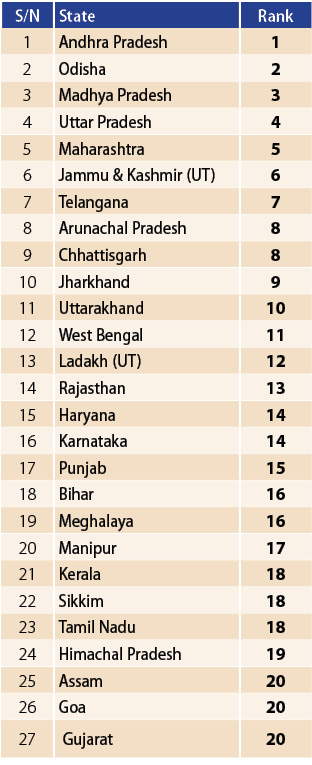
Table 2 – Police & Safety
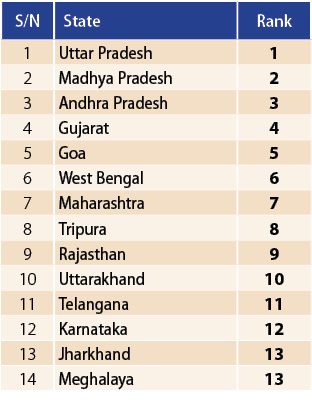
Table 3 – Municipal Governance
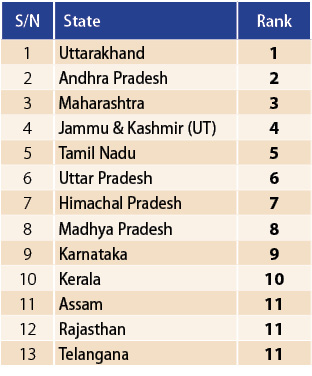
A detailed examination of category-wise performance reveals a decisive structural shift in how governance success is being achieved across Indian states. High-performing states are steadily moving away from siloed departmental excellence toward integrated delivery frameworks that place citizens, outcomes and responsiveness at the centre of administrative design. District Governance, Police & Safety and Municipal Governance together account for the largest share of recognitions, underscoring the growing importance of frontline administration, urban management and citizen safety as core pillars of modern governance.

This clustering of performance is not coincidental. Rapid urbanisation, demographic transitions, internal migration and rising citizen expectations have placed unprecedented pressure on districts, cities and law enforcement agencies. States that have anticipated these pressures and responded proactively by strengthening district leadership, modernising municipal institutions and investing in responsive policing are seeing tangible improvements in service delivery, administrative efficiency and public trust.
Table 4 – e-Governance
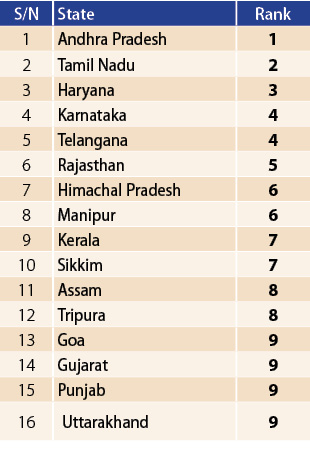
Table 5 – Rural Development
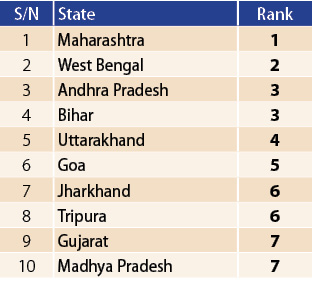
Table 6 – Power & Energy
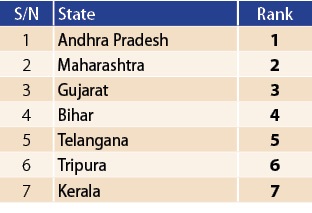
The strong showing of Police & Safety reflects an important evolution in the role of law enforcement. Policing is increasingly preventive, intelligence-led and community-oriented. Initiatives focused on cyber safety, disaster preparedness, Women & Child protection, mental health intervention, traffic management and large-event security demonstrate how public safety is being redefined as a comprehensive governance function rather than a narrow enforcement role. Technology-enabled command and control centres, data analytics and citizen-facing platforms are enabling police departments to anticipate risks, respond faster and build trust with communities.
Table 7 – Health
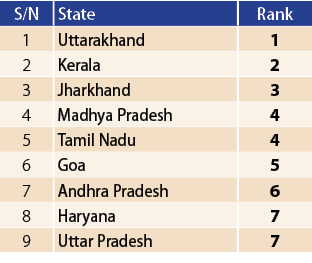
Table 8 – Education
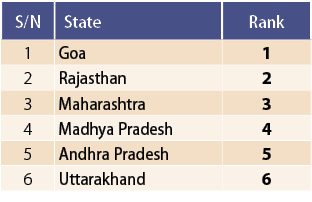
Similarly, the prominence of Municipal Governance highlights the growing centrality of urban local bodies in shaping everyday governance outcomes. Cities and towns are now the primary interface between citizens and the state for services such as waste management, water supply, sanitation, housing, mobility, public spaces and digital service access. States that have invested in municipal capacity building, financial management reforms and technology-enabled urban governance systems are setting benchmarks for responsiveness, sustainability and inclusivity. Urban governance performance has thus become a decisive determinant of overall state governance rankings.
Initiatives focused on cyber safety, disaster preparedness, women and child protection, mental health intervention, traffic management and large-event security demonstrate how public safety is being redefined as a comprehensive governance function
Table 9 – General Administration
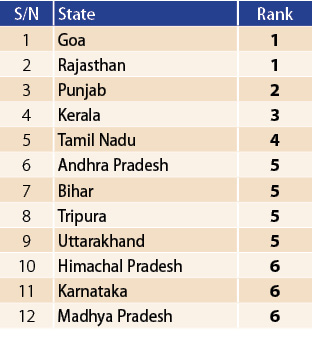
Table 10 – Agriculture
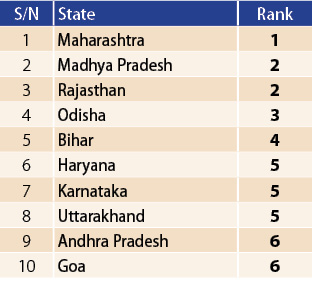
Alongside frontline administration, the second major performance cluster comprises e-Governance and Power & Energy. Together, these sectors illustrate how technology and infrastructure are functioning as powerful multipliers of governance impact. Digital platforms have evolved from pilot initiatives into core administrative systems, fundamentally altering how governments plan, implement, monitor and course-correct public programmes.
States that have invested in municipal capacity building, financial reforms and technology-enabled urban governance systems are setting benchmarks for responsiveness, sustainability and inclusivity
Across states, e-governance initiatives are streamlining procedures, reducing delays, limiting discretion and enhancing transparency. Digital certificates, online grievance redressal systems, integrated dashboards, real-time monitoring platforms and blockchain-enabled verification mechanisms are increasingly becoming standard tools of governance. These systems enable scale without sacrificing accountability, allowing governments to deliver services to large populations while maintaining traceability and auditability.
Importantly, digital governance is also reshaping internal administrative processes. Platforms such as eOffice, digital procurement systems and integrated financial management systems are improving workflow efficiency, reducing paperwork and enabling data-driven decision-making. States that have institutionalised these platforms are witnessing improvements in administrative speed, coordination and responsiveness.

Parallel to this digital transformation, the sustained prominence of Power & Energy highlights the recognition that reliable infrastructure is foundational to governance effectiveness. Energy reforms underpin industrial growth, agricultural productivity, urban services and household welfare. States leading in this sector are not only expanding renewable energy capacity but are also strengthening transmission networks, improving operational efficiency and ensuring last-mile connectivity. Clean energy initiatives, smart grids and decentralised power solutions are contributing to sustainability while enhancing resilience.
High-performing states are steadily moving away from siloed departmental excellence toward integrated delivery frameworks that place citizens, outcomes and responsiveness at the centre of administrative design
The convergence of digital governance and infrastructure reform signals a transition toward platform-based governance. States are moving beyond digitising individual services in isolation and are instead building interoperable systems that enable cross-departmental coordination, data sharing and integrated service delivery. This integrated approach is increasingly defining governance leadership in the 2025 assessment.
Health, Education, Rural Development, Agriculture, Transport and allied social sectors together account for a substantial share of recognitions, reflecting their central role in inclusive and sustainable growth. What distinguishes the 2025 assessment, however, is a clear shift in emphasis from programme scale and expenditure levels to effectiveness, quality and long-term impact.
In the health sector, states are strengthening governance through digital monitoring, district-level oversight and outcome tracking. Mental health governance initiatives, quality certification of health facilities, digital health registries and service locator platforms illustrate how access, quality and accountability are being improved simultaneously. The integration of health data systems is enabling better planning, resource allocation and service delivery, particularly for vulnerable populations.
Education reforms are similarly evolving. Beyond infrastructure expansion, states are focusing on teacher capacity building, digital learning platforms, assessment reforms and skill-oriented curricula. Initiatives aimed at coding, robotics, vocational education and digital evaluation systems reflect a growing emphasis on preparing students for future labour markets while improving governance efficiency within education systems.
Rural development programmes are increasingly integrating livelihoods, entrepreneurship, environmental sustainability and social inclusion. Initiatives supporting self-help groups, rural enterprises, sanitation and environmental management demonstrate how governance is addressing both income generation and quality of life. Agriculture reforms are shifting toward diversification, value-chain development, market access and climate resilience rather than production alone, reflecting a more holistic approach to farmer welfare.
Transport and connectivity initiatives are improving mobility while enabling regional integration and economic opportunity. Better roads, digital ticketing systems, logistics reforms and multimodal transport planning are strengthening connectivity and reducing transaction costs. Collectively, these social and economic sector initiatives reflect a maturing governance approach in which states are aligning interventions across sectors to deliver compounded and sustainable outcomes.
The reshuffling of state rankings between 2024 and 2025 offers valuable insight into the evolving dynamics of governance performance in India
The reshuffling of state rankings between 2024 and 2025 offers valuable insight into the evolving dynamics of governance performance in India. Andhra Pradesh’s rise to the top demonstrates the effectiveness of integrated, outcome-driven reform sustained over multiple years. Maharashtra’s marginal shift to second position reflects not decline, but the intensification of competition as other states accelerate reform and narrow performance gaps.
Uttarakhand’s sharp climb into the top three illustrates how focused investments in education, infrastructure and district capacity can generate rapid governance gains, even for smaller and geographically constrained states. Madhya Pradesh’s leap into the top tier highlights the impact of administrative restructuring, improved coordination and renewed emphasis on service delivery. Goa’s dramatic ascent underscores how efficient scale management, strong municipal governance and citizen-centric services can deliver outsized results within a relatively short timeframe.
These movements indicate that governance rankings are increasingly dynamic. States can no longer rely on legacy strengths or past performance. Continuous innovation, monitoring and institutional learning are now prerequisites for maintaining or improving rank. The competitive nature of the rankings is driving states to benchmark themselves more rigorously, adopt best practices and pursue evidence-backed reforms.

The state has done remarkably well across various indicators, primarily being Health, e-Governance and Municipal Governance, all on the backing of technology
Telangana has embarked on a visionary journey to establish itself as a leader in Artificial Intelligence with a promise for inclusive growth and development. The state has consistently been at...
Nagaland’s governance story is less about position and more about the possibility of acceleration
A smaller administrative canvas and continued benchmarking alignment define its state’s footprint
"American roads are good not because America..
State Rankings Highlights -: Odisha scaled to number..
Step 1: Call for Project Submission Call for..
In the run-up to the elections, the most..

Inclusion is the first magazine dedicated to exploring issues at the intersection of development agendas and digital, financial and social inclusion. The magazine makes complex policy analyses accessible for a diverse audience of policymakers, administrators, civil society and academicians. Grassroots-focused, outcome-oriented analysis is the cornerstone of the work done at Inclusion.