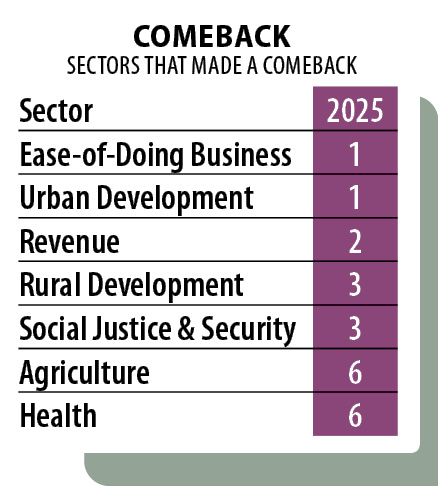
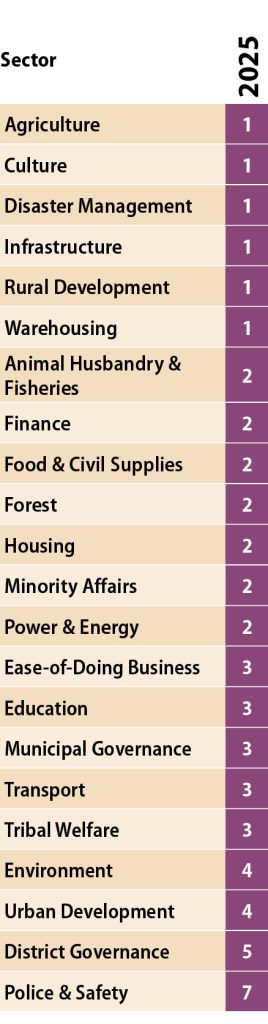
In a country where scale often complicates delivery, Maharashtra’s experience underscores a central lesson: sustained governance is built not on singular achievements, but on the cumulative effect of many well-executed actions, year after year
In a state as vast and varied as Maharashtra, governance is rarely about a single breakthrough. It is about consistency across districts, resilience across sectors and the ability to improve outcomes at scale. Maharashtra’s governance performance in 2025 reflects the outcomes of sustained administrative effort across sectors and levels of government.
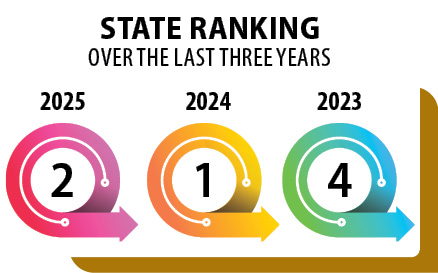
Ranked second nationally in the State of Governance assessment, the state demonstrates strong institutional capacity, depth of implementation and consistency in delivery. A total of 67 well-performing projects qualified for deeper study. What emerges is not just a statistical account of performance, but a narrative of institutional maturity, where systems deliver repeatedly, where local governments are no longer peripheral actors and where governance is increasingly measured by impact on the ground rather than intent on paper.
Where Scale Meets Stability
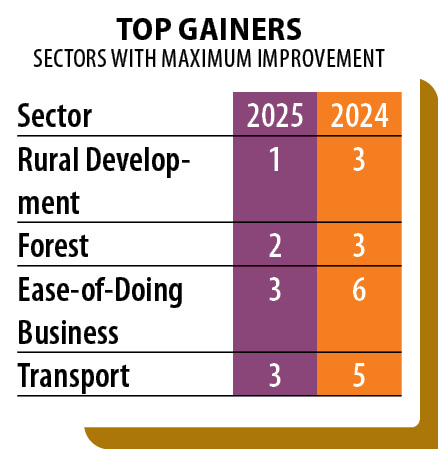
Agriculture remains one of Maharashtra’s most complex governance domains, shaped by climatic variability, market fluctuations and fragmented landholdings. Yet the state’s sustained performance in agriculture and rural development reflects an ecosystem approach, one that integrates productivity, supply chains, storage and farmer support mechanisms.
The governance story here is not defined by isolated interventions, but by coordination. Rural development initiatives have increasingly aligned with agricultural outcomes, ensuring that infrastructure, logistics and institutional support move in step with farm-level realities. Warehousing and post-harvest systems, for instance, have helped reduce distress sales and improved price realisation, reinforcing the idea that governance outcomes are strongest when departments work laterally rather than vertically.
This integration is visible across districts, where locally anchored projects often implemented at the block or taluka level have contributed to statewide outcomes. The fact that a large number of these initiatives originate from district administrations underscores how decentralised governance has become a driver rather than a constraint.
Governance here is less about individual programmes and more about ecosystems, where policies, projects and people interact predictably and productively. It is this systems-driven approach that enables Maharashtra to perform across sectors and absorb shocks
From Response to Readiness
Few sectors reveal administrative capability as starkly as disaster management. Maharashtra’s performance in this domain reflects a transition from reactive systems to anticipatory governance. Preparedness planning, early warning mechanisms, inter-agency coordination and district-level execution have become increasingly embedded in administrative routines.
This maturity is reflected in how urban local bodies, district collectors and line departments operate from shared playbooks. The result is a governance model that emphasises readiness and resilience rather than post-event correction.
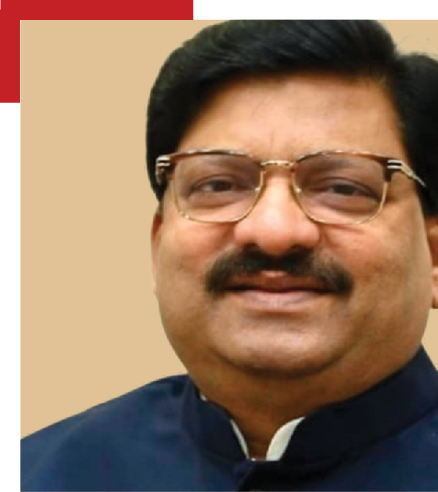
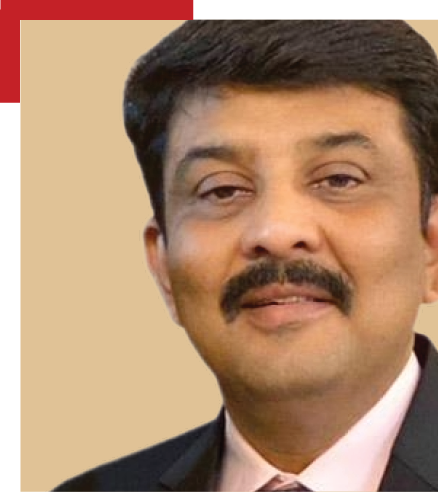
Our government is committed to social empowerment by ensuring proportional representation for weaker sections and advancing social equity. Reducing economic disparities remains a top priority. Guided by transparency, efficiency and empowerment, governance reflects honest intent and the use of advanced technologies, enabling fast, efficient delivery of public services for inclusive and sustainable development
Devendra Fadnavis Chief Minister, Maharashtra
Enablers of Economic Geography
Infrastructure governance in Maharashtra has long been about managing scale connecting urban centres, industrial corridors and rural hinterlands. What the report highlights is a renewed focus on execution quality and sectoral integration.
Hindu Hrudaysamrat Balasaheb Thackeray Samruddhi Mahamarg
Anilkumar Baliram Gaikwad
Vice Chairman & MD Maharashtra State Road Development Corporation Ltd
The Nagpur-Mumbai Super Expressway, formally known as the Hindu Hrudaysamrat Balasaheb Thackeray Maharashtra Samruddhi Mahamarg, is a 701-km engineering marvel designed to bridge the economic divide between Maharashtra’s urban heart and its rural hinterlands. Historically, the 16-18-hour journey between Nagpur and Mumbai stifled the growth of the Vidarbha and Marathwada regions. By creating a high-speed link to the Jawaharlal Nehru Port Trust (JNPT), the project was conceptualised to transform 24 districts from landlocked agrarian zones into vibrant industrial hubs, effectively curbing urban migration and unlocking the state’s full socio-economic potential.
To realise this vision, the MSRDC utilised an innovative land-pooling model and a streamlined Engineering, Procurement and Construction (EPC) framework. Funding was secured through a robust mix of state equity and bank loans, totaling approximately Rs 55,000 crore.
Apart from slashing travel time to just 7-8 hours, this has increased connectivity to revitalise agro-based industries and manufacturing, providing farmers with direct access to global markets via Mumbai.
Transport improvements, in particular, have emerged as a significant area of progress. Rather than viewing mobility as a standalone service, recent governance efforts have treated it as an economic enabler, supporting logistics, employment access and regional integration. This is complemented by advances in forest and environmental governance, where infrastructure expansion has been balanced with regulatory oversight and sustainability considerations.
The Maharashtra Report documents something enduring: the strengthening of systems. Across agriculture, infrastructure, disaster management, social sectors and local governance, the common thread is institutional depth
Sectors with Enhanced Focus – Maharshtra
Introduction of High-Value Crop – Chia
Buveneswari S S
District Magistrate and Collector Washim
The Agriculture Technology Management Agency (ATMA), Washim, under the Agriculture Department of Maharashtra, implemented an innovative initiative titled “Introduction of High Value Crop – Chia” to address persistent agrarian distress in one of the state’s aspirational and drought-prone districts. With only about 19 per cent of the area irrigated, Washim’s farmers largely depend on rainfed agriculture and traditional crops such as soybean, cotton, tur, chickpea and wheat. Recognising the urgent need for crop diversification and income enhancement, the district administration conceptualised chia as a non-traditional, climate-resilient, high-value crop with strong international market demand.
Technical guidance was provided by agricultural officers and experts from national research institutions. Given the absence of a local market in Maharashtra, the project proactively addressed marketing risks by facilitating bilateral agreements with private buyers and organic Farmer-Producer Companies.
SMART Project
The Hon Balasaheb Thackeray Agribusiness and Rural Transformation (SMART) Project is a flagship initiative of the Government of Maharashtra, implemented with financial assistance from the World Bank, to strengthen inclusive and competitive agricultural value chains across the state.
Launched in March 2020 with a total outlay of Rs 2,100 crore, the project focuses on empowering small and marginal farmers.
Covering 34 districts, over 15,000 villages and more than 5.5 lakh farmers, the project has approved 767 productive partnership sub-projects, facilitated market linkages across multiple crops, mobilised over Rs 300 crore in bank finance.
Infrastructure here is not just about building assets, but about aligning them with economic and social outcomes. That alignment is increasingly visible in how departments plan, fund and monitor projects across the state.
Quiet Strength of Consistency
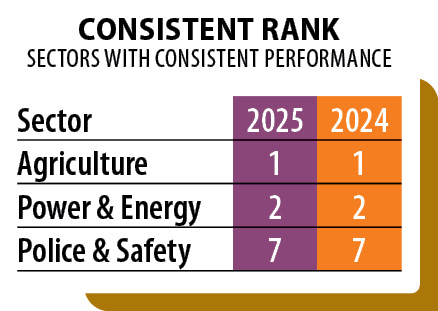
Some of the most important governance achievements are those that avoid volatility. Maharashtra’s consistent performance in Power & Energy reflects institutional steadiness where service delivery is predictable, regulatory systems function with continuity and large-scale operations remain resilient.
Some of the most important governance achievements are those that avoid volatility. Maharashtra’s consistent performance in Power & Energy reflects institutional steadiness where service delivery is predictable
Ghe Bharari – Mala Pankh Milale
Nilesh Gorakh Sagar
CEO Maharashtra State Rural Livelihood Mission
Ghe Bharari – Mala Pankh Milale is a television reality show designed to empower rural women entrepreneurs across Maharashtra. Implemented under the DAY-NRLM framework, the project leveraged mass media to drive social and economic transformation by providing rural women with a unique platform to showcase their enterprises, access funding and gain national visibility.
The initiative built on MSRLM’s extensive grassroots network and aimed to address persistent barriers, such as limited access to capital, markets, skills and mentorship, that restrict women’s entrepreneurial growth.
The programme followed a rigorous, multi-stage selection process covering all 34 districts of the state. From over 330 applicants, 240 women entrepreneurs were shortlisted and provided intensive training in business planning, financial management, communication and pitching skills. The final selection identified 39 entrepreneurs.
Mitigation Project
Satishkumar Khadke
Director Disaster Management Unit
Maharashtra is highly vulnerable to floods, landslides, cyclones and coastal erosion, with recurring disasters causing significant loss of life and assets. Tragic incidents such as the Irshalwadi landslide in 2023 and repeated monsoon-related floods highlighted the urgent need for large-scale, science-based mitigation interventions to protect vulnerable communities across the state.
Launched in November 2023 under the National Disaster Mitigation Fund, the project focuses on structural mitigation measures.
A comprehensive Landslide Management Plan of Maharashtra was developed following a statewide landslide susceptibility and risk assessment.
Based on district-level identification and rigorous technical appraisal, a total of 1,676 mitigation works worth `5,100 crore were approved.
In the Konkan coastal belt alone, 288 projects are strengthening disaster resilience for nearly 1.6 crore people, while 1,388 projects in the rest of Maharashtra are protecting an additional 11.5 crore citizens.
Similarly, policing and public safety governance has demonstrated durability across years. This is a sector where gains are often incremental rather than dramatic, yet deeply consequential for citizen trust. Investments in systems, training and coordination have created a governance environment where safety outcomes are not dependent on short-term interventions, but on stable institutional frameworks.
Consistency in these domains provides the backbone for progress elsewhere. Reliable power enables industry and services; effective policing underpins social stability. These are the quiet successes that rarely dominate headlines, yet define governance credibility.
Signs of Renewal
Governance trajectories are rarely linear. The report notes a renewed momentum in education and urban development, two sectors that often reflect broader administrative capacity.
In education, improved alignment between policy intent and implementation has begun to show results. Administrative focus on delivery mechanisms, school-level systems and district oversight has helped rebuild performance momentum. Urban development, meanwhile, reflects the growing role of municipal governance in managing complexity from service delivery to infrastructure maintenance and planning.
Online Question Paper Delivery and Digital Evaluation System
Pramod Ambadas Naik
Director Maharashtra State Board of Technical Education
Previously, the Board relied on manual, paper-based workflows that were vulnerable to leaks, logistical delays and inconsistencies across its 550+ centres.
To protect the academic integrity of over 4.5 lakh students, the Board transitioned to a fully ICT-enabled lifecycle, replacing physical transport and storage with encrypted digital delivery and centralised oversight.
The system’s architecture was meticulously developed throughout 2023, focusing on secure VPN connectivity and end-to-end encryption. In this model, question papers are authored and encrypted centrally, then delivered online to authorised centres only moments before the exam begins, utilising strict time controls and digital logs to prevent unauthorised access.
Following the exam, answer books are scanned at designated centres, shifting the burden of evaluation from manual checking to a sophisticated digital platform.
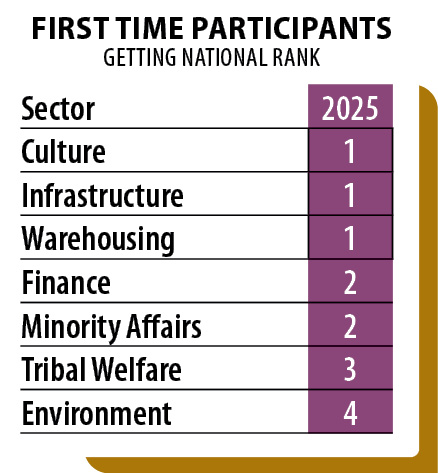
One of the most significant developments reflected in the report is the expansion of governance focus into newer sectors – Finance, Environment, Tribal Welfare, Minority Affairs and Culture
Mukhyamantri Saur Krushi Vahini Yojana – 2.0
Abha Shukla
Additional Chief Secretary (Energy) and MD MSEB Solar Agro Power Limited
Building on the PM-KUSUM framework, the project addresses the long-standing challenge of providing farmers with reliable, daytime electricity while alleviating the financial strain on the state’s distribution utility (MSEDCL). By shifting agricultural loads to decentralised solar power, the scheme reduces the state’s dependence on expensive thermal power and fossil fuel subsidies, fostering a more sustainable and economically resilient energy ecosystem.
A defining feature of MSKVY 2.0 is its innovative use of digital governance and land-use strategies. To overcome land-acquisition hurdles, a digital land bank portal was developed, enabling developers to identify viable plots within a 5-10 km radius of substations. The scheme adopted a cluster-based tendering model, issuing Letters of Award (LoAs) for over 15,400 MW of capacity by late-2025.
The results have been transformative, with over 6 lakh farmers now receiving eight hours of uninterrupted daytime power. By mobilising `80,000 crore in investment, 60% of which came from the private sector, the project has solarised 390 substations and created new income streams for farmers through land leasing.
What is notable is the volume and quality of initiatives emerging from municipal bodies. Cities and towns are no longer passive recipients of state policy; they are increasingly active governance units, designing and executing projects that respond to local needs while contributing to statewide outcomes.
What is notable is the volume and quality of initiatives emerging from municipal bodies. Cities and towns are no longer passive recipients of state policy; they are increasingly active governance units, designing and executing projects that respond to local needs while contributing to statewide outcomes
Expanding the Canvas
One of the most significant developments reflected in the report is the expansion of governance focus into newer sectors, finance, environment, tribal welfare, minority affairs and culture. These areas demand nuanced approaches, balancing administrative efficiency with social sensitivity.
UmedMart
Following a successful pilot in mid-2024 that provided hands-on training in digital fulfilment and product cataloguing, the platform by Maharashtra State Rural Livelihood Mission scaled statewide across all 36 districts by July 2024. This rapid expansion ensured that diverse products, from artisanal handicrafts to organic wellness items, reached a much broader audience.
The operational strength of UmedMart lies in its integrated digital value chain, which manages inventory, secure payments and logistics. In January 2025, the initiative evolved to include B2B trading, allowing SHGs to move beyond individual sales and engage directly with large-scale institutional buyers. Throughout 2025, the platform underwent significant upgrades in automation and data analytics to address challenges such as production consistency and packaging limitations.
MAHA-AMBIS
Launched in May 2022, the MAHA-AMBIS (Maharashtra Automated Multi-modal Biometric Identification System) initiative represents a monumental shift in Indian law enforcement. Spearheaded by the Crime Investigation Department, Maharashtra, it is the first state-level project in India to replace manual fingerprinting with a fully integrated, multi-modal biometric platform. By consolidating fingerprints, palm prints, facial recognition and iris scans into a unified digital database, the system addresses the critical limitations of traditional paper-based methods, which were historically prone to human error and low detection rates.
The case detection rate has surged from 3.92% to 13.28%, with over 1,000 cold cases and active investigations solved since its inception.
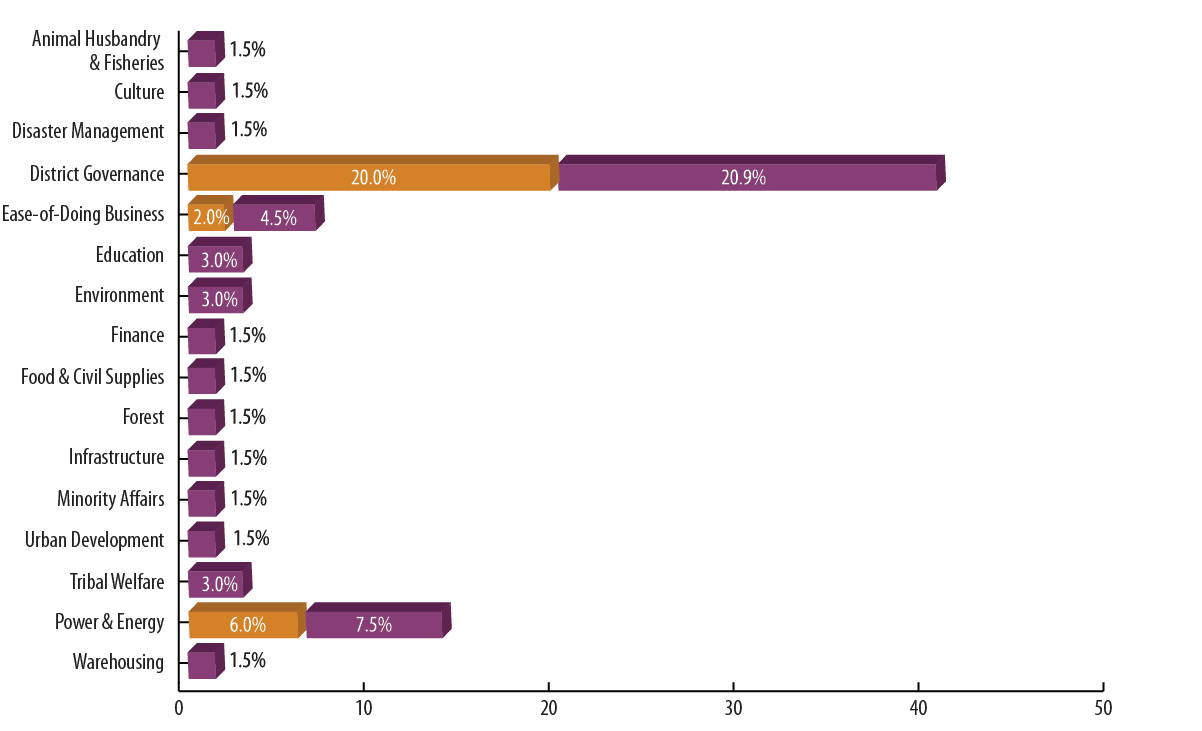
The most compelling story running through the report is the role of District and Municipal Governance. A substantial share of well-performing initiatives originates at these levels, reflecting administrative decentralisation in practice rather than just in principle
Maharashtra’s early performance in these domains suggests an administrative willingness to engage with complexity rather than defer it. Cultural governance, for instance, goes beyond preservation to encompass participation and access. Environmental governance reflects an evolving balance between growth and sustainability. Tribal welfare and minority affairs require governance models that are inclusive, contextual and responsive.
The emergence of structured initiatives in these sectors signals a broadening of the state’s governance imagination recognising that development outcomes are multi-dimensional and interconnected.
The ability of these local innovations to scale, replicate or inform state-level policy speaks of a governance culture that values experimentation and learning. This bottom-up momentum is crucial in a state as diverse as Maharashtra
25 MW Sakri-II Solar Power Project
MAHAGENCO’s 25 MW Sakri-II Solar Power Project is a key initiative contributing to Maharashtra’s clean energy vision. Recognising the urgent need for low-carbon energy infrastructure, the organisation planned and implemented a grid-connected photovoltaic plant at Shivajinagar in Sakri taluka, Dhule district. The project aimed to address dual challenges: reducing carbon emissions and making renewable energy accessible and affordable to citizens.
The plant spans 44.41 hectares and was developed with a total investment of Rs 187.54 crores. From conceptualisation to commissioning, the project involved a meticulously phased process including site selection, surveys, contract tendering and strict oversight of execution.
Ground Up Governance
Perhaps the most compelling story running through the report is the role of district and municipal governance. A substantial share of well-performing initiatives originates at these levels, reflecting administrative decentralisation in practice rather than just in principle.
Citizen Centric Digital Services
Mahendra P Kalyankar
CEO Slum Rehabiliation Authority (SRA), Brihanmumbai
The Slum Rehabilitation Authority (SRA) of Brihanmumbai has launched the “Citizen Centric Digital Services” initiative, a transformative project under the Housing and Urban Renewal category. Aimed at modernising the way slum communities interact with the government, this project seeks to replace aging, manual workflows with a streamlined, transparent digital ecosystem.
For years, accessing SRA services was a logistical hurdle for citizens. Manual processes created a “hurry up and wait” culture, characterised by long queues, inconsistent communication and a frustrating lack of transparency regarding rent payments and tenement transfers. To dismantle the barriers, the SRA implemented an integrated suite of digital tools. Key solutions included mobile apps, multilingual chatbots and the “Mitra Vaani” voice-accessible system, specifically designed to assist persons with disabilities.
Single Window System for Film Permissions
The Single Window System for Film Permissions in Maharashtra 2.0 represents a transformative shift from a fragmented, multi-departmental bureaucracy to a streamlined digital governance model. Prior to this reform, filmmakers were forced to navigate a daunting array of individual agencies, each with unique timelines and procedures, leading to substantial delays and administrative uncertainty. Recognising these hurdles, the Government of Maharashtra initiated the transformation in 2018, tasking the MFSCDC with creating a centralised framework.
District collectors, municipal commissioners and local teams are designing solutions that address immediate, ground-level challenges often within tight resource and time constraints. The ability of these local innovations to scale, replicate or inform state-level policy speaks to a governance culture that values experimentation and learning. This bottom-up momentum is crucial in a state as diverse as Maharashtra. It allows governance to remain context-sensitive while still aligned with broader policy objectives.
The state has done remarkably well across various indicators, primarily being Health, e-Governance and Municipal Governance, all on the backing of technology
Telangana has embarked on a visionary journey to establish itself as a leader in Artificial Intelligence with a promise for inclusive growth and development. The state has consistently been at...