Goa’s governance journey marks a quiet but decisive shift, as consistent delivery, sectoral depth and institutional maturity propel the state into the top five
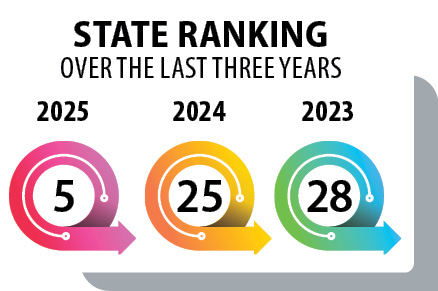
For years, Goa’s governance story has unfolded without drama. Unlike larger states that dominate national conversations by sheer scale, Goa’s progress has been quieter, incremental and often understated. In 2025, however, the numbers tell a story that is difficult to ignore. For the first time, Goa has entered the top five states nationally in the SKOCH State of Governance rankings, securing the #5 position and marking a decisive shift in its governance trajectory. A total of 46 well-performing projects qualified for deeper study this year. This rise is not the result of a single policy breakthrough or an exceptional year alone. Instead, it reflects a steady broadening of administrative capability across sectors, improved depth in programme design and a visible consolidation of performance in both traditional and newly evaluated areas of governance.
From Consistency to Comprehensiveness
What distinguishes Goa’s 2025 performance is not merely its overall rank, but the range of categories in which the state has demonstrated strength. The evaluation this year places Goa firmly among the country’s more administratively active states. Within this pool projects that were assessed signalled not just participation but measurable outcomes.
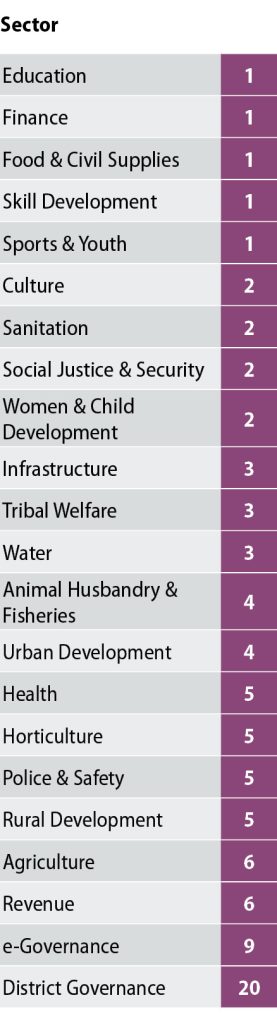
Historically, Goa has performed well in a handful of social sectors. In 2025, that performance has widened. The state emerged as a national leader in Education, Finance, Food & Civil Supplies, Skill Development and Sports & Youth, topping these categories outright. These are sectors that require sustained institutional capacity rather than one-off initiatives and Goa’s showing here reflects a maturing governance ecosystem.
Education, in particular, stands out. Not only does the state rank first nationally, it also submitted one of the largest volumes of projects in this category, many of which demonstrated outcome-oriented design.
For the first time, Goa ranks among India’s top five states, driven by strong performance across education, health, sanitation, finance and an impressive debut in several newly evaluated sectors
The emphasis has shifted from access alone to quality, retention and skill alignment, indicating a system that is learning from earlier phases of reform rather than constantly reinventing itself.
Significance of Recovery
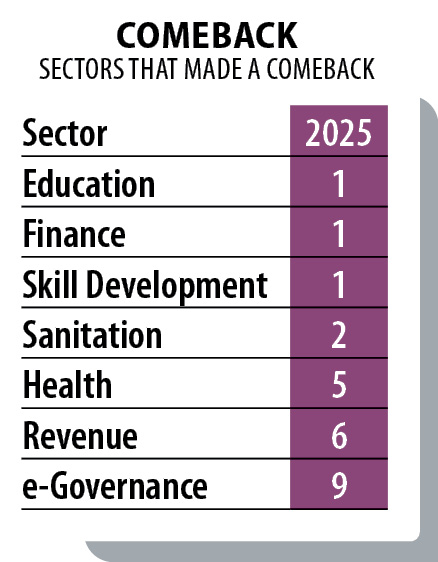
Equally telling is Goa’s recovery in several core service sectors. In Sanitation, Health, Revenue and e-Governance, the state re-entered the national top ten, with Sanitation ranked #2, Health #5 and Revenue #6 nationally. These are sectors where performance fluctuations are common due to fiscal pressures, demographic shifts or administrative churn.
The return to higher rankings suggests a degree of institutional resilience. In Health, for instance, Goa’s project submissions point to improvements in service delivery systems, patient tracking and facility-level management. Rather than isolated interventions, the evaluated projects indicate a strengthening of the underlying public health architecture. In Sanitation and Revenue, the recovery narrative is similar. Performance gains appear to be driven by better integration of digital systems with field-level execution a pattern increasingly visible across the state’s governance portfolio.
Immediate Impact
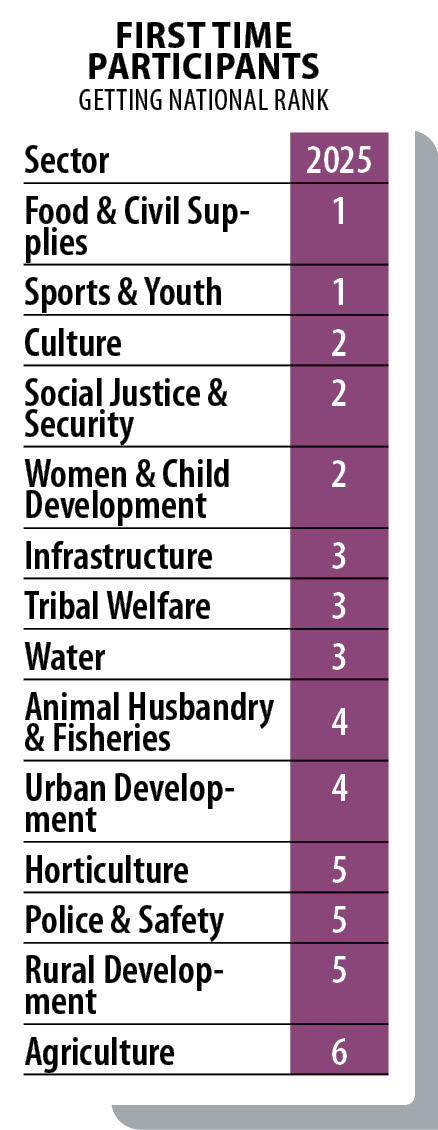
One of the most striking features of Goa’s 2025 report card is its performance in categories where it participated for the first time. New entrants often struggle initially, using the first year primarily as a learning exercise. Goa defied this pattern.
In Culture, Social Justice & Security and Women & Child Development, the state debuted at #2 nationally. In Infrastructure, Tribal Welfare and Water, it secured the #3 position, while entering the national top ten in Urban Development, Rural Development, Agriculture, Horticulture, Animal Husbandry & Fisheries and related sectors.
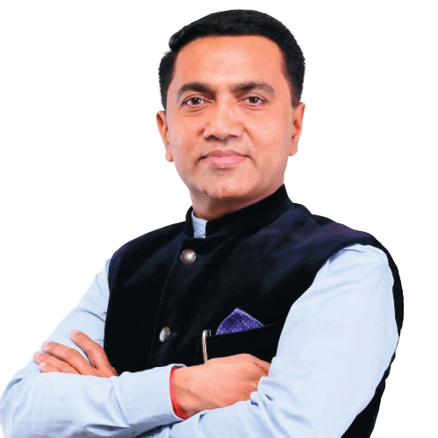
Goa is witnessing a transformative phase under the Double Engine Sarkar, driven by Atmanirbhar Bharat and Swayampurna Goa. Efforts are focused on empowering people, strengthening infrastructure and ensuring sustainable growth across sectors. The state is progressing towards a self-reliant, resilient and prosperous future, contributing meaningfully to the larger vision of a Viksit Bharat
Pramod Sawant Chief Minister, Goa
This immediate competitiveness points to an important governance characteristic: the presence of transferable administrative capacity. Departments entering evaluation for the first time were not starting from scratch; they were able to adapt existing programme management practices, monitoring systems and documentation standards to new domains with relative ease.
GOA CHIEF MINISTER’S KAUSHALYA PATH SCHEME
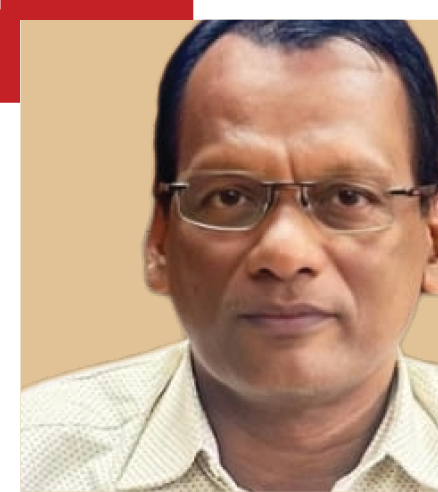
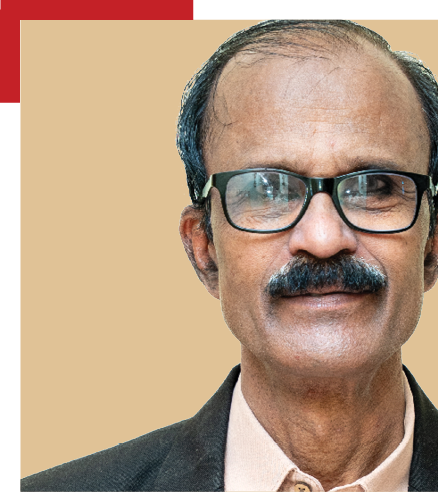
Sakharam Sadashiv Gaonkar
Director Directorate of Skill Development & Entrepreneurship
The Chief Minister’s Kaushalya Path Scheme (CMKPS), launched by the Government of Goa, is a strategic initiative designed to create a “job-ready” workforce.
The CMKPS utilises a robust digital portal to manage everything from registration to real-time placement tracking. The curriculum is broken into 150-300-hour modules, focusing on both technical domain expertise and “soft skills” like digital literacy and financial management.
A standout feature is the empanelment of industry-experienced trainers and third-party assessments, ensuring that certifications carry national weight and employer confidence. The scheme also integrates with existing subsidies like PMEGP to support those pursuing self-employment.
The pilot phase across 8 Government ITIs has successfully institutionalised a “paperless and faceless” administrative model. By establishing placement cells that partner with industry bodies like the CII and GCCI, the scheme has directly linked classroom learning to the local labour market.
In areas such as Women & Child Development and Social Justice & Security, project narratives reflected an emphasis on service reach, beneficiary identification and grievance redressal elements that benefit from cross-departmental learning and shared platforms.
From sectoral recoveries to first-time national rankings, Goa’s 2025 performance reflects steady execution, scalable projects and a governance model built on balance rather than spectacle
Improving Childhood Nutrition
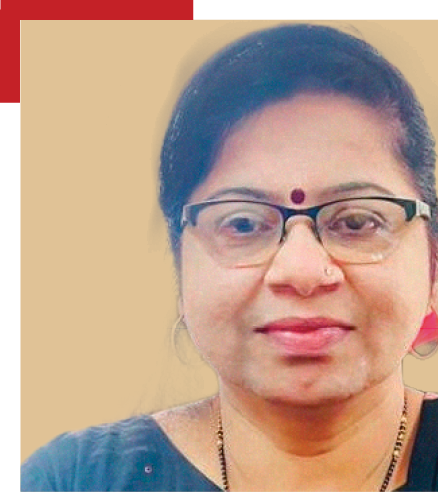
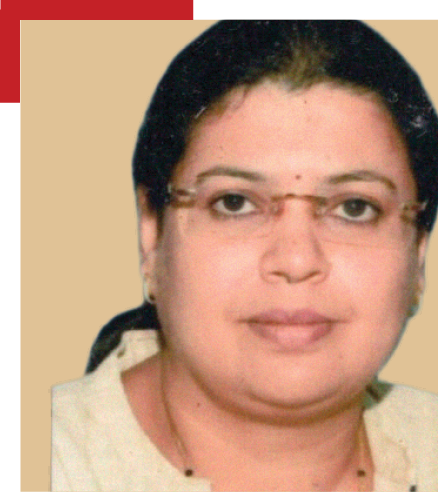
Jyoti Desai
Director Department of Women & Child Development
Launched to address stunting, wasting and underweight categories, the initiative leverages a decentralised network of 1,227 Anganwadi Centres. For children aged six months to three years, the programme provides micronutrient-fortified Take-Home Rations (THR), while older children receive freshly cooked, culturally resonant mid-day meals such as soyachunk pulao and pulses. This dual strategy ensures that nutritional support is both accessible and palatable for the state’s youngest citizens.
Mother and Child Committees actively co-design menus, ensuring high acceptance rates and local relevance. Beyond food distribution, the programme integrates daily physical stretching and intensive home visits by Anganwadi Workers (AWWs) to monitor Severe and Moderate Acute Malnutrition (SAM/MAM) cases. This holistic focus on both dietary intake and physical health is supported by a robust financial commitment, with the State Government voluntarily augmenting central funding to reach over 53,000 children across the region.
The results of this multi-layered intervention are remarkable, with wasting, underweight and stunting rates falling significantly below national averages, wasting now stands at a mere 0.69%.
Historically, Goa has performed well in a handful of social sectors. In 2025, that performance has widened. The state emerged as a national leader in Education, Finance, Food & Civil Supplies
Swayampurna Goa
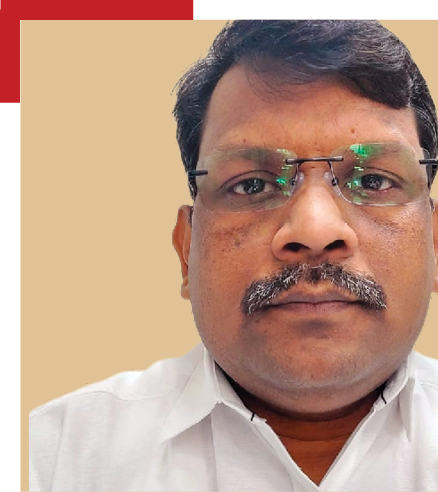
Vijay B Saxena
Director Directorate of Planning, Statistics and Evaluation
Born from the socio-economic disruptions of the COVID-19 pandemic, which exposed the state’s overdependence on neighboring regions and tourism, the project aims to empower local communities through decentralised governance.
By integrating planning with implementation, the pdrogramme ensures the last-mile delivery of government services to every corner of the state.
The project’s hallmark is the appointment of Swayampurna Mitras, Gazetted Officers who visit Village Panchayats and Municipalities weekly to identify beneficiaries and resolve service bottlenecks. This effort was bolstered by a unique partnership with 25 academic institutions, whose faculty conducted field surveys to collect baseline data.
Significant impact has been achieved through the implementation of over 200 schemes, ranging from MSME promotion to the integration of AI and robotics in school curricula. The initiative has prioritised social inclusion, notably distributing over `3.14 crore in assistive equipment to persons with disabilities and conducting awareness drives that reached 24,000 citizens by early 2025. Public engagement remains central, with the Chief Minister participating in numerous webinars to address grievances and enhance transparency in real-time.
Projects as the Unit of Governance
While rankings provide the headline, it is the projects that offer insight into how governance is being practiced on the ground. Across sectors, Goa’s performance reveals a preference for focused, problem-specific interventions rather than sprawling umbrella schemes.
Unlike states that rise sharply on the back of one dominant sector, Goa’s ascent into the top five is the result of multi-sectoral balance. Education and Finance provide stability, Health and Sanitation show recovery, while first-time categories demonstrate adaptability
The Radical Content Analyser
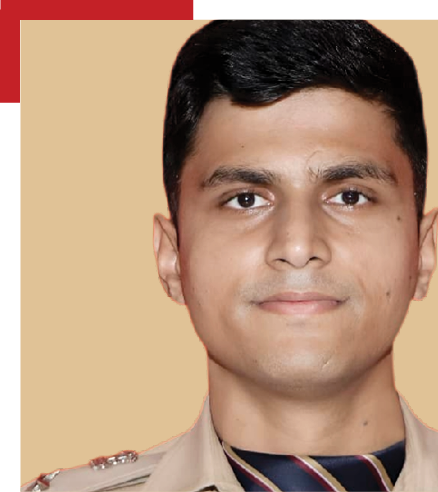
Rahul Gupta
Superintendent of Police North Goa Police
In an era where extremist narratives can proliferate instantly, the Goa Police faced a significant hurdle: manual monitoring of online content was slow, subjective and lacked the scalability required for modern law enforcement. Without an AI-enabled framework, identifying digital hate speech depended on third-party reports, leading to delays that allowed harmful content to spread unchecked.
Developed in collaboration with BITS Pilani Goa, the Radical Content Analyser (RCA) emerged from a 2024 hackathon prototype into a sophisticated browser-based platform. By integrating Google Speech-to-Text and open-source Large Language Models (LLMs), RCA processes content in English, Hindi and Urdu. It provides officers with “explainable” outputs, such as risk heatmaps and threat scores, ensuring that digital monitoring is backed by data rather than intuition.
The implementation of RCA has been transformative, reducing analysis time from several hours to under two minutes per video.
In Skill Development, projects linked training programmes with local employment opportunities, particularly in tourism, hospitality and emerging service sectors. In Food & Civil Supplies, initiatives emphasised last-mile delivery, transparency in allocation and system reliability. Sports & Youth projects demonstrated a mix of infrastructure development and talent identification, reflecting a long-term approach rather than event-driven activity. Importantly, departments such as Education, Health and Police & Safety performed well. This suggests internal competition and confidence.
Decade in Perspective
Seen against the cumulative performance from 2014 to 2025, Goa’s 2025 ranking represents a consolidation phase rather than a sudden leap. Over the years, the state has oscillated between strong sectoral performances and uneven breadth. The current ranking signals a moment where depth and spread have aligned.
Coding and Robotics Education in Schools
The Coding and Robotics Education in Schools (CARES) scheme, represents a paradigm shift in preparing students for a digital-first economy. Recognising the limitations of traditional ICT education, the Directorate of Technical Education established a multidimensional framework to embed computational thinking, design thinking and robotics into the standard curriculum.
The scheme’s success lies in its innovative “hub-and-spoke” delivery model, which utilises over 200 lead schools to support more than 440 cluster schools. To ensure high-quality instruction, the government recruited “Teach for Goa” Fellows, specialised engineering and MCA graduates, who provide uniform training and mentoring across the state.
This human capital is supported by a massive infrastructure overhaul, where 442 schools were equipped with advanced ICT labs featuring robotic kits, 3D printers and digital fabrication tools. With over 50,000 hours dedicated to teacher capacity building, the initiative has fostered a sustainable culture of innovation.
Unlike states that rise sharply on the back of one dominant sector, Goa’s ascent into the top five is the result of multi-sectoral balance. Education and Finance provide stability, Health and Sanitation show recovery, while first-time categories demonstrate adaptability.
New India Literacy Programme
Meghana Shetgaonkar
Director Goa State Council of Educational Research & Training
The New India Literacy Programme (NILP), implemented under the ULLAS – Nav Bharat Saksharta Karyakram in Goa, represents a localised triumph of the National Education Policy 2020.
Faced with an absence of existing databases, the Goa State Council of Educational Research and Training (GSCERT) initiated a massive grassroots effort in June 2023. By mobilising panchayats, municipal bodies and student volunteers, the state successfully mapped 6,299 non-literate individuals aged 15 and above.
This decentralised identification model was crucial for reaching remote populations, particularly the elderly, ensuring that the drive for foundational literacy and numeracy left no one behind.
Despite significant hurdles, such as 65% of the target demographic being over 60 years old with mobility issues, the programme achieved a staggering 99.72% effective literacy rate by May 2025, significantly exceeding the national benchmark of 95%. This success was powered by seamless interdepartmental coordination and volunteer dedication, proving that local ownership is the best antidote to logistical bottlenecks.
This combination reduces volatility and increases the likelihood of sustained performance.
Governance Without Spectacle
Perhaps the most notable aspect of Goa’s governance story in 2025 is its lack of spectacle. There are no dramatic overhauls, no singular flagship dominating the narrative. Instead, the picture that emerges is one of administrative normalcy done well, systems that function, projects that scale and departments that learn.
Khelo Goa Centres
Arvind Bhanudas Khutkar
Director Directorate of Sports and Youth Affairs
The Khelo Goa Centres initiative, spearheaded by Chief Minister Pramod Sawant, was designed to unlock rural sports talent in talukas like Sattari, Bicholim and Ponda. Recognising that logistical barriers and parental hesitation often hindered participation in residential pdrogrammes, the government adopted a strategic non-residential day-boarding model. Implementation involved a rigorous selection process, where 120 athletes were chosen from over 400 aspirants across Kabaddi, Archery and Volleyball. Monitoring was multi-layered, utilising fortnightly fitness tests and monthly skill assessments to track progress. This holistic approach fostered a competitive temperament.
As a result, in Archery, 21 of the 30 selected athletes advanced to national-level competitions from Goa.
The top-five ranking is not an endpoint but a reflection of accumulated efforts across departments, years and policy cycles.
The governance rankings are reflections of delivery systems that work. In 2025, Madhya Pradesh’s message is clear: reform has moved from intent to institutional habit
In the mountains, you don’t sprint to the summit. You climb steadily, adjusting to the terrain, measuring every step. Uttarakhand’s rise to #3 nationally in the SKOCH State of Governance...
In a country where scale often complicates delivery, Maharashtra’s experience underscores a central lesson: sustained governance is built not on singular achievements, but on the cumulative effect of many well-executed...
For the third time, Andhra Pradesh leads the nation in governance outcomes. It affirms a model defined by scale, sustained impact and institutional strength where performance is consistent, improvement continuous...