Jyotiben Ramobai (50) is a contented person. She has a house of her own, a strategic vending cubicle in an Ahmedabad Municipal Corporation (AMC) fish market under Chamunda bridge and well-settled three sons and two daughters. Besides, she also has her own and her family’s health insured.
The fish market earlier operated from some unauthorised pavements in Chamanpura and was fully dependent on middlemen or what you call commission agents.
But this was not the scene till six months back. She would buy her stock of fish from three middlemen at very high margins and sell it from an unauthorised pavement in Chamanpura. She would face constant harassment at the hands of middlemen, municipal workers and policemen. Though she had inherited the pavement space from her mother-in-law 35 years back, this did not protect her from the oppressive government machinery.
Her fate took a turn for better when she joined Shri Matsyagandha Women’s SEWA Co-operative Limited a Cooperative aligned to SEWA. SEWA fought for nine years to get them designated places for selling their stuff with AMC having allocated 56 cubicles under the Chamunda bridge to fish vendors six months back. Jyotiben and other Cooperative members now buy from SEWA which delivers about 500 kilogram of fish from Saurashtra everyday in off season and 1,000 kilogram otherwise to their doorstep. And this is sold at lowest margins.
Jyotiben has not looked back since then. “Earlier I would buy from the middlemen. Since their profit margins were very high, I would earn only Rs 50 per day. But since SEWA intervened, I earn anything between Rs 200 and Rs 300. Besides, I also save the money I would spend on travelling to the middlemen,” she says proudly displaying Rau, Silver and other variety of fish, placed in large bowls in front of her.
Unlike the pavement space which would have been unauthorised forever, the cubicles under the flyover would belong to vendors’ provided each one of them pays Rs 500 per month for 18 months. Apart from this they would also be entitled to a health insurance after paying just Rs 50 per month. “If I or a member of my family fall ill and get hospitalised, SEWA pays up to Rs 2,000 for our hospitalisation. Only condition is that these hospitals should be empanelled with SEWA,” Jyotiben claims weighing piece of a fish for a customer.
Jyotiben has not only paid off loan for her house, she has also bought a separate flat for her son. She proudly informs that she saves Rs 1,500 per month in SEWA bank and her youngest grandson goes to an English school now. The Fish Cooperative is 300-member strong and growing.
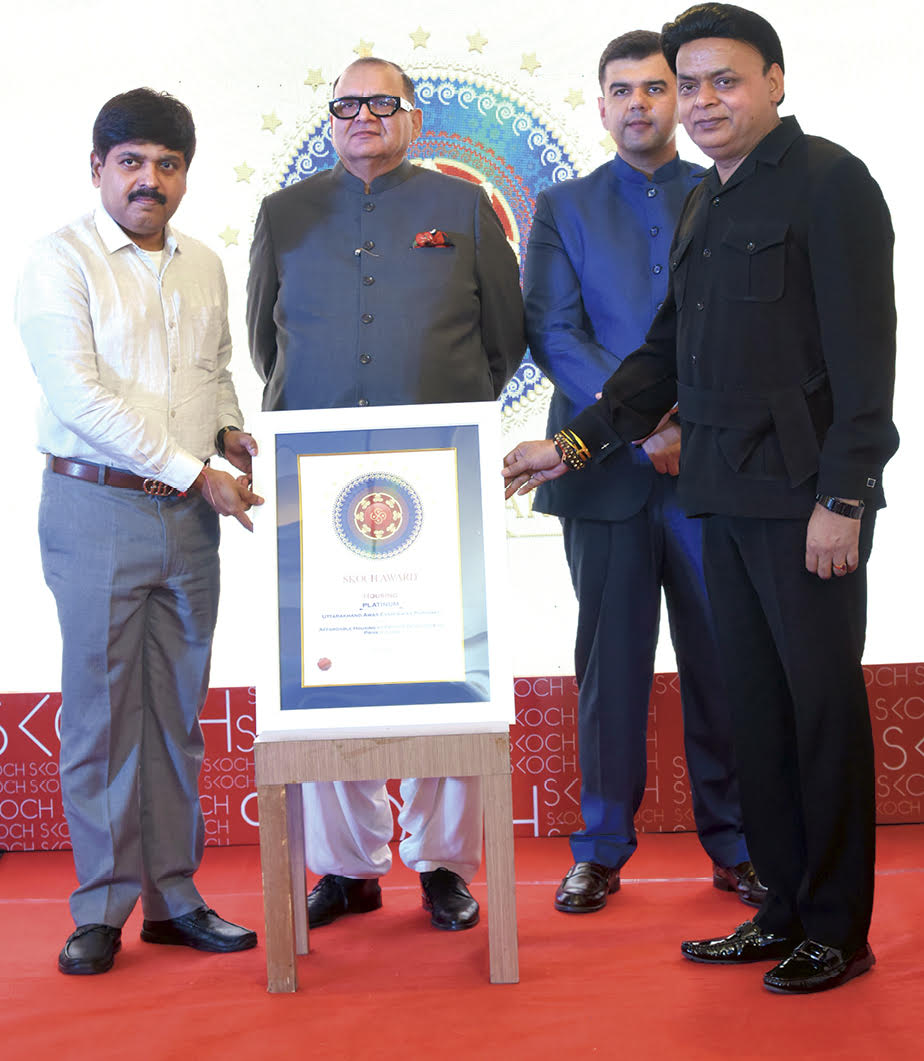
The Affordable Housing project emerged as a path-breaking response to Uttarakhand’s acute land scarcity and the growing demand for homes among the economically weaker sections (EWS). Implemented under the Pradhan...
The revamping of the ICAAP framework and the launch of a Risk Appetite Dashboard further strengthen this structure. These tools provide consolidated views of credit, liquidity and market risk indicators,...
That capital flows into SHG-led Enterprises & Urban Job Creation, where 31,637 new livelihood units take shape, 9,183 members gain “walk-to-work” placements and 143,173 entrepreneurs formalise via MSME registration. This...
When Muthoot Microfin began its journey as an NBFC-MFI in 2015, the goal was simple yet bold: bring credit to the women who had long been excluded from India’s formal...
In 2020, JSCB faced an alarming situation — the Gross Non-Performing Asset (GNPA) ratio stood at an unsustainable 51.63%, while the Net NPA (NNPA) was 18.48%. Recognising the existential threat,...
"American roads are good not because America..
State Rankings Highlights -: Odisha scaled to number..
Step 1: Call for Project Submission Call for..
In the run-up to the elections, the most..

Inclusion is the first magazine dedicated to exploring issues at the intersection of development agendas and digital, financial and social inclusion. The magazine makes complex policy analyses accessible for a diverse audience of policymakers, administrators, civil society and academicians. Grassroots-focused, outcome-oriented analysis is the cornerstone of the work done at Inclusion.