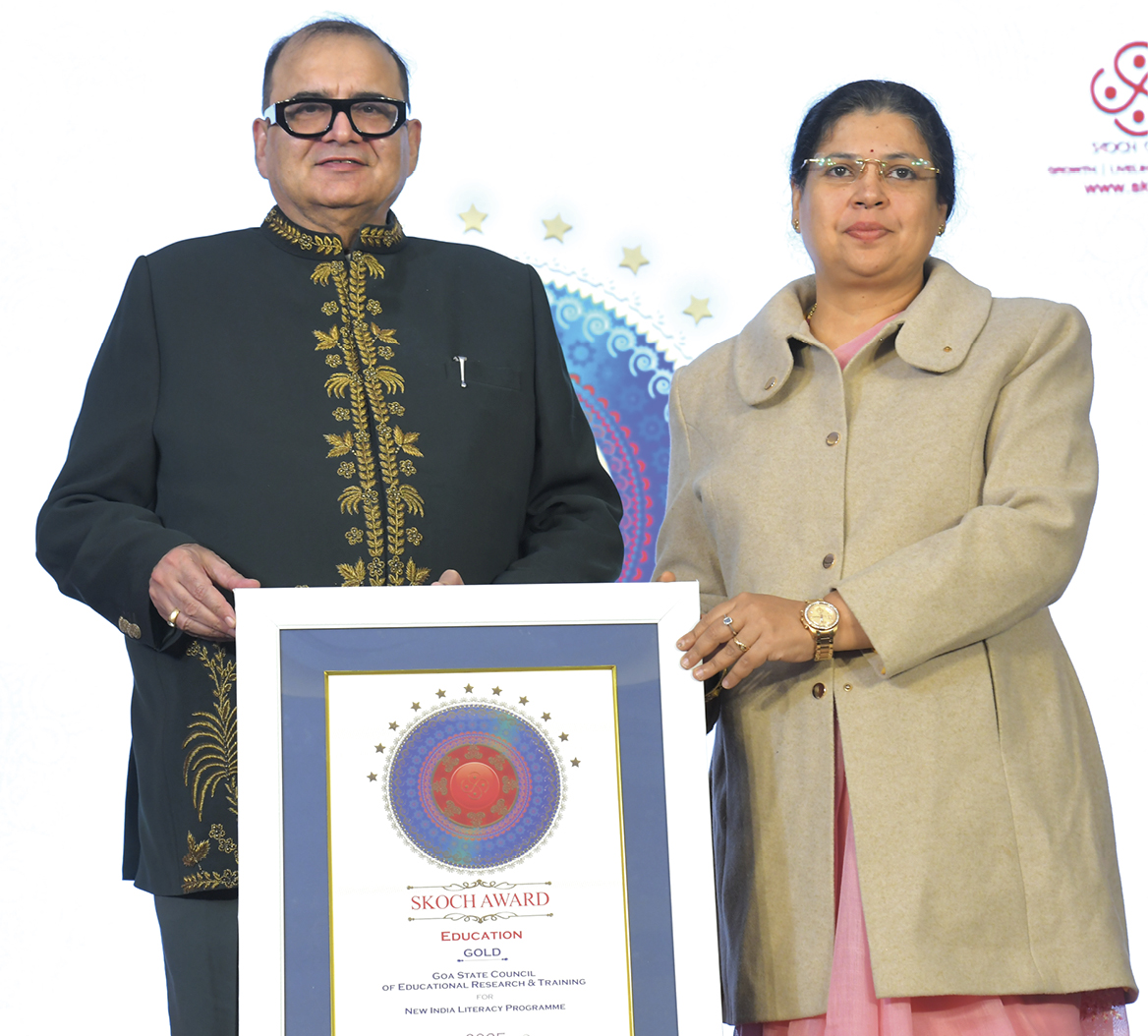
On 30 May 2025, Goa marked its Statehood Day with an announcement that carried neither spectacle nor slogan. There were no banners declaring victory, no dramatic countdowns. Just a statement, quietly delivered: Goa had become a fully literate state. Behind that sentence lay an effort that did not depend on large budgets, fresh surveys or sweeping institutional reforms but on people, persistence and an unusual rediscovery of civic duty.
At 99.72 percent, Goa crossed the literacy benchmark set by the Government of India, becoming only the second state in the country to do so. What distinguishes this milestone is not the figure itself, but the path taken to reach it through a voluntary programme, without additional financial provisioning and in the absence of a ready database of non literate adults.
The New India Literacy Programme (NILP), implemented as ULLAS, Nav Bharat Saksharta Karyakram, focused on adults aged 15 and above who had missed formal schooling. In Goa, this translated into a deceptively small number: 6,299 non literate adults spread across 191 Panchayats, 13 Municipalities and one Municipal Corporation.
Yet this number concealed a deeper complexity. Many of those identified were elderly. Some faced health and mobility constraints; others carried social hesitation or the belief that learning late in life held little value. Literacy, in this context, was not merely about alphabets and numbers, it was about confidence, dignity and the courage to re-enter a public system after decades of absence.
Unlike many large-scale programmes, NILP in Goa began without the comfort of a dedicated survey or pre existing dataset. Instead of stalling, the state responded by expanding ownership.
Literacy was no longer treated as the responsibility of the education department alone. Eight key directorates including Education, Higher Education, Panchayats, Municipal Administration, Social Welfare, Planning & Statistics and Women & Child Development were brought into a coordinated framework. Regular review meetings and follow-up instructions ensured that literacy remained on the administrative agenda across departments and districts.
This “whole-of-government” approach transformed a policy mandate into a governance mission.
The real energy of the programme, however, came from its people. Resource Adult Trainee Coordinators were deployed across all 12 talukas, supported by retired teachers, primary school educators, block and cluster resource persons, NSS units and college students.
These volunteers taught in community spaces, adjusted timings around work and family obligations and returned patiently when learners hesitated or dropped out. The programme did not rely on authority, but on proximity on familiar faces teaching familiar people, often in neighbourhoods where formal classrooms had never existed.
What sustained this effort was kartavyabodh, a sense of duty that turned literacy from a scheme into a shared social commitment.
Instructional material was developed in Konkani, Marathi, Hindi and English, reflecting Goa’s linguistic diversity. More importantly, the content was rooted in everyday experience. Lessons connected reading and numeracy to financial transactions, digital tools and daily decision-making.
For many learners, literacy was not an abstract goal but an immediate tool to read a message, understand form or manage money independently. This practical orientation helped overcome fear and built confidence, especially among older learners.
Sustaining motivation required visibility. Literacy Weeks, rallies, exhibitions and ULLAS Melas transformed adult education into a public celebration. Neo-literates were recognised openly, their achievements honoured rather than hidden.
The Foundational Literacy and Numeracy Assessment Test (FLNAT) was conducted in three phases, offering learners multiple opportunities to succeed. Schools registered under UDISE served as test centres, with trained teacher invigilators ensuring credibility.
Every learner who enrolled and persisted eventually cleared the assessment. The resulting 100 percent success rate among test-takers reflected not diluted standards, but sustained mentoring and support over time.
Of the 6,299 identified non-literate adults, many particularly those above 60, chose not to participate due to age-related constraints. Yet every individual who stepped forward was supported through to certification.
Goa’s literacy achievement offers no dramatic technological leap or sweeping reform. Its uniqueness lies in something quieter: a governance model that trusted communities, mobilised volunteers and treated learning as a lifelong right.
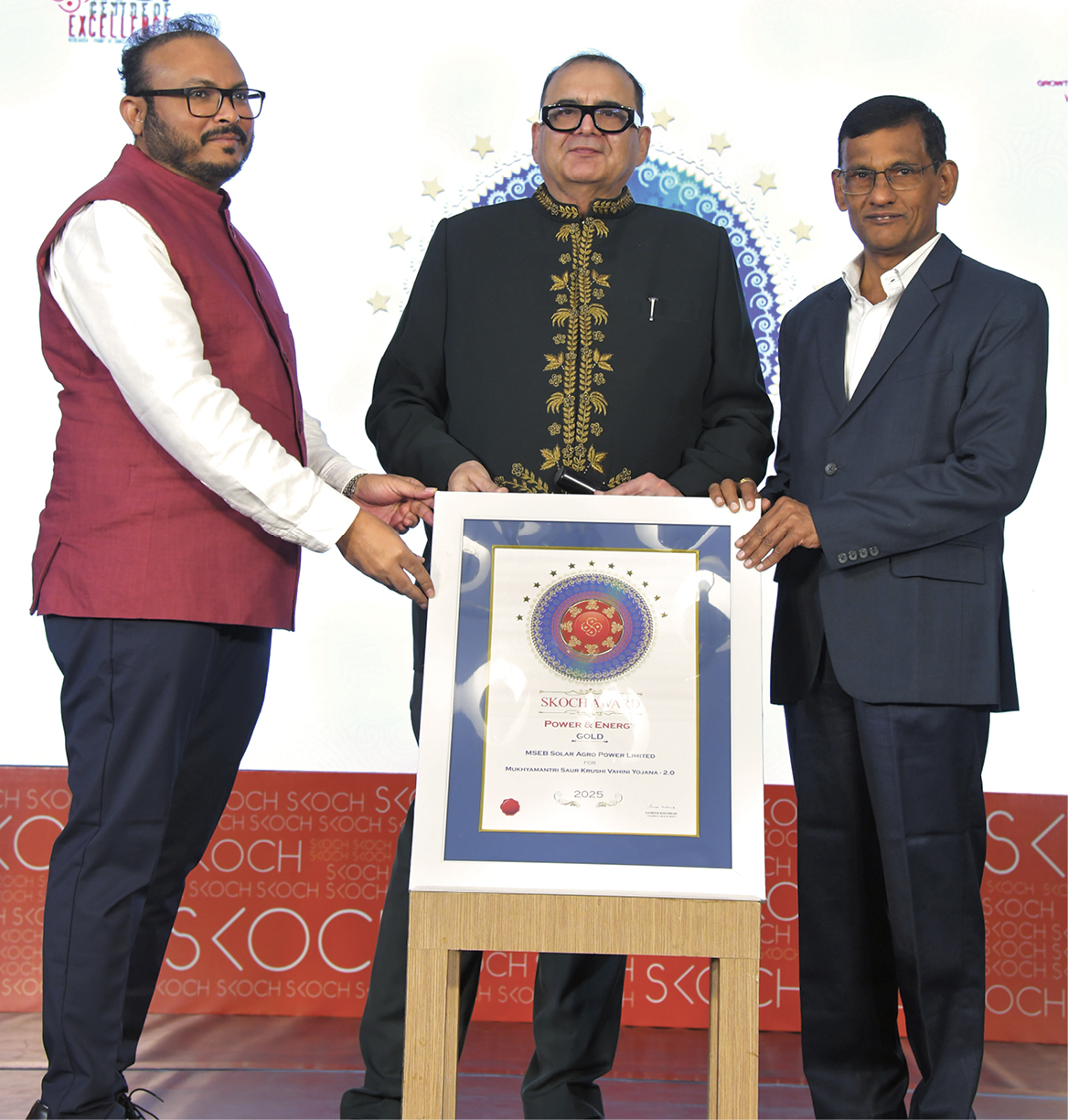
Commissioned on 30 April 2024, the project has an annual generation potential of 58.1 million units with a capacity utilisation factor of 26.53 percent.
Solid waste management was among the most pressing issues. Years of unsegregated garbage posed health and environmental risks.
Affordable Housing by Private Developers on Private Land Uttarakhand Awas Evam Vikas Parishady
eASE App: Transforming Urban Governance Uttarakhand Housing and Urban Development Authority
"American roads are good not because America..
State Rankings Highlights -: Odisha scaled to number..
In the run-up to the elections, the most..
Step 1: Call for Project Submission Call for..

Inclusion is the first magazine dedicated to exploring issues at the intersection of development agendas and digital, financial and social inclusion. The magazine makes complex policy analyses accessible for a diverse audience of policymakers, administrators, civil society and academicians. Grassroots-focused, outcome-oriented analysis is the cornerstone of the work done at Inclusion.