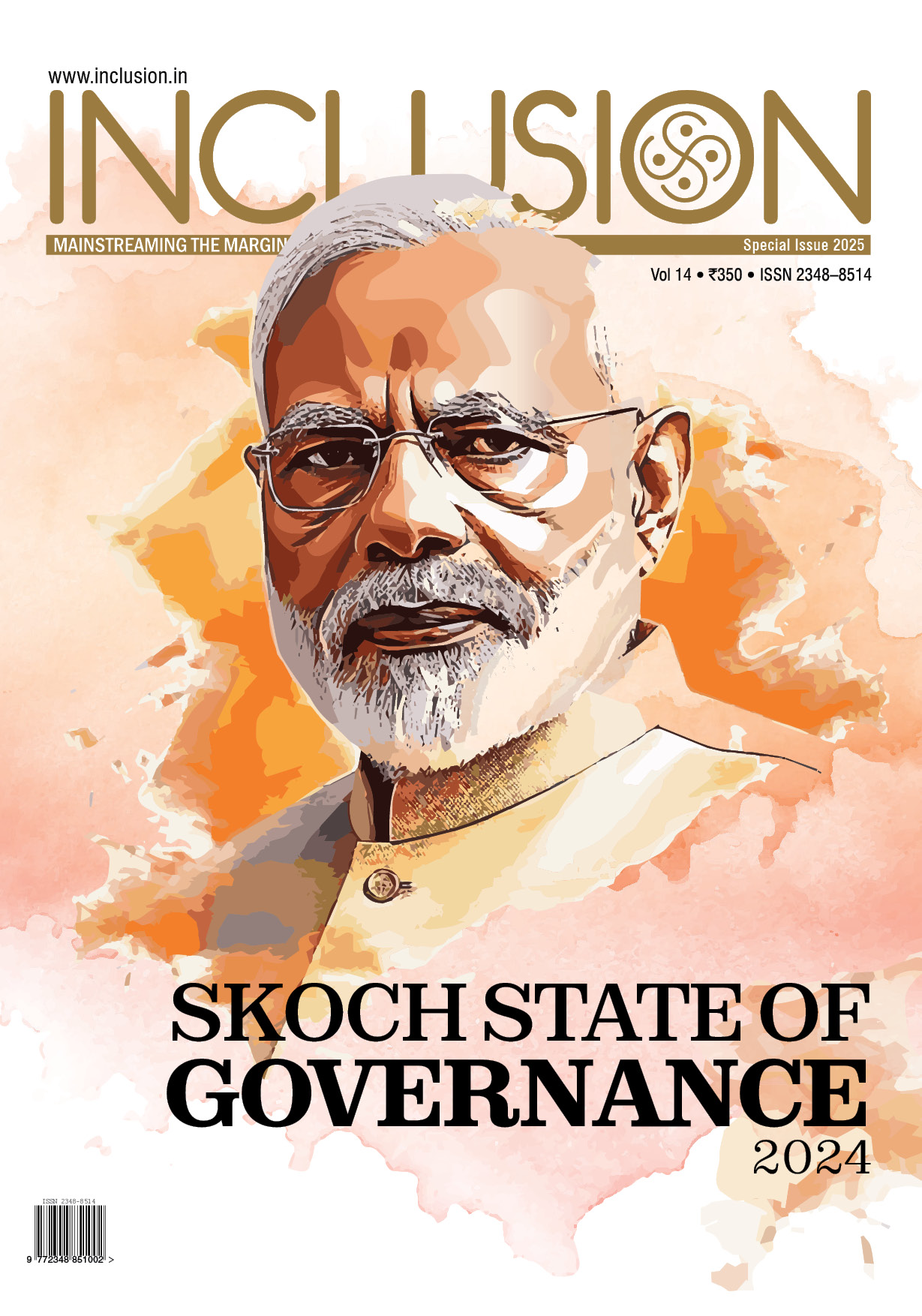
India’s ambition of becoming a fully developed, high income nation by 2047 will require a decisive shift from headline-driven reform to deep structural change in how the economy mobilises savings, allocates capital and drives productivity. According to SKOCH Report – Macro Economic Imperatives for Viksit Bharat (India 2047), India cannot reach a $20-35 trillion GDP through investment expansion alone unless capital efficiency improves sharply and domestic savings rise on a sustained basis.
The report estimates that India must sustain annual growth of 7.5-10 percent for over two decades to meet its 2047 targets. Even the widely cited $30 trillion scenario would require investment rates close to 35-40 percent of GDP. At present, India’s domestic savings rate remains near 30 percent, creating a structural financing gap that cannot be bridged safely through external borrowing.
“India’s growth constraint is increasingly a savings and efficiency problem, not a reform deficit,” said Sameer Kochhar, Chairman, SKOCH Group. “Without a durable expansion of domestic savings, especially long-term savings, the arithmetic of high growth becomes unsustainable.” Beyond savings, the study stresses the urgency of improving capital efficiency and financial architecture. It proposes Tokenised Rupee Debt Instruments (TRDI) digitally tokenised, fully government-backed securities, as a regulated innovation to reduce settlement delays, improve collateral mobility and deepen India’s sovereign bond market. Drawing on global evidence, the report argues that such instruments could lower working-capital frictions, reduce liquidity premia and improve capital allocation across the economy.
The report identifies pensions and insurance as the most critical missing link in India’s growth architecture. With household financial savings having declined to around 5 percent of GDP, the study argues that well-developed pension and insurance systems are indispensable for pooling small household savings into large reservoirs of patient, long duration capital. Such capital is uniquely suited to financing infrastructure, urban services, human capital and productivity enhancing investments that underpin sustained per-capita income growth.
“Financial innovation must serve macroeconomic efficiency, not speculation,” said Rohan Kochhar, Founder, SKOCH Law Offices. “Pensions, insurance and tokenised public debt together can form a stable backbone for long-term growth without increasing systemic risk.”

Education and welfare are inseparable in Andhra Pradesh. For millions of students from Scheduled Castes, Scheduled Tribes, Backward Classes, minority communities, economically weaker sections and differently abled backgrounds, access to...
"American roads are good not because America..
State Rankings Highlights -: Odisha scaled to number..
In the run-up to the elections, the most..
Step 1: Call for Project Submission Call for..

Inclusion is the first magazine dedicated to exploring issues at the intersection of development agendas and digital, financial and social inclusion. The magazine makes complex policy analyses accessible for a diverse audience of policymakers, administrators, civil society and academicians. Grassroots-focused, outcome-oriented analysis is the cornerstone of the work done at Inclusion.