
With Tanya Malhotra, Research Assistant (Legal), RIS & Alisha Goswami, Consultant (Economics), RIS
Regulatory frameworks rarely make headlines, yet they increasingly determine whether nations succeed or fall behind. The vision of Viksit Bharat represents one of India’s most important national aspirations. By 2047, India aims to become a developed economy of nearly $30 trillion1, a goal that will require sustaining an annual growth rate of around 8%2. In the near term, India has also set an ambitious target of achieving $2 trillion in exports3. With exports standing at around $860 billion in 2025-264, expanding India’s export base and strengthening its global competitiveness will be essential to achieving this objective.
The Government of India has already taken significant steps in this direction through investments in infrastructure, talent development, innovation, technology adoption, industrial growth and ease of doing business. However, the quality, sustainability and competitiveness of this growth will ultimately depend on the quality of governance and the effectiveness of our regulatory systems. The real challenge, therefore, is not the quantity of regulations, but the capability of the regulatory framework to respond to changing economic realities.
As India moves towards the goal of Viksit Bharat by 2047, stronger regulatory capability will be indispensable for navigating the uncertainties of a rapidly evolving global economic order while ensuring resilient and inclusive development. In this context, the regulatory framework must be viewed through two dimensions: the international dimension, which shapes the evolving dynamics of the global order and the domestic dimension, which strengthens institutions and governance systems at home.
International trade is undergoing a period of significant transformation, making the international dimension of regulation more important than ever. Changes in the global economic environment directly affect countries’ trade, investment, technology access and participation in global value chains. Therefore, understanding and responding to these developments is essential for sustaining growth and competitiveness.
For several decades, globalisation and trade liberalisation have defined the global economic order. Today, however, the world is moving towards a more fragmented and strategically driven economic landscape. Geopolitical and national security concerns are increasingly shaping economic policies, leading to greater protectionism and stronger competition for markets, technology and global value chains. While tariffs have dominated international trade discussions in recent months, they are only one part of a much larger shift. The more significant long-term challenge lies in the growing use of non-tariff measures, which are increasingly determining market access, influencing competitiveness and shaping the future rules of international trade.
Standards, regulations, conformity assessment procedures and compliance requirements are set to play a far greater role in determining competitiveness and market access in the years ahead. Unlike tariffs, these measures often operate beyond the border, influencing how goods are produced, traded and consumed, while also shaping investment decisions, production structures, technological choices and ultimately a country’s development trajectory, making regulatory capability a critical determinant of economic competitiveness.
The issue of sustainability offers a useful illustration of how the global regulatory landscape is evolving. Earlier, countries mainly exported products. Today, they are also exporting standards. Measures such as the European Union’s Carbon Border Adjustment Mechanism (CBAM) and the European Union Deforestation Regulation (EUDR) show how domestic regulations are increasingly influencing international trade. Similar measures are now being considered by other major economies, making standards and regulations an important factor in global competitiveness.
While these measures originate as domestic regulations, their implications extend far beyond national borders, influencing production processes, supply chains and market access across the world. The challenge is that countries often have different understandings of sustainability. Some approaches place greater emphasis on environmental objectives, while others seek to balance environmental concerns with social realities, livelihoods and development priorities. As often said, if a farmer is red, then he will not go green. The phrase captures an important development reality. Sustainability cannot be pursued in isolation from livelihoods and economic well-being. Environmental objectives are more likely to succeed when they are aligned with broader development aspirations. As sustainability becomes an increasingly important component of global trade governance, an important question arises: how should countries respond?
There are two complementary approaches: One is to engage and negotiate with those shaping these emerging frameworks. Second is to undertake domestic reforms and strengthen regulatory systems at home so that countries can effectively defend and promote their own understanding of sustainability. Yet the larger question remains: who will shape the future narrative on sustainability? And this question extends well beyond sustainability. New rules and standards are emerging in areas such as artificial intelligence, digital trade, data governance, financial architecture and other rapidly evolving domains. The challenge is not simply whether these rules will emerge, but whether countries will merely adopt rules made elsewhere or actively participate in shaping them.
This is the moment for India to become a rule-shaper. We need to develop and promote our own narrative and contribute actively to the formulation of international rules5. Experience from the World Trade Organisation (WTO) negotiations offers an important lesson. Many existing disciplines, especially in Agriculture, were formulated without fully reflecting the socioeconomic realities of India and other developing countries. As a result, many developing countries became adopters of rules rather than architects of them, often finding themselves reacting to frameworks that had already been established elsewhere. Such a reactive approach carries significant costs. It limits policy choices, constrains development opportunities and reduces the ability of countries to influence the standards that increasingly shape competitiveness.
India must therefore engage proactively in discussions that will define the next generation of international standards, regulations and governance frameworks. This is not only a question of trade competitiveness. It is equally a question of preserving development opportunities, safeguarding national interests and ensuring that future rules reflect the aspirations and realities of developing countries.
Many of these discussions are taking place across multiple forums. Some continue within the WTO through its consensus-based processes, while others are increasingly emerging through plurilateral initiatives and trade agreements. New issues are steadily entering international trade negotiations. The question is not whether these issues will be discussed, but how countries choose to engage with them.
At the 14th WTO Ministerial Conference held in Cameroon, India emphasised that plurilateral initiatives should not come at the cost of weakening the multilateral trading system. Multilateralism will remain central to global trade governance, even as new forms of cooperation continue to evolve. India should therefore engage, but engage with guardrails6. The developmental realities of India and the Global South must be reflected in future rule-making processes.
As new regulatory proposals emerge in international forums, one principle must remain central: protecting policy space. Countries are at different stages of development and what works for advanced economies may not always be suitable for developing countries like India. Protecting policy space does not mean resisting reforms or avoiding global standards. It simply means preserving the flexibility to design policies that address our own development priorities and domestic realities. This approach has consistently guided India’s positions in international negotiations, including discussions on agriculture, food security and development issues at the WTO. The objective is not to avoid change, but to ensure that reforms support inclusive growth and national development while giving countries the flexibility to pursue legitimate public policy objectives. For developing countries, policy space is not a privilege. It is a development necessity.
While international engagement is important, domestic preparedness is equally critical. India must continue building regulatory excellence at home. Significant reforms have already taken place. The implementation of the Trade Facilitation Agreement and numerous initiatives by the Ministry of Commerce and Industry have improved trade processes and reduced transaction costs. Paperless documentation systems and Single Window mechanisms have expanded. Digitisation has improved efficiency.
Quality has become a central focus area7. The Prime Minister has repeatedly emphasised that quality will be a key determinant of India’s future competitiveness. In this regard, Quality Control Orders (QCOs) represent an important effort to strengthen standards, improve product quality and enhance consumer confidence. However, even well-intentions and carefully designed regulations require continuous evaluation. It is important to assess whether regulations are achieving their intended objectives and whether stakeholders are genuinely benefiting from them8.
The experience of QCOs also highlights the importance of periodic review and course correction to ensure that regulatory objectives are achieved without creating unintended burdens. Based on stakeholder feedback and implementation experience, governments must continue refining regulatory mechanisms. Good regulation reduces uncertainty. Reduced uncertainty attracts investment. Regulation should not merely ensure compliance; it should create competitiveness.
Similarly, GST reforms have created a common national market for more than 1.4 billion people. This is a remarkable achievement. Technological advancements are also transforming regulatory thinking. The evolution of India’s drone regulations demonstrates how governments can balance innovation with legitimate concerns relating to safety and security. Initiatives such as Drone Didi illustrate how adaptive regulation can generate productivity gains and create new opportunities at the grassroots level. India has also demonstrated through Aadhaar, UPI, DigiLocker and Open Network for Digital Commerce (ONDC) that regulation and innovation are not adversaries. Smart regulation can become a platform for innovation.
The journey towards Viksit Bharat must be guided by the principle of Reform, Perform, Transform9. India needs smart regulation supported by appropriate guardrails, a strong focus on quality and institutions capable of adapting to a rapidly changing global environment10. We must safeguard policy space while actively contributing to the evolution of international regulatory frameworks.
At the same time, India must continue strengthening its regulatory capabilities in emerging areas such as artificial intelligence, digital trade, sustainability and future technologies. This is a living project. Reforms must continue. The next phase of India’s development is not simply about becoming a larger market or a larger economy. It is about becoming a standards-setting, rule-shaping and technology-governing nation. India must move from being a participant in global systems to becoming one of their architects.
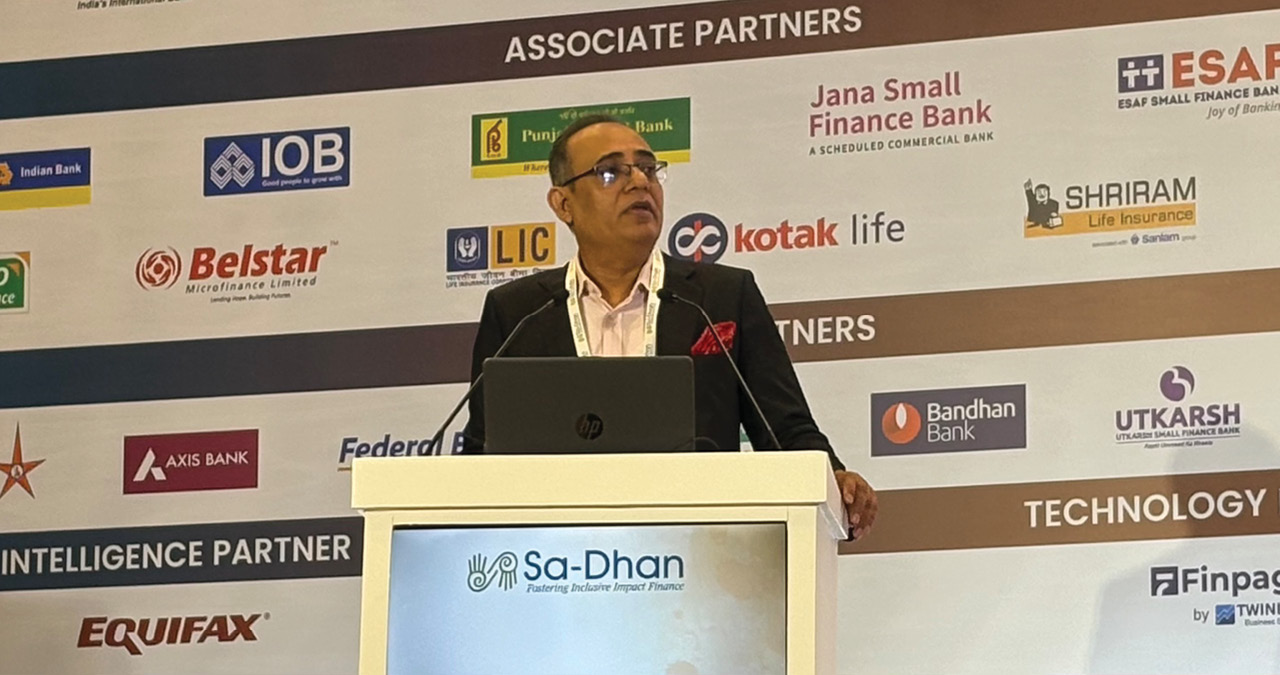
Paper Presented at 108th SKOCH Summit
1 https://www.pib.gov.in/PressReleasePage.aspx?PRID=2007105®=48&lang=2
2 https://www.pib.gov.in/PressReleasePage.aspx?PRID=1577055®=48&lang=2
3 https://newsonair.gov.in/india-aims-for-2-trillion-in-total-exports-by-2030-31-says-minister-piyush-goyal/
4 https://www.pib.gov.in/PressReleaseDetail.aspx?PRID=2252272®=1&lang=1
5 https://www.ned.org/winning-the-battle-of-ideas-exposing-global-authoritarian-narratives-and-revitalising-democratic-principles/
6 https://economictimes.indiatimes.com/news/economy/foreign-trade/wto-is-relevant-necessary-guardrails-must-in-place-before-plurilaterals-inclusion-india/articleshow/129860053.cms?from=mdr
7 https://www.thehindu.com/news/national/pm-modi-130th-mann-ki-baat-on-january-25-2026/article70549004.ece
8 https://www.theregreview.org/2015/07/27/hutton-regulatory-excellence
9 https://www.pib.gov.in/PressReleasePage.aspx?PRID=2219910®=3&lang=2
10 https://www.niti.gov.in/sites/default/files/2023-03/National-Strategy-for-Artificial-Intelligence.pdf
"American roads are good not because America..
State Rankings Highlights -: Odisha scaled to number..
Step 1: Call for Project Submission Call for..
In the run-up to the elections, the most..

Inclusion is the first magazine dedicated to exploring issues at the intersection of development agendas and digital, financial and social inclusion. The magazine makes complex policy analyses accessible for a diverse audience of policymakers, administrators, civil society and academicians. Grassroots-focused, outcome-oriented analysis is the cornerstone of the work done at Inclusion.