For decades, international rankings have shaped how countries are perceived and judged in the global arena. From the World Bank’s Governance Indicators to the World Economic Forum’s Competitiveness Index, these scorecards have come to wield influence far beyond academia. They frame the stories nations tell about themselves, influence credit ratings, guide investor sentiment and even tilt the outcomes of multilateral negotiations.
India, the world’s fourth-largest economy and a rising global power, finds itself at the receiving end of this paradox. While its growth trajectory and developmental strides are widely acknowledged, global indices often underplay or misrepresent the Indian reality. The result is a skewed narrative that affects investor sentiment, international diplomacy and even domestic self-perception. Correcting this imbalance is not just an academic exercise; it is a national imperative.
This is where the SKOCH India 2047 Centre of Excellence comes in. By closely examining the methodologies of global indices, suggesting improvements and even building new frameworks, the Centre is working to ensure that India’s story is told more fairly and more truthfully. Its focus is not merely on demanding better rankings but on highlighting the need for indices that reflect reality, account for diversity and truly measure progress.
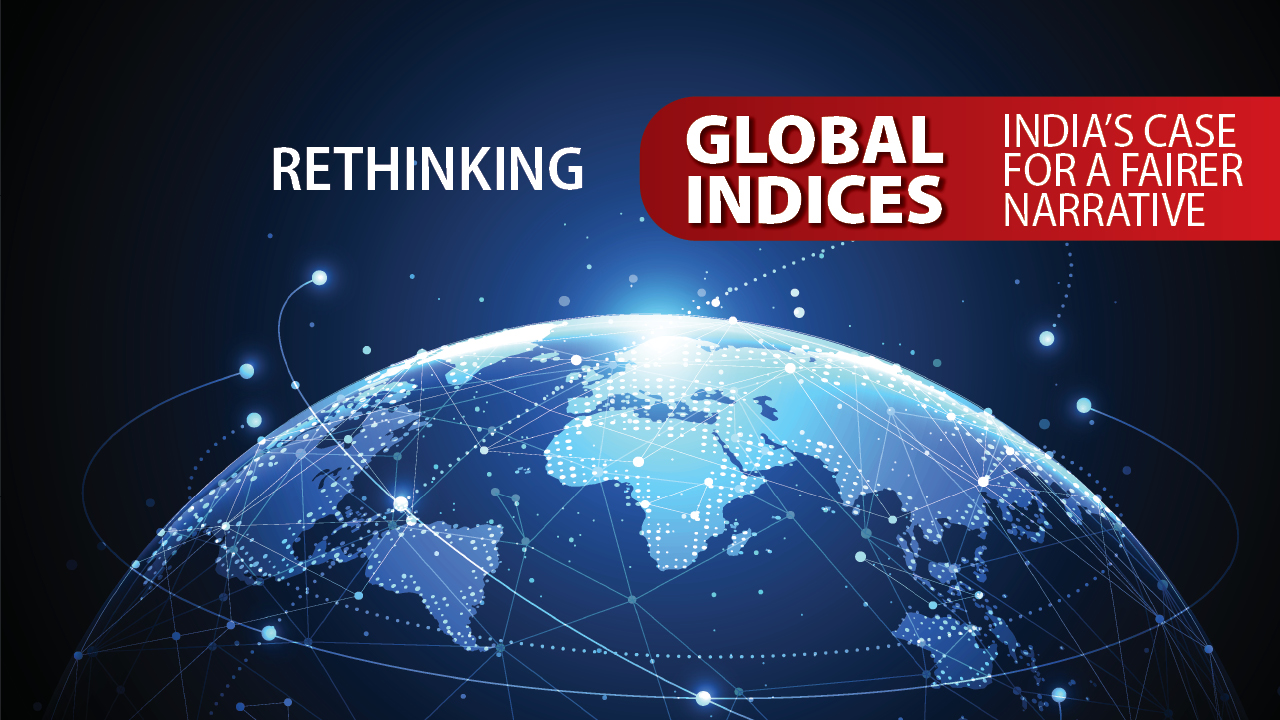
Global indices shape how nations are judged, yet many continue to misrepresent India’s achievements. The SKOCH India 2047 Centre of Excellence is rewriting this narrative—exposing flawed methodologies, correcting misplaced rankings and ensuring that India’s governance, growth and competitiveness are accurately reflected on the world stage.
For India, the consequences have been stark. Despite being the fastest-growing large economy, a pioneer in digital public infrastructure and a nation that has lifted millions out of poverty in the past two decades, India routinely finds itself ranked poorly across indices measuring hunger, governance or press freedom. This persistent misrepresentation not only damages reputation but also translates into real costs. Poor rankings can discourage investment, increase the cost of borrowing and restrict India’s ability to negotiate trade and climate deals on equal terms.

As SKOCH argues, indices today have become non-tariff barriers; subtle instruments of exclusion that can keep India and the Global South out of global value chains, financial markets and decision-making tables. Correcting these indices, therefore, is not simply a matter of pride. It is a matter of sovereignty.
India’s low scores in global indices are often presented as evidence of structural weaknesses. But SKOCH’s research reveals that the real problem lies in the indices themselves. Their flaws are both quantitative and qualitative.
On the quantitative side, the choice of indicators often sets India up to fail. Consider the case of digital readiness. India is a mobile-first Internet economy, where more than a billion people access services via affordable smartphones and data plans. Yet global indices continue to privilege wired broadband penetration, a metric that disadvantages India’s model while flattering the infrastructure-heavy models of Europe. Similarly, indicators like secondary school enrolment are used to measure e-Governance, even though in India, illiterate citizens access services through intermediaries, kiosks or voice-response systems. These mismatched proxies ignore how India has innovated around constraints.
Correcting this imbalance is not just about climbing the rankings; it is about reclaiming the narrative. India must ensure that global platforms recognise its progress fairly.
SKOCH India 2047 Centre of Excellence is leading this effort. With deep expertise in governance, economics and public policy, the Centre is engaging with global methodologies, identifying gaps and advocating for change. Its work emphasises that indices should not merely be instruments of comparison but tools of understanding.
By highlighting flaws in existing indices, SKOCH is pushing for reforms that will benefit not only India but also the broader global community. After all, inaccurate or biased indices misrepresent realities everywhere not just in India.
Equally important is the effort to build new indices in areas that matter for the 21st century. For instance, Corporate Digital Responsibility (CDR) is an area where India can set global standards. In an age where data privacy, digital ethics and online accountability are critical, an index measuring corporate responsibility in the digital realm would be groundbreaking.
Finally, the idea of creating Indian indices that evaluate global performance is both innovative and necessary. It signals that India is not merely reacting to global judgements but is actively shaping the discourse. By holding the world accountable to fairer, more inclusive benchmarks, India can demonstrate leadership.
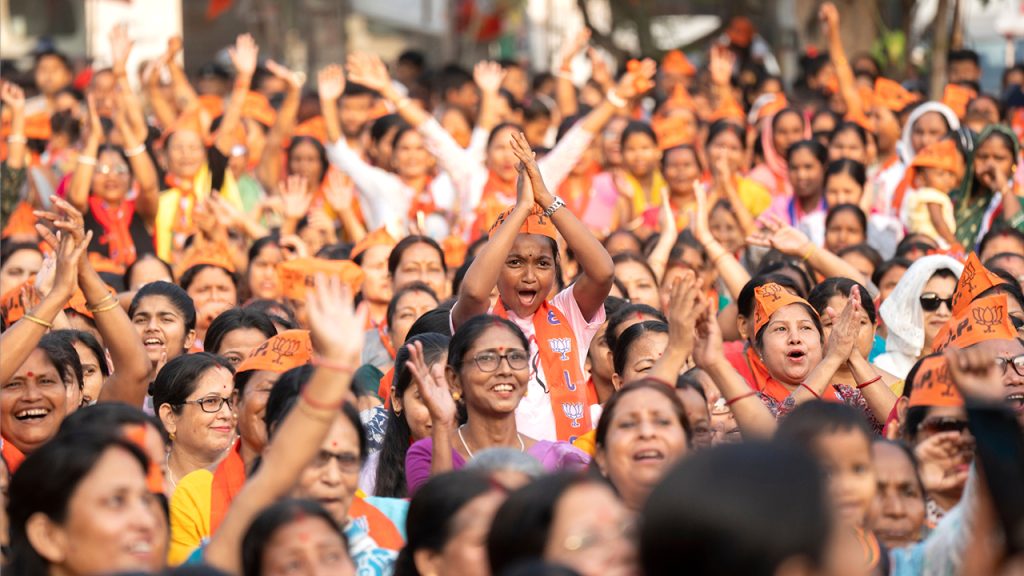
Women’s representation is another area where India is unfairly judged. Indices count only the number of women in Parliament, overlooking the millions of women elected to Panchayati Raj institutions and state legislatures. Ignoring grassroots democracy while privileging elite representation gives an incomplete picture, underestimating India’s pioneering role in gendered political participation.
SKOCH India 2047 Centre of Excellence relies on rigorous research, data-driven insights and evidence-based analysis. By equipping policymakers with the right tools and arguments, it enables India to challenge flawed rankings and ensure that its true progress resonates across the world.
Even in sovereign credit ratings, India is disadvantaged. Debt-to-GDP ratios, crucial for assessing fiscal prudence, are often overlooked in favour of narrower indicators. This skews perceptions of India’s macroeconomic stability.
On the qualitative side, the problems are even more pronounced. Many global indices rely on perception-based surveys, filled in by small, non-representative groups of experts. These surveys are not just subjective; they are predictable. Ask a Western journalist about press freedom in India and the answer is likely to mirror prevailing narratives, regardless of on-ground complexities. Methodologies are opaque, data sources unverified and field research virtually absent. The result is a spreadsheet-driven portrayal of India that often bears little resemblance to reality.
This explains the paradoxes. Countries with severe restrictions on free speech sometimes score higher than India on press freedom. Nations with weaker food security mechanisms rank better on hunger indices. India, with its noisy democracy and massive welfare delivery, is shown as struggling. The problem, therefore, is not performance but perception and perception shaped by flawed design.
There are several valid criticisms of the indices that currently dominate international discourse. These issues cut across multiple sectors—from development and hunger to gender, governance and sovereign ratings.
The Human Development Index has long been seen as a gold standard for measuring social progress, yet it suffers from several major flaws. By reducing complex issues of human development to a single number, the HDI oversimplifies reality and risks masking disparities within countries—urban versus rural, rich versus poor, male versus female.
Moreover, the heavy emphasis on Gross National Income (GNI) per capita often overshadows other dimensions of human development such as health, education and access to social services. In many countries, including India, rapid improvements in non-income areas do not get reflected adequately. Combined with limited or unreliable data, the HDI becomes less a mirror of progress and more a distorted snapshot.
Perhaps its most serious shortcoming is its neglect of inequality. Averages can be misleading; they often hide the struggles of marginalised communities. The HDI, in its current form, does not fully account for these disparities.
The Global Hunger Index faces similar methodological challenges. Measuring hunger is inherently complex, relying on diverse data sources with varying quality and accuracy. In some cases, governments may underreport or manipulate data to appear better on the index.
The GHI’s narrow focus on caloric intake is another problem. Nutrition is not just about calories—it is about balance, diversity and long-term well-being. An index that ignores this nuance paints an incomplete picture. Additionally, the GHI often captures short-term conditions without adequately addressing structural causes of hunger such as poverty, infrastructure gaps or agricultural policies.
Gender indices often reveal more about methodological bias than actual realities on the ground. Many are rooted in Western cultural contexts and may not reflect the priorities of societies elsewhere.
Data availability is another significant challenge. Reliable and comprehensive data on gender participation—whether in politics, the workforce or education—remains patchy in many countries. As a result, indices often end up measuring what is easy to capture, not what is truly important. They also tend to focus on high-visibility areas such as political representation while overlooking equally vital domains like economic participation or access to healthcare. This “one-size-fits-all” approach reduces their credibility.
The EGDI, which measures the adoption of digital governance tools, has its own blind spots. It does not adequately capture the digital divide within countries. Urban populations with high connectivity may skew the index while rural or marginalised communities remain underrepresented.
Another issue is that the EGDI often measures the availability of e-government services rather than their usage or effectiveness. A portal may exist, but does it work for the citizen who needs it? Does it improve governance outcomes? Such questions are rarely addressed. Cultural differences in how people interact with governments online are also overlooked. Given the rapid pace of technological change, the data and methodologies used for the EGDI often become outdated.
| Domain | Index | Institution | India’s Rank | India’s SKOCH Rank* (Top-10 Economies) |
|---|---|---|---|---|
| DIGITAL | E-Government Development Index | United Nations (DESA) | 105/193 | 2 |
| SOCIAL | Human Development Index | UNDP | 134/193 | 10 |
| Global Hunger Index | Concern Worldwide and Welthungerhilfe | 111/125 | 9 | |
| Gender Inequality Index | UNDP | 108/193 | 9 | |
| Global Gender Gap Index | World Economic Forum | 129/146 | 8 | |
| World Press Freedom Index | Reporters Without Borders | 159/177 | Work in progress | |
| FINANCIAL | Sovereign Rating | Moody’s | baa3 | a1 |
| Financial Deepening Index | IMF | – | Score – 31.85 (2021-22) | |
| GOVERNANCE | Voice and Accountability | World Bank | Percentile Rank – 49.28 | Work in progress |
| Political Stability and Absence of Violence | World Bank | Percentile Rank – 24.53 | Work in progress | |
| Government Effectiveness | World Bank | Percentile Rank – 63.21 | Work in progress | |
| Regulatory Quality | World Bank | Percentile Rank – 50.94 | Work in progress | |
| Rule of Law | World Bank | Percentile Rank – 55.19 | Work in progress | |
| Control of Corruption | World Bank | Percentile Rank – 44.34 | Work in progress | |
| ESG | Being Evolved | Multiple | – | India Assessment Released |
SKOCH Research published on 12th Aug 2024, MINT
* SKOCH Research.
The gap between India’s lived reality and its global rankings is glaring. Consider the following examples:
The conversation about global indices and India’s standing in them can be framed around three broad pathways.
The first and most direct option is to engage with existing indices and call out their flaws. This means challenging the assumptions, methodologies and parameters that often fail to reflect ground realities. By doing so, India and institutions like SKOCH can advocate for more nuanced approaches that capture actual progress.
There are many areas where existing indices do not even attempt to measure performance. For instance, Corporate Digital Responsibility (CDR), a critical dimension in today’s world of rapid digitisation, remains largely unmeasured. By developing indices in such new areas, India can become a thought leader, setting benchmarks that others follow.
The third pathway is to flip the script. Instead of being passive recipients of external evaluations, India can create its own indices that assess global performance. This counter-narrative would not only showcase India’s analytical capabilities but also highlight the biases and limitations of existing global scorecards.
Correcting global indices requires more than small adjustments. It calls for a fundamental rethinking of how we measure development, governance and sustainability.
First, the choice of indicators must be made context-sensitive. Wired Internet cannot be the sole measure of digital readiness in a mobile-first country. Parliamentary representation alone cannot define gender participation in a nation where grassroots democracy thrives. Sovereign ratings must factor debt-to-GDP ratios to give a true sense of fiscal resilience.
Second, methodologies must be transparent. Today, most global indices keep their weightings, data sources and models opaque, limiting scrutiny and accountability. A credible index must open its methods to peer review, allowing countries to challenge flaws and suggest corrections.
Third, qualitative assessments must move beyond elite perception surveys. Impact must be assessed through fieldwork, citizen feedback and project-level evaluations. This requires investment in field-based research, something global index creators have long neglected but which independent think tanks like SKOCH have championed.
Finally, there must be correlation between qualitative and quantitative data. Numbers alone cannot capture development, nor can narratives. But when objective indicators are validated against ground-level impact assessments, a more accurate picture emerges.
In short, what needs fixing is not India’s performance, but the lens through which it is judged.
Recognising the distortions, SKOCH India 2047 Centre of Excellence (SCoE) has launched an ambitious initiative to decode and correct the biases embedded in global indices. Task forces comprising domain experts from governance, finance, technology and social policy have been constituted to carry out this work at arm’s length from government, ensuring independence and credibility.
The approach is systematic. First, SKOCH’s research teams study the methodologies of key global indices, from the Global Hunger Index to sovereign credit ratings. Each indicator is subjected to a sanity check: is it relevant to India? Is there a better indicator available? For instance, instead of measuring broadband penetration, why not track digital transactions or Aadhaar-linked service delivery?
Next, corrected indicators are tested through proof-of-concept exercises. SKOCH applies the revised methodology to the top-10 economies, using only published government data, and then compares the results.
Transparency is paramount. No opinion surveys are used. All methodologies and data sources are placed in the public domain for review. In India’s case, SKOCH validates the results by correlating quantitative findings with years of qualitative, field-based research.
The goal is not simply to produce counter-indices but to build credible, objective and replicable frameworks that can challenge and eventually replace flawed global benchmarks.
While tariffs are obvious trade restrictions, skewed indices act as hidden non-tariff barriers, distorting perceptions, influencing investment flows and weakening credibility. SKOCH is shining a light on these biases, exposing flawed yardsticks and working to dismantle narratives that unfairly hold India back in the global economy.
In its analysis, SKOCH highlights several critical factors that global indices routinely overlook but must be considered if fairness is to be restored.
One is India’s unique CSR framework. India is the only country with a mandated CSR policy for corporates, aligning perfectly with ESG principles. Yet global ESG ratings dismiss this, focusing instead on Western reporting norms.
Another is digital transformation. From UPI to CoWIN, India has pioneered scalable, inclusive digital public goods that map directly to ESG outcomes in financial inclusion, health and governance. Global indices, however, remain wedded to older models of e-government and infrastructure-heavy paradigms.
Competitive federalism is also a major factor. India’s states are laboratories of policy innovation, experimenting with governance reforms, welfare delivery and technology adoption. SKOCH’s State of Governance Report has, for nearly two decades, ranked states on outcome-based performance, creating incentives for improvement. Such bottom-up dynamics rarely figure in global indices.
Finally, holistic governance measurement is needed. Indices like the UN’s EGDI operate in silos, with education, telecom and IT ministries assessed separately. India’s integrated digital model demands a cross-domain lens. Similarly, women’s representation must include state and local levels, and sovereign ratings must factor fiscal prudence—not just raw deficits.
These are not minor corrections. They are shifts that recognise the distinct developmental trajectories of the Global South, trajectories that cannot be judged by Western end states alone.
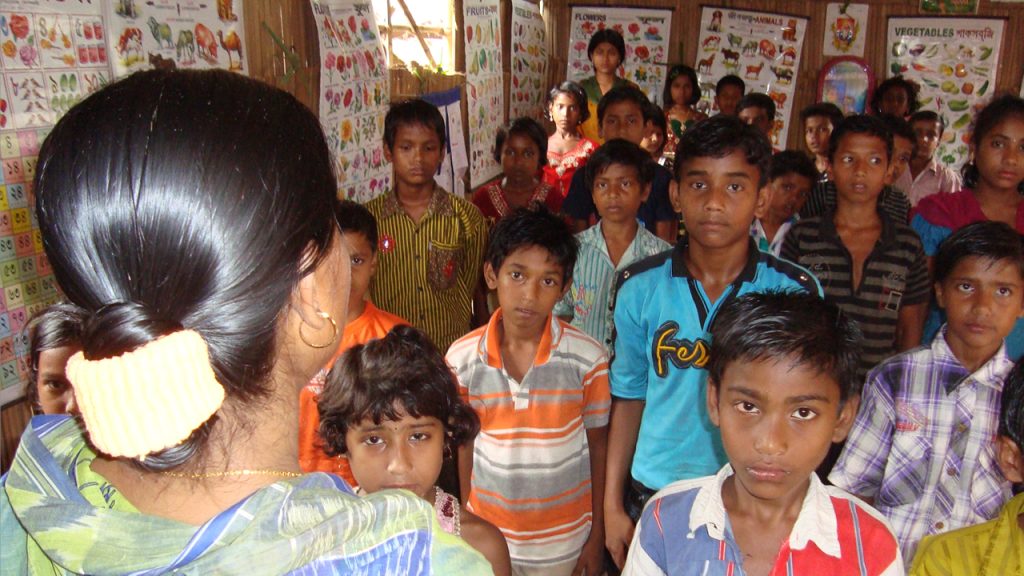
India’s struggle with indices mirrors that of many Global South countries. Whether in Africa, Latin America or Southeast Asia, nations face the same problem: frameworks that ignore their innovations, penalise their contexts and privilege Western norms.
This creates an opportunity for India to lead. By developing credible alternative indices through institutions like SKOCH, India can become the voice of the Global South in the battle over measurement. The idea is not to reject global indices outright but to reframe the discourse, to show that multiple pathways to development exist and must be measured on their own terms.
India has the credibility to do this. As the world’s largest democracy, a fast-growing economy and a leader in digital innovation, India can convene a coalition of misrepresented countries. Together, they can push for recognition of alternative indices in multilateral forums, financial markets and trade negotiations. In doing so, India shifts from being a passive recipient of rankings to an active shaper of global metrics.
Overcoming these challenges requires a multi-pronged strategy.
At the policy level, India must invest in data diplomacy. Just as climate diplomacy has become a key arena of international engagement, so too must the politics of measurement. Indian representatives need to be present in global discussions on indices, challenging flawed methodologies and pushing for recognition of alternative frameworks.
Domestically, India must strengthen its capacity to capture and report progress. For instance, Indian corporates often under-report their achievements under SEBI’s Business Responsibility and Sustainability Reporting (BRSR) guidelines. Upskilling is needed to ensure India’s ESG-aligned practices are not undercounted.
At the federal level, competitive governance benchmarking must continue. By ranking states and encouraging best practice diffusion, SKOCH’s State of Governance Reports generate datasets and time series that global indices lack. These can serve as robust alternatives to World Bank or UN indicators.
Finally, India must invest in independent institutions like the SKOCH 2047 Centre of Excellence. Credibility comes from independence, rigour and transparency—qualities that can ensure Indian indices are respected globally.
If judged fairly, India brings unique strengths that global indices must acknowledge.

These are not marginal achievements. They are paradigmatic innovations that deserve recognition. For the Global North to continue ignoring them is to perpetuate a distorted narrative.
As protectionism rises worldwide, including tariff wars led by the Trump Administration, global indices become even more influential. Correcting these distortions is not just about optics; it is a strategic imperative for India to safeguard its economic interests and secure a fair place in global decision-making.
Global indices, once seen as neutral measures, have become instruments of power. For India, they function as non-tariff barriers, restricting capital flows, undermining reputation and skewing trade negotiations.
But India is no longer content to be misrepresented. SKOCH 2047 Centre of Excellence is building corrective frameworks, grounded in transparency and field research, to challenge and eventually replace flawed global indices.
The task, therefore, is twofold: to reform existing indices and to create new ones that set global benchmarks. This is not about inflating India’s image artificially but about ensuring that the story being told is accurate.
In doing so, India is not just defending its own reputation. It is offering leadership to the Global South, demonstrating that measurement need not be monopolised by the West. Fair, context-sensitive and transparent indices are possible and they can reshape the global narrative.
It is observed, “Indices are not neutral. They shape power. If India is to lead, it must first learn to count itself and ensure it is counted fairly.”
In the battle for narrative sovereignty, India is taking its first decisive steps. For a Viksit Bharat by 2047, ensuring fair measurement may prove as crucial as economic growth itself.
"American roads are good not because America..
State Rankings Highlights -: Odisha scaled to number..
Step 1: Call for Project Submission Call for..
In the run-up to the elections, the most..

Inclusion is the first magazine dedicated to exploring issues at the intersection of development agendas and digital, financial and social inclusion. The magazine makes complex policy analyses accessible for a diverse audience of policymakers, administrators, civil society and academicians. Grassroots-focused, outcome-oriented analysis is the cornerstone of the work done at Inclusion.