Governance in Jammu & Kashmir has always unfolded under distinctive conditions, mountainous terrain, dispersed habitations, climatic extremes and an evolving administrative framework. In such a landscape, delivering services is not merely procedural; it is logistical, strategic and often weather-bound.
What makes J&K unique in 2025 is this: it has built governance systems that function reliably despite geography. This year ten well-performing projects were qualified for deeper study. Whether transporting essential food supplies across snowbound districts, digitising urban services in rapidly growing towns or streamlining financial oversight within a Union Territory structure, the administration has demonstrated an ability to align systems with terrain.
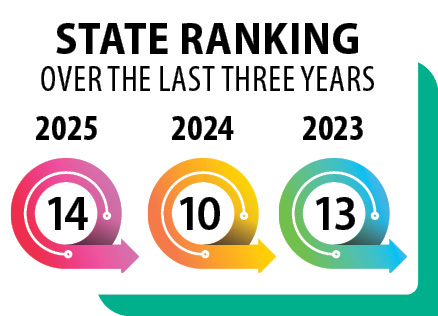
Ranked 14th nationally in the SKOCH State of Governance Report 2025, Jammu & Kashmir’s story this year is not about headline leaps. It is about foundational strength tightening delivery mechanisms, strengthening municipal systems and reinforcing fiscal discipline.
Mastering the Basics in Difficult Terrain
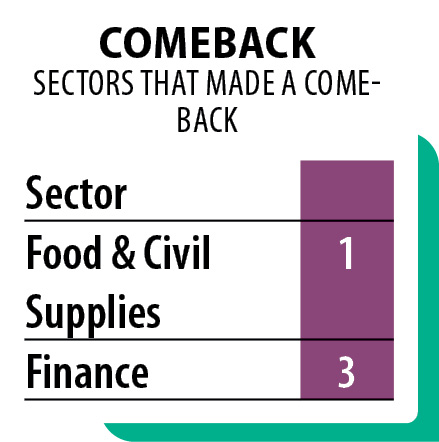
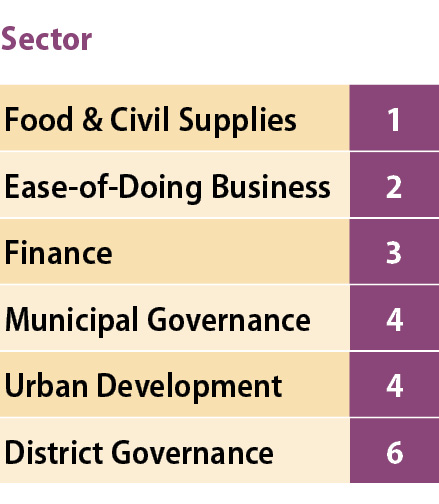
The clearest marker of administrative confidence is J&K’s leadership in Food & Civil Supplies, where it tops the country. In a Union Territory where physical access can determine policy success, digitised ration distribution systems and end-to-end supply chain monitoring have transformed delivery. Movement of food grains is tracked with greater precision. Beneficiary databases are verified digitally. Fair price shops are linked to authentication systems that reduce leakages.
Ensuring consistent food supply across remote and high-altitude regions is no small task. Topping this category nationally reflects not just reform but execution under complexity.
Sectors with Enhanced Focus – Jammu & Kashmir
Cities Finding Structure
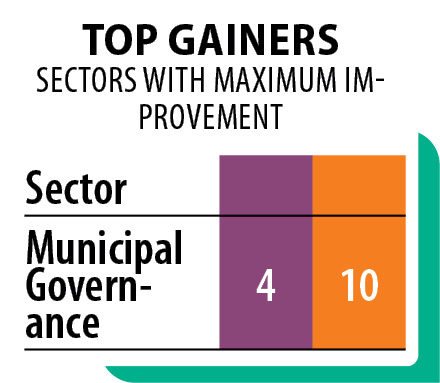
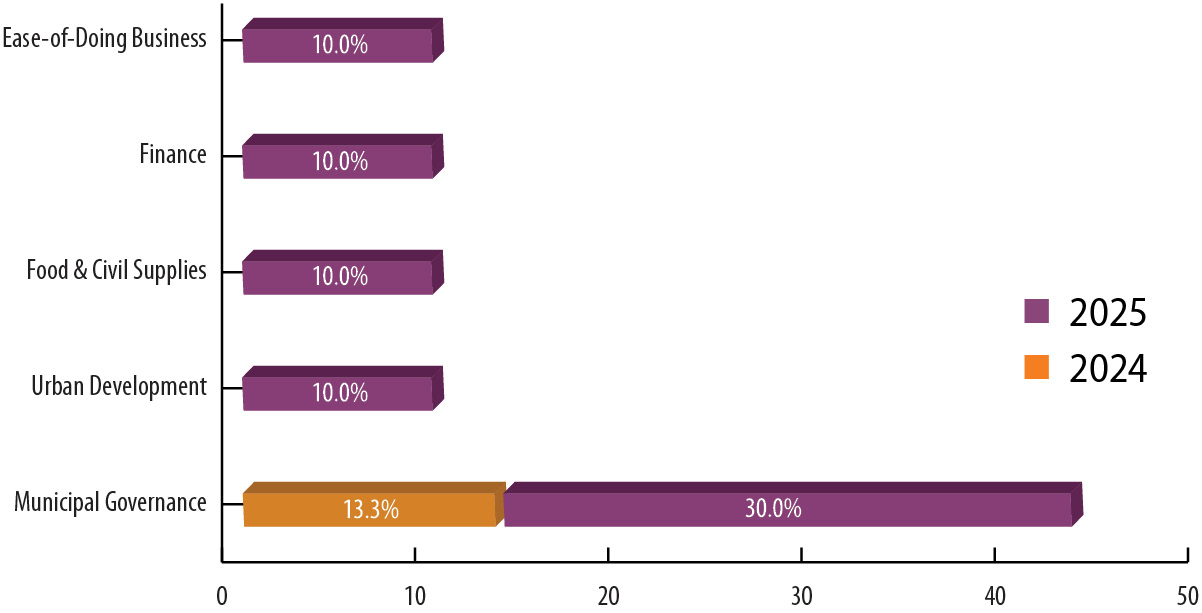
Urban governance has emerged as another area of strength. J&K ranks 4th nationally in Municipal Governance, marking one of its most significant improvements.
Municipal bodies are increasingly operating through digitised property tax systems, structured waste management frameworks and service monitoring dashboards. Citizen requests are logged and tracked. Urban infrastructure projects are supervised more systematically.
In towns balancing rapid growth with limited infrastructure legacy, these reforms represent structural organisation rather than incremental adjustment.
A developed India will only become a reality when every state and region progresses together. Viksit Bharat cannot be achieved if growth is limited to a few areas; true development must be inclusive, balanced and spread across the entire nation
Omar Abdullah Chief Minister, Jammu & Kashmir
The Return of Fiscal Discipline
Jammu & Kashmir’s comeback in Finance, where it ranks 3rd nationally, underscores strengthening institutional discipline.
Treasury systems are monitored through digital platforms. Fund allocation and expenditure tracking have become more transparent. Financial dashboards allow closer supervision of spending patterns.
MSME Health Clinic
Arun Manhas
Director Department of Industries and Commerce
Recognising that small enterprises often succumb to “silent” distress, such as credit gaps and technological obsolescence before the government can intervene, the Department of Industries & Commerce partnered with IIM Jammu to create a proactive diagnostic framework. By functioning as a “digital doctor,” the initiative identifies early signs of business stagnation, moving the state away from reactive crisis management toward a sustainable, preventive model of economic support. The core of the initiative is a sophisticated ‘health score’ system that categorises enterprises into three distinct tiers: Healthy, Recoverable or Stressed.
This is powered by the integration of diverse datasets, including GST filings, Udyam registration and energy consumption patterns. This data-driven mapping allows the government to deliver surgical interventions ranging from credit restructuring and export facilitation to technology upgrades.
In governance, fiscal clarity is the invisible force that sustains visible outcomes. J&K’s recovery in Finance suggests a stabilised administrative backbone.
Operation Sindoor Rehabilitation Initiative
The primary objective of Operation Sindoor Rehabilitation Initiative implemented by Municipal Council, Baramulla was to provide rapid humanitarian aid, including food, shelter and hygiene kits, while addressing the deep-seated trauma of the affected population. By mobilising a localised workforce within 48-hours, the Council demonstrated that agility and leadership are critical when institutional resources are stretched thin by a conflict of this nature.
Implementation was characterised by a decentralised, data-driven approach. Field teams conducted rapid door-to-door assessments to map damages and identify vulnerable groups, such as the elderly and children, for prioritised care.
To overcome the logistical bottlenecks caused by restricted movement and supply shortages, the administration established coordination cells and temporary logistics hubs.
A hallmark of the initiative was its commitment to digital transparency; the use of MIS-based reporting and digitised beneficiary lists.
A Strong Debut
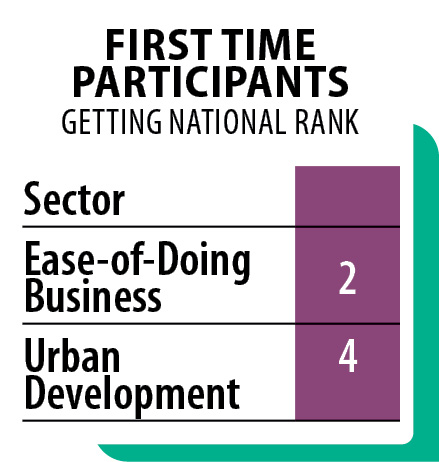
Participating for the first time in Ease-of-Doing Business, J&K entered the top tier immediately, ranking 2nd nationally.
Streamlined approval mechanisms, digitised registration processes and clearer timelines for clearances have simplified procedural navigation for enterprises. The strong debut indicates reform momentum that predated formal evaluation.
In a region seeking greater private investment and economic diversification, regulatory predictability sends a powerful signal.
The sectoral achievements reveal something more enduring: systems designed to withstand complexity. The uniqueness of Jammu & Kashmir lies not only in its landscape, but in its ability to govern effectively within it
Infrastructure with Oversight
Complementing municipal reforms, J&K ranks 4th nationally in Urban Development. Urban infrastructure water systems, sanitation upgrades, planning mechanisms is increasingly supervised through structured monitoring tools. Digital integration ensures projects are tracked from approval to completion.
Urban Development, Municipal Governance and Finance together form a coherent governance cluster infrastructure planned, funded and monitored systematically.