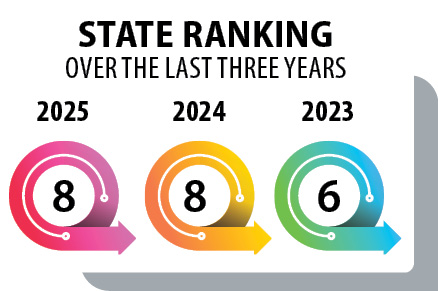
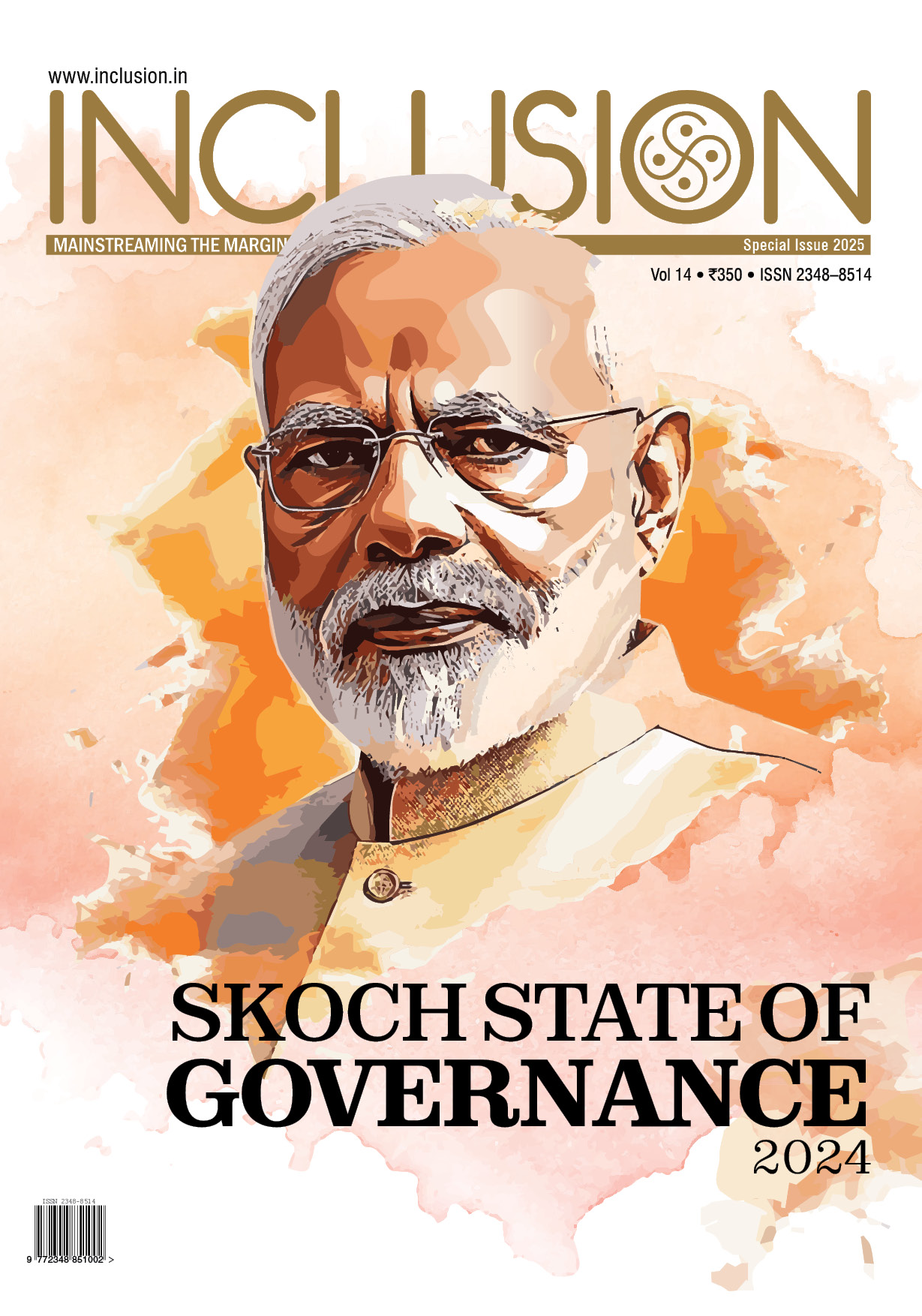
In the SKOCH State of Governance Report 2025, Tamil Nadu retained its position among India’s top-performing states, ranking #8 nationally. The result reflects continuity rather than fluctuation, a governance model that has chosen consolidation over volatility.
Areas of Maximum Improvement
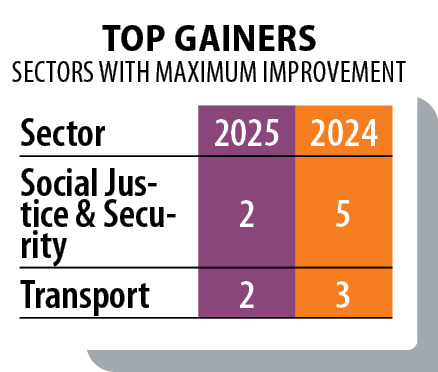
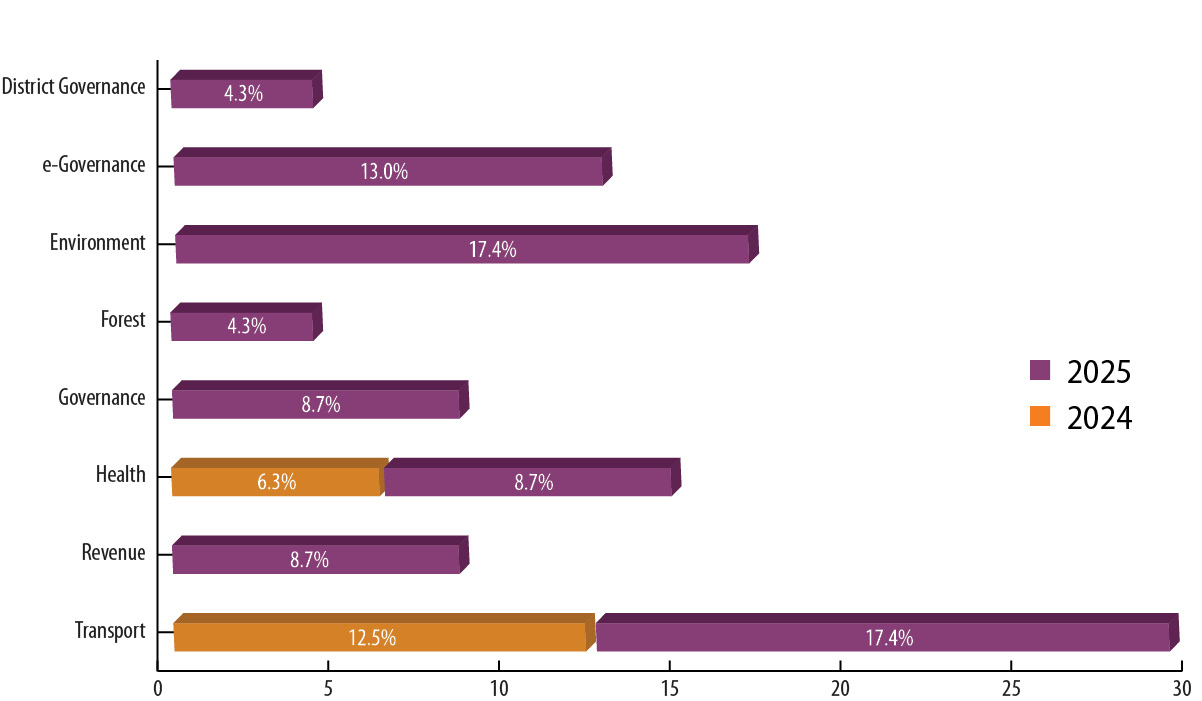
A total of 23 well-performing projects from the state this year qualified for deeper study. The most striking gains this year came in Transport and Social Justice & Security, where Tamil Nadu recorded maximum improvement nationally, securing second position in both categories.
In Transport, reforms have centred on modernising public transit systems, digitising permits and fleet monitoring and expanding integrated mobility solutions in urban centres. Intelligent transport systems, GPS-enabled fleet tracking and improved route optimisation have strengthened efficiency and accountability.
Social Justice & Security reflect targeted welfare delivery and data-backed inclusion frameworks. Digitised beneficiary databases, streamlined pension and assistance disbursal systems and improved grievance handling mechanisms have enhanced transparency. By aligning welfare delivery with digital verification tools, the state has strengthened both outreach and accountability.
These improvements signal a government recalibrating high-impact sectors with measurable outcomes.
Environmental Governance
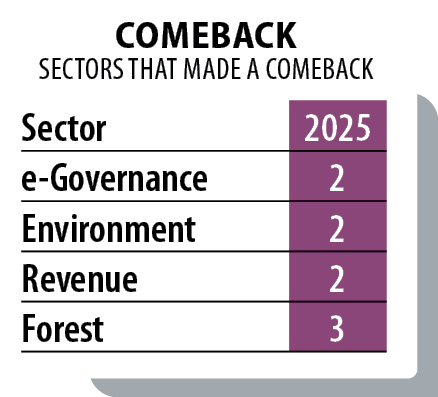
Tamil Nadu also made a strong comeback in Environment, e-Governance and Revenue, securing leading national positions in each.
In Environment, performance has been driven by climate adaptation strategies, coastal protection measures, solid waste management innovations and urban air quality monitoring systems. The state’s environmental dashboarding tools and pollution tracking mechanisms have strengthened regulatory oversight.
Tamil Nadu has strengthened transport, Social Justice & Security and environmental governance through technology-driven systems, integrated service delivery and a steady expansion of high-impact public administration projects
The Forest category also witnessed recovery, with Tamil Nadu regaining a leading national rank in recent years. Reforestation drives, wildlife habitat protection and digitised forest boundary mapping are reinforcing conservation outcomes.
Sectors with Enhanced Focus – Tamil Nadu
Together, these efforts reflect a state that treats environmental governance not as compliance but as structured policy.
Systems that Integrate
Tamil Nadu’s comeback in e-Governance underscores its digital backbone. Online service portals, integrated citizen application platforms and real-time service tracking systems have deepened transparency.
Unity is the backbone of Tamil Nadu’s consistent development. Collective purpose strengthens resilience, helps overcome challenges and unlocks opportunities, playing a vital role in shaping the state into one of India’s leading performers across sectors
M K Stalin Chief Minister, Tamil Nadu
Projects in this domain focus on reducing physical interface points, automating approvals and linking departmental databases. The state’s digital architecture increasingly allows citizens to access certificates, welfare schemes and public services through unified platforms.
Tamizh Pudhalvan Scheme
Govinda Rao
Chief Executive Officer Tamil Nadu e-Governance Agency
The scheme provides monthly financial assistance of Rs 1,000 to eligible students pursuing undergraduate, diploma, ITI and other approved courses. The initiative was designed to address financial barriers that often lead to dropouts from after-school education and to improve the Gross Enrollment Ratio in Tamil Nadu.
TNeGA played a pivotal role in designing and operationalising a fully digital, paperless ecosystem for the scheme using the University Management Information System (UMIS). Data from multiple sources, including EMIS, DGE, the 7.5 per cent quota database, Aadhaar and NPCI, were seamlessly integrated to automatically identify eligible beneficiaries.
Aadhaar-based e-KYC ensured accurate verification, while DBT enabled transparent and timely disbursal of funds directly into students’ bank accounts. An inbuilt appeal mechanism allowed students who were initially marked ineligible to correct their data through field-level verification. Within a short span, the scheme has benefited over 3.76 lakh students.
The recovery in this category suggests renewed emphasis on technology integration, a reminder that digital governance must continually evolve to retain efficiency.
Integrated End-to-End Computerisation of Core Functions
S Visakan
Managing Director Tamil Nadu State Marketing Corporation Ltd
The project covers the full lifecycle of the business – from procurement and warehouse management to retail sales at over 4,775 shops and real-time financial reconciliation. The technical implementation focused on bottle-level traceability and retail resilience. Every bottle is tracked using unique QR/barcode holograms, ensuring that only authenticated stock moves through the 43 regional depots.
At the retail level, staff utilise handheld POS devices capable of offline sales, ensuring business continuity even in areas with poor connectivity. Digital payments via integrated UPI and POS systems have effectively replaced cash handling, enabling daily sales of over Rs 55,000 crore annually. This massive data flow is managed through secure primary data centres and disaster recovery nodes, maintaining a system uptime that handles over 5.2 million bills daily.
Governance is now driven by real-time MIS dashboards and predictive analytics for demand planning. These tools have improved compliance.
Structured Monitoring
In Revenue administration, Tamil Nadu regained competitive national standing. Digitised land records, streamlined mutation processes and time-bound service delivery mechanisms have strengthened citizen interface.
The integration of GIS-based mapping with land administration systems has improved accuracy and dispute resolution efficiency. By modernising revenue operations, the state has reinforced a foundational layer of governance that impacts both rural and urban populations.
Municipal Governance
Municipal Governance also reflects enhanced attention this year. Urban local bodies have adopted structured project monitoring, digital tax collection systems and waste management innovations.
Integrated Temple Management System (ITMS)
P N Sridhar
Commissioner Hindu Religious & Charitable Endowments Department (HR & CE)
The Hindu Religious and Charitable Endowments (HR&CE) Department, Government of Tamil Nadu, implemented the Integrated Temple Management System (ITMS) as a comprehensive e-governance initiative to modernise the administration of more than 46,000 Hindu and Jain temples under its control.
Launched in 2017, ITMS was conceived to bring transparency, efficiency and digital convenience to temple governance, while improving service delivery for millions of devotees and strengthening financial and asset management across temples.
ITMS functions as a unified digital platform that dynamically generates bilingual websites for temples and enables a wide range of online and counter-based services. Over 645 temple services have been enabled digitally, generating more than Rs 5,810 crore in revenue through transparent cashless transactions and facilitating the issuance of over 50 crore tickets. ITMS has helped identify and verify approximately 4.78 lakh acres of temple land, safeguard properties from encroachment.
Smart monitoring of urban utilities including water supply tracking and property tax digitisation has improved local-level transparency. Given the rapid pace of urbanisation in Tamil Nadu, strengthening municipal governance is critical to sustaining overall performance.
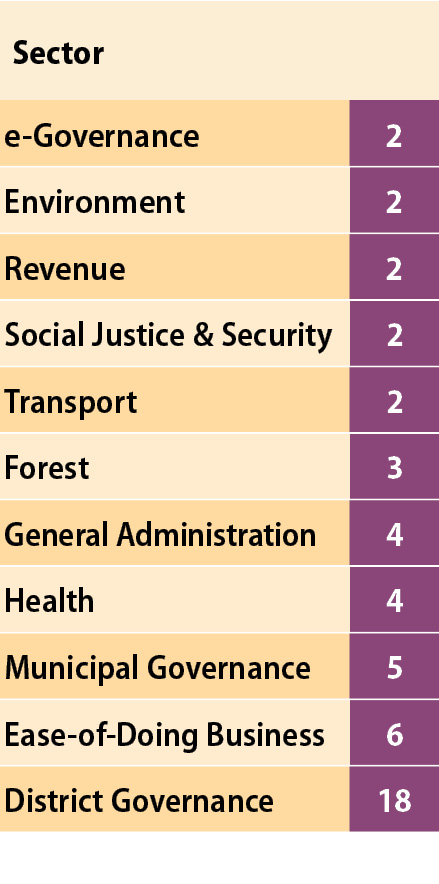
With 23 well-performing initiatives and strong gains across 11 sectors, Tamil Nadu’s governance model in 2025 reflects institutional resilience, digital integration and renewed focus on urban management, revenue reform and citizen-centric services
This pattern signals departmental confidence and systematic documentation. When frontline departments consistently present reform initiatives for evaluation, it reflects internal benchmarking and competitive governance culture.
Steady Performance
The cumulative trajectory from 2014 to 2025 shows Tamil Nadu’s consistent presence among top performers. Unlike states that oscillate sharply year to year, Tamil Nadu’s path reflects incremental strengthening.
Swachh Bharat Mission Urban 2.0
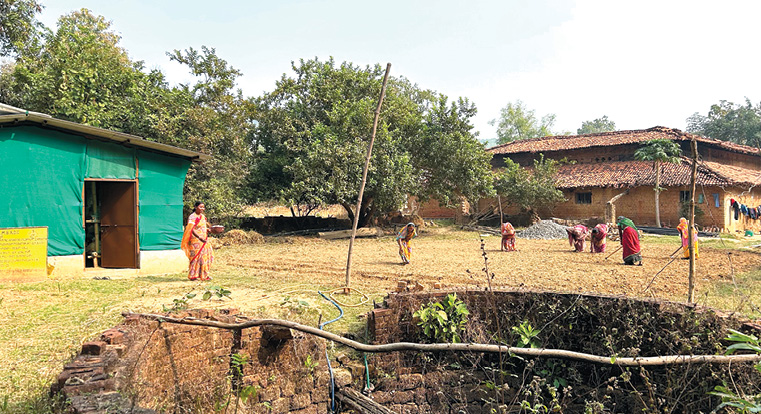
Prior to this project, the region lacked a formal sanitation framework, leading to deteriorating environmental conditions. The project’s primary objective was to establish a circular waste economy by transitioning from a traditional ‘collect and dump’ method to a structured resource recovery model. It begins with at-source segregation, where approximately 5,600 households separate waste into biodegradable and non-biodegradable categories. Collected waste is transported to a dedicated Resource Recovery Park, where biodegradable materials undergo the windrow composting method. This process transforms organic waste into nutrient-rich compost for local agriculture, significantly reducing the volume of waste sent to landfills.
Retention in the top ten in 2025 underscores this steadiness. Improvements in Transport and Social Justice & Security, recovery in Environment, e-Governance, Revenue and Forest and strong participation across multiple categories collectively reinforce institutional depth.
Tamil Nadu’s performance is defined by continuity with calibration. Rather than dramatic overhauls, the state has focused on refining systems modernising transport networks, digitising welfare delivery, strengthening environmental regulation and integrating digital governance platforms.
In 2025, Tamil Nadu’s governance narrative is one of sustained competence, a state that retains its place among national leaders not through isolated breakthroughs, but through steady system-building, data-backed delivery and institutional resilience.
On a humid morning in a district headquarters in Odisha, a young officer scans a digital dashboard tracking everything from pension disbursals to irrigation coverage. Miles away, in a weaving...
After three years outside the top tier, Rajasthan has made a decisive return. In the SKOCH State of Governance Report 2025, the state ranks 7th nationally, marking its re-entry into...
In the SKOCH State of Governance Report 2025, Uttar Pradesh secured an #6 position nationally, reinforcing its place among India’s leading states in governance performance. For a state of its...
Goa’s governance journey marks a quiet but decisive shift, as consistent delivery, sectoral depth and institutional maturity propel the state into the top five