Organic Recycling Systems Pvt Ltd (ORS) was incorporated in 2008 as a strategic initiative between a team of technocrats (sector experts) and a group of investors (Intellivate Capital) to promote ‘Greenfield’ projects in the field of Integrated Urban Waste Management (IUWM).
It aimed to become a technology leader in Urban Waste Management Sector (UWMS) over five years by giving viable solutions to the city administration, for mitigating environmental challenges poised by perpetuating waste disposal issues.
In significant ways, this project has turned out to provide integrated technological solutions to the Urban Local Bodies (ULBs) for effective processing and disposal of Solid Waste in conformance with Solid Waste Management (SWM) Handling Rules, 2004 with a focus on minimising disposal burden to landfill sites.
Development of Indigenous Proprietary Technology DRYADTM, is based on Theremophilic Biomethanation Process to suit the local environmental conditions after pilot validations. DRYAD™ operates at 550C (temp suitable for operation in Indian cities). It has a high loading rate that requires less digester volume and in turn requires less area for operation as compared to landfills.
This project led to successful Implementation of 400 TPD, 3mw (Grid Connected) Waste-to-Energy Project, based on unsegregated MSW at Sholapur, Maharashtra.
Sholapur Project
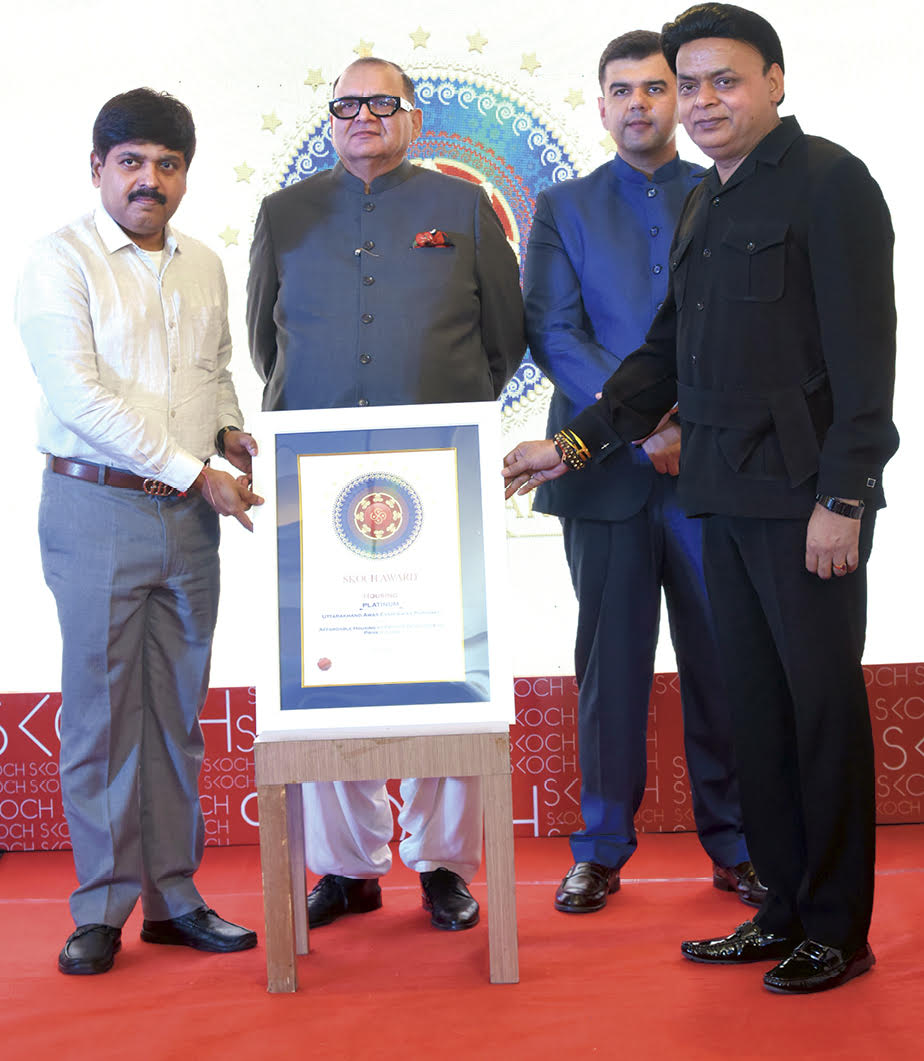
The Affordable Housing project emerged as a path-breaking response to Uttarakhand’s acute land scarcity and the growing demand for homes among the economically weaker sections (EWS). Implemented under the Pradhan...
The revamping of the ICAAP framework and the launch of a Risk Appetite Dashboard further strengthen this structure. These tools provide consolidated views of credit, liquidity and market risk indicators,...
That capital flows into SHG-led Enterprises & Urban Job Creation, where 31,637 new livelihood units take shape, 9,183 members gain “walk-to-work” placements and 143,173 entrepreneurs formalise via MSME registration. This...
When Muthoot Microfin began its journey as an NBFC-MFI in 2015, the goal was simple yet bold: bring credit to the women who had long been excluded from India’s formal...
In 2020, JSCB faced an alarming situation — the Gross Non-Performing Asset (GNPA) ratio stood at an unsustainable 51.63%, while the Net NPA (NNPA) was 18.48%. Recognising the existential threat,...
"American roads are good not because America..
State Rankings Highlights -: Odisha scaled to number..
Step 1: Call for Project Submission Call for..
In the run-up to the elections, the most..

Inclusion is the first magazine dedicated to exploring issues at the intersection of development agendas and digital, financial and social inclusion. The magazine makes complex policy analyses accessible for a diverse audience of policymakers, administrators, civil society and academicians. Grassroots-focused, outcome-oriented analysis is the cornerstone of the work done at Inclusion.