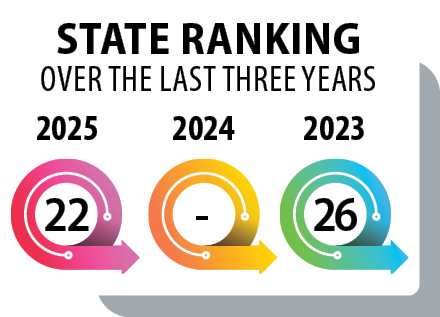
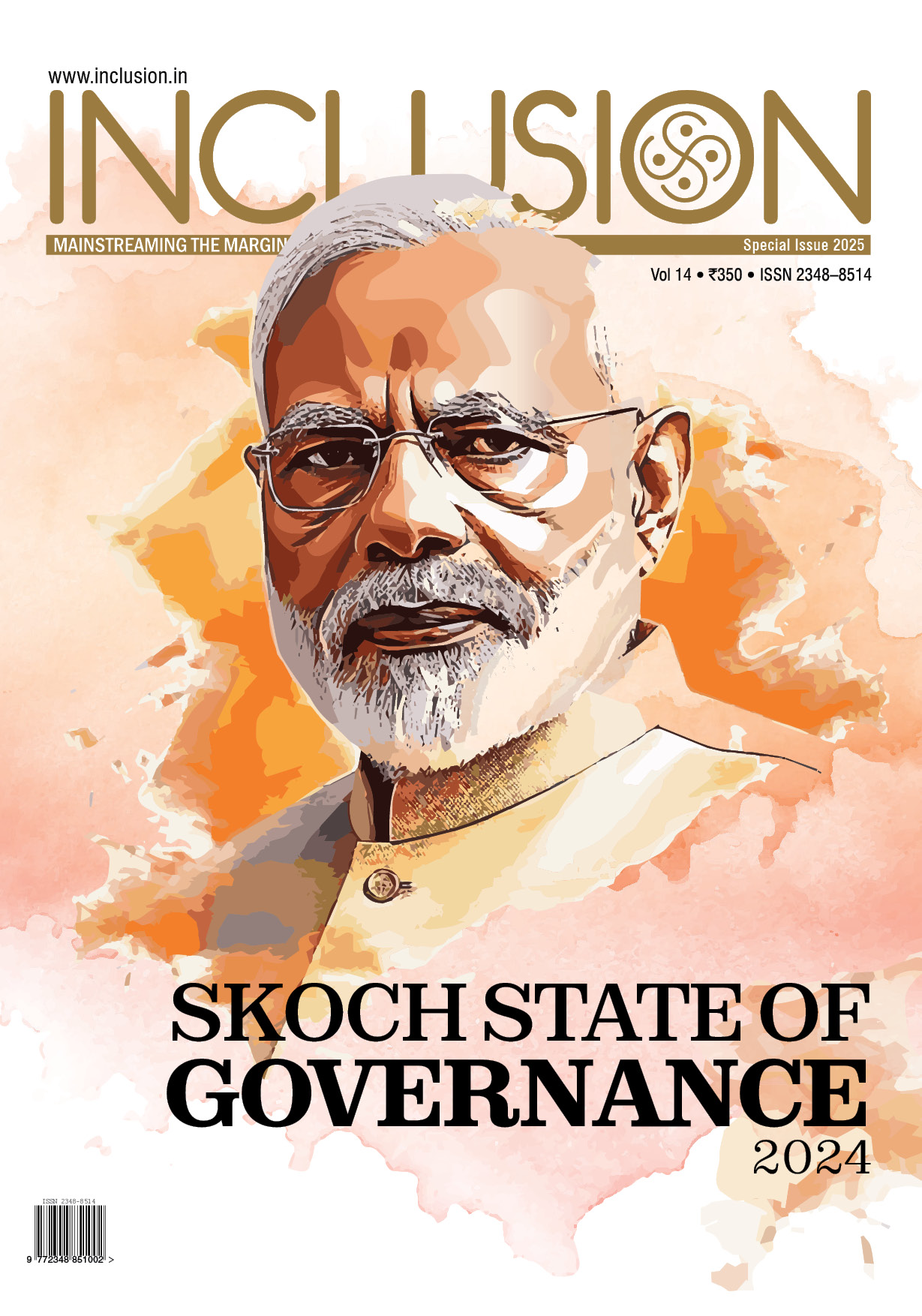
After the disruption of the Covid years, Meghalaya has returned to the national governance platform with renewed participation and visible intent. In the SKOCH State of Governance Report 2025, the state ranks #22 nationally. Seven well-performing projects from the state qualified for deeper study this year.
Re-entering the competitive landscape after a gap is itself significant. What makes this return noteworthy is not only the rank, but the confidence with which Meghalaya has stepped into new categories and secured national standing. The state delievered strong performance in two categories.
Participation Post-Covid
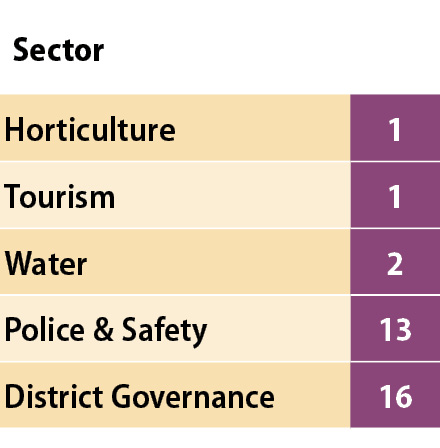
One of the most striking aspects of Meghalaya’s 2025 performance is its entry into Horticulture, Water, Tourism and Police & Safety for the first time.
For a hill state with ecological richness and cultural depth, these categories are not peripheral, they reflect core developmental priorities. Participation itself signals administrative readiness to benchmark performance nationally.
Entering multiple new sectors in a single cycle demonstrates expansion of governance ambition beyond traditional domains.
For a state emerging from pandemic-era disruption, returning to the rankings at 22nd place reflects renewed administrative confidence
Leveraging Natural Strength
In Horticulture, Meghalaya’s participation aligns with its agro-climatic advantage. The state’s fruit cultivation, spice production and high-value crops form a natural economic base.
By stepping into national evaluation in this category, Meghalaya positions its agricultural diversification efforts within a competitive framework. The move indicates greater formalisation of what has long been a local strength.
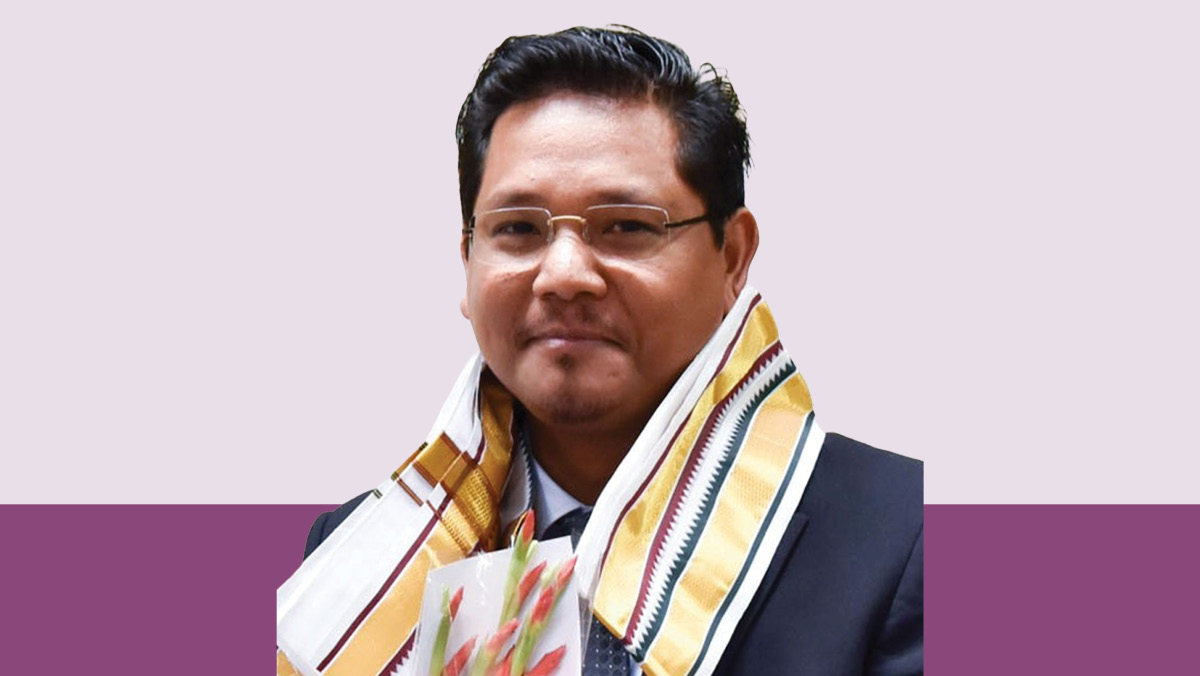
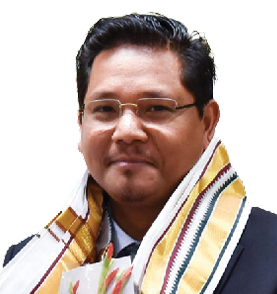
True governance is measured by its impact on citizens’ daily lives, not just infrastructure. Prioritising people-centric development, it focuses on outcomes that can be felt, such as better healthcare, quality education, and stronger livelihood support for all
Conrad Sangma Chief Minister, Meghalaya
Identity as Policy
Tourism participation reflects strategic thinking. Meghalaya’s landscapes from living root bridges to highland plateaus are global attractions. Formal evaluation in this sector suggests that tourism development is being institutionalised rather than treated as a passive asset.
Structured promotion mechanisms, infrastructure upgrades and regulatory oversight likely underpin this entry.
Expanding Scope
Participation in Water and Police & Safety further broadens the administrative canvas. Water management in hilly terrain demands precision and sustainability. Entering this category signals attention to resource governance. Meanwhile, Police & Safety participation reflects an effort to strengthen institutional oversight and public order mechanisms.
Shiitake Production and Training Centre
Kitdorlang Kharpran
Assistant Director Mushroom Development Centre, Upper Shillong
The Shiitake Production and Training Centre is the cornerstone of the Meghalaya Mushroom Mission (MMM). With a strategic investment of `62.37 crore, the initiative aims to transform the state’s agricultural landscape by scaling production from 27 MT to 5,000 MT. By leveraging Meghalaya’s naturally cool, humid climate, which is ideal for high-value species like Shiitake, the project seeks to provide a sustainable, high-income alternative to traditional farming. This mission-mode approach addresses rural livelihood gaps.
The project is in collaboration with YATS Corporation, Japan. The Centre currently produces 150,000 ready-to-fruit blocks per cycle, each yielding approximately 700 grams of mushrooms. At premium market rates reaching up to Rs 1,000 per kg, the model allows a farmer managing 500 blocks to earn an annual income of Rs 5-7 lakh.
Together, these first-time entries indicate a state widening its governance footprint. The 2025 entry signals re-engagement with benchmarking, comparison and structured documentation.
The state has done remarkably well across various indicators, primarily being Health, e-Governance and Municipal Governance, all on the backing of technology
Telangana has embarked on a visionary journey to establish itself as a leader in Artificial Intelligence with a promise for inclusive growth and development. The state has consistently been at...