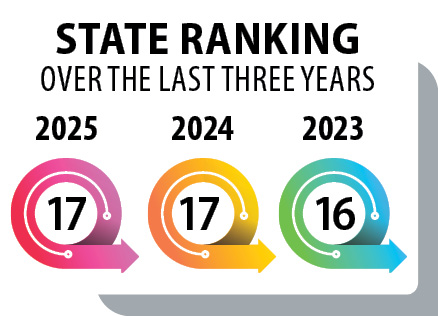
Haryana’s governance journey over the past decade has reflected cycles of steady performance interspersed with sectoral surges. In the SKOCH State of Governance Report 2025, the state ranks #17 nationally, a position that places it in the mid-competitive band. Yet beneath the aggregate ranking lies a more compelling narrative: a decisive surge in Women & Child Development and recoveries across Agriculture, Forest and Health.
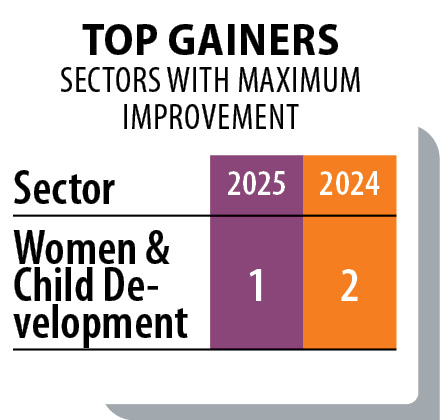
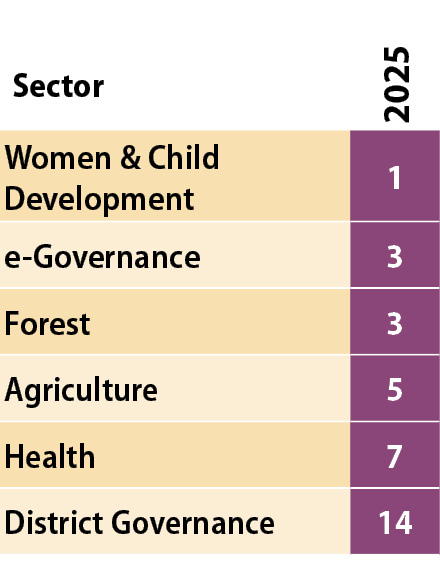
Across six categories, Haryana delivered strong performance this year. The most striking achievement is unmistakable, the state tops the country in Women & Child Development. Thirteen well-performing projects were qualified for deeper study this year.
Leading from the Front
In 2025, Haryana emerged as the national leader in Women & Child Development, signalling a powerful shift in focus.
Haryana’s story is not about sweeping expansion across all sectors. It is about concentrated excellence, particularly in strengthening outcomes for women and children and rebuilding competitive standing
This performance reflects strengthened nutrition delivery systems, improved monitoring of Anganwadi services, digitised beneficiary tracking and structured maternal-child health outreach. Welfare disbursement and scheme supervision increasingly rely on digital dashboards, ensuring better targeting and accountability.
Haryana advances agriculture through farmer welfare, MSP procurement and income-boosting schemes, while strengthening infrastructure and last-mile connectivity to drive inclusive rural development and sustainable economic growth
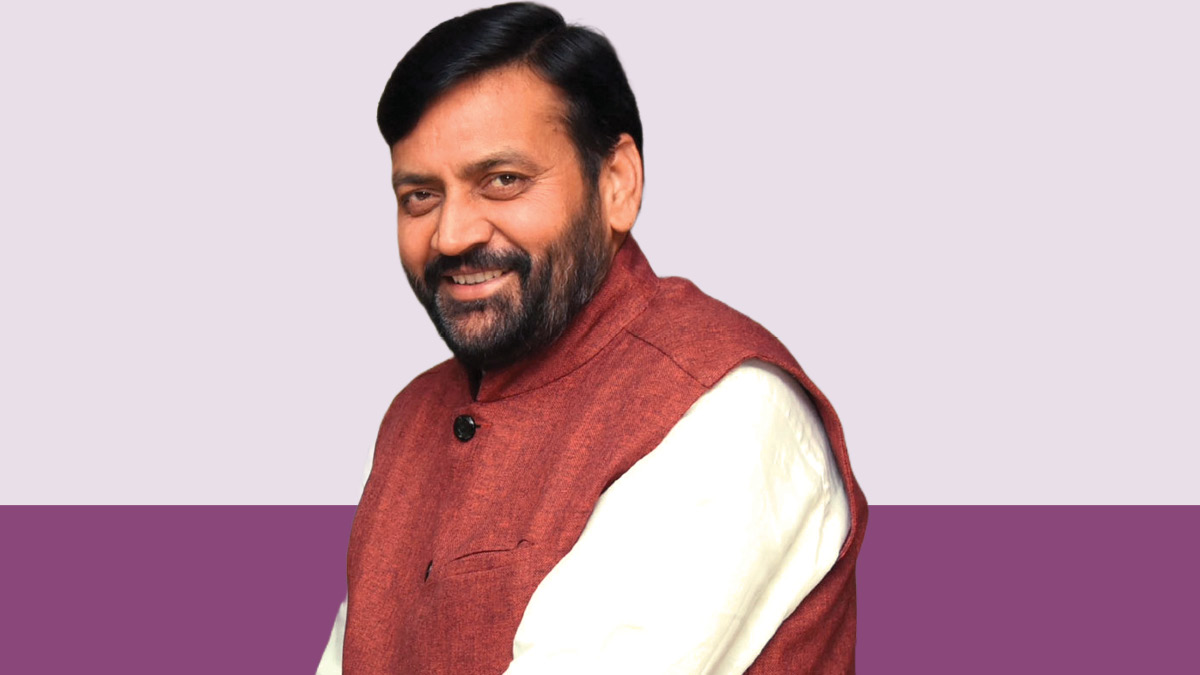
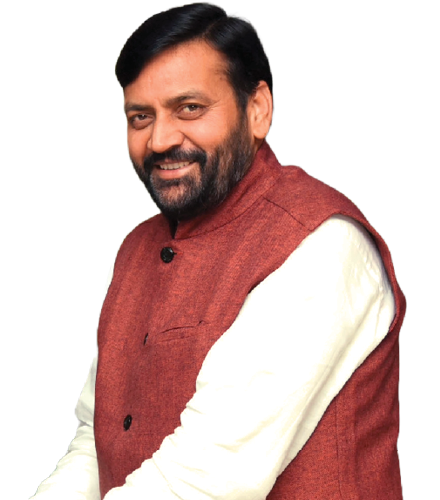
Nayab Singh Saini Chief Minister, Haryana
Five recognitions within this category underscore the depth of reform. More importantly, topping this sector nationally suggests institutional commitment to strengthening social protection frameworks for women and children.
In governance terms, this is a foundational shift , investment in human capital at the earliest stages.
Strong Comebacks
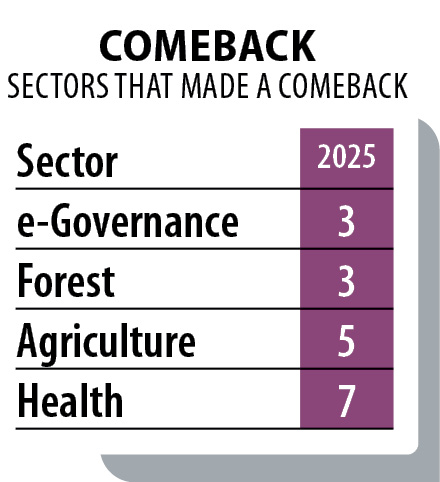
Haryana recorded significant recoveries in e-Governance and Forest, ranking 3rd nationally in both the categories.
In e-Governance, integrated service portals, automated approvals and digital grievance systems have streamlined citizen interaction with the state. Reduced physical interface points and improved service tracking enhance efficiency and transparency. In Forest governance, digitised land and boundary mapping, structured conservation initiatives and improved monitoring frameworks have strengthened environmental oversight. Securing a top-three position signals administrative precision in ecological management.
eKharid
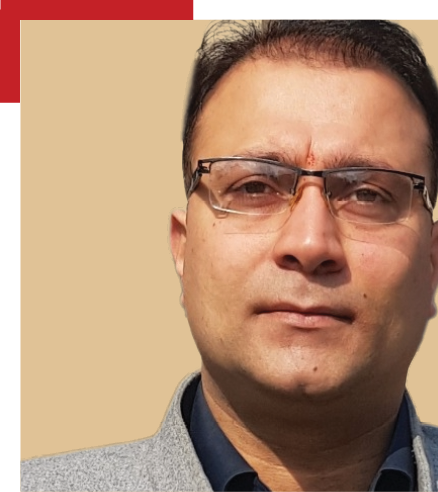
Munish Chandan
Additional Chief Information Technology Officer Citizen Resources Information Department
In September 2020, the Government of Haryana launched e-Kharid, a pioneering digital platform designed to modernise agricultural procurement. Orchestrated by the State e-Governance Mission Team (SeMT), the initiative sought to dismantle a legacy of manual inefficiencies, corruption and delayed payments. By centralising the procurement lifecycle–from land verification to final payment, e-Kharid replaced opaque paperwork with a transparent, rule-based system. This digital pivot was essential to reclaim the agricultural ecosystem from middlemen and ensure that farmers, the primary stakeholders, received the fair value of their labour without administrative friction.
The project’s hallmark is its automated payment engine, which utilises Direct Benefit Transfer (DBT) to credit funds into verified bank accounts within 72 hours. The impact of e-Kharid has been transformational, benefiting over 1.5 million farmers and significantly improving crop quality.
Strengthening the Grassroots Economy
In Agriculture, Haryana ranks 5th nationally, reflecting steady performance in a sector central to the state’s identity. Structured crop planning, irrigation convergence initiatives and digital extension services are strengthening productivity. Integration of technology with field-level implementation enhances farmer outreach and scheme delivery.
The state’s sectoral gains signal internal recalibration with emphasis on social development, digital integration and environment
Agriculture’s performance complements Women & Child Development, rural livelihoods and social welfare advancing in parallel.
Regaining Momentum
Mahari Laado
Monica Malik
Director General Women & Child Development Department
At its heart was a state-wide radio series that aired across All India Radio and community stations, blending legal education, health awareness and success stories from rural leadership. By using local dialects and community storytellers, the initiative dismantled systemic biases through culturally resonant narratives, making the case for gender equality directly in the living rooms of rural households.
The programme’s success was driven by a decentralised “listen-and-act” model. District administrations established listener groups at schools and Anganwadi centres, where frontline workers facilitated discussions on topics ranging from the PCPNDT Act to girl-child scholarships. This community-led advocacy was bolstered by high-level interdepartmental coordination, integrating resources from health and education sectors. In districts like Mahendragarh and Jhajjar, supplementary activities such as adolescent clubs and cycle rallies ensured that the radio programme’s digital footprint was matched by physical grassroots mobilisation.
Health is another area of recovery in 2025. Improved monitoring of primary healthcare systems, digitised health records and better coordination between departments have strengthened service delivery. As health systems become increasingly data-driven, structured tracking of indicators enhances accountability and response time. Haryana’s comeback in this category suggests recalibrated oversight.
The state has done remarkably well across various indicators, primarily being Health, e-Governance and Municipal Governance, all on the backing of technology
Telangana has embarked on a visionary journey to establish itself as a leader in Artificial Intelligence with a promise for inclusive growth and development. The state has consistently been at...