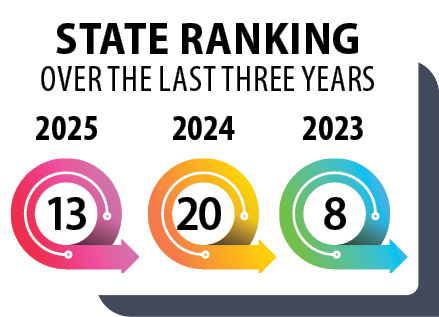
Kerala’s governance journey over the past decade has been defined by strong social sector credentials and institutional depth. Yet, like many mature administrative systems, it has experienced phases of recalibration. In the SKOCH State of Governance Report 2025, Kerala ranks #13 nationally. It is not a story of stagnation, rather, of improvement and sectoral resurgence. Seventeen well-performing projects qualified for deeper study.
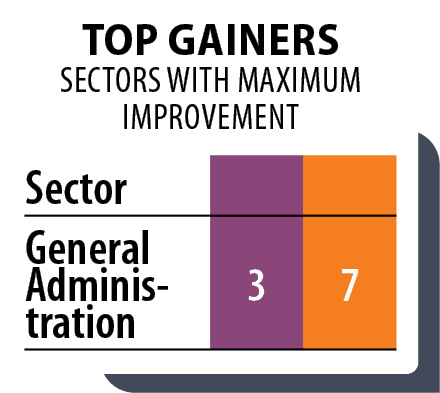
The most notable shift in 2025 is Kerala’s sharp rise in General Administration, where it improved from 7th position last year to 3rd nationally. This leap signals renewed strength at the administrative core the machinery that drives every other sector.
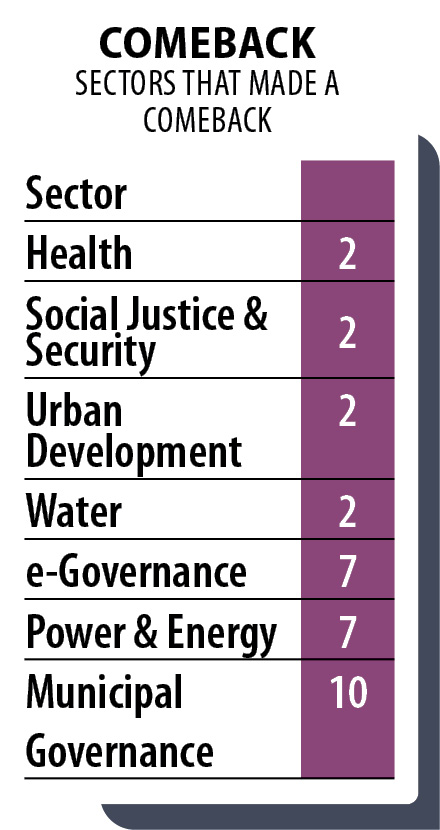
Across nine categories, Kerala delivered strong performances, with recoveries in Health, Social Justice & Security, Urban Development, Water, e-Governance, Power & Energy and Municipal Governance. It suggests that the state is tightening its systems and regaining competitive ground.
Strength at the Core
Administrative reform often operates behind the scenes, yet it shapes the efficiency of every public service. Kerala’s significant improvement in General Administration reflects streamlined workflows, stronger grievance redress mechanisms and improved coordination between departments.
It is not about expansion. It is about refinement in administrative processes, recovery in Health and Social Justice, strengthened urban systems and digital integration across services
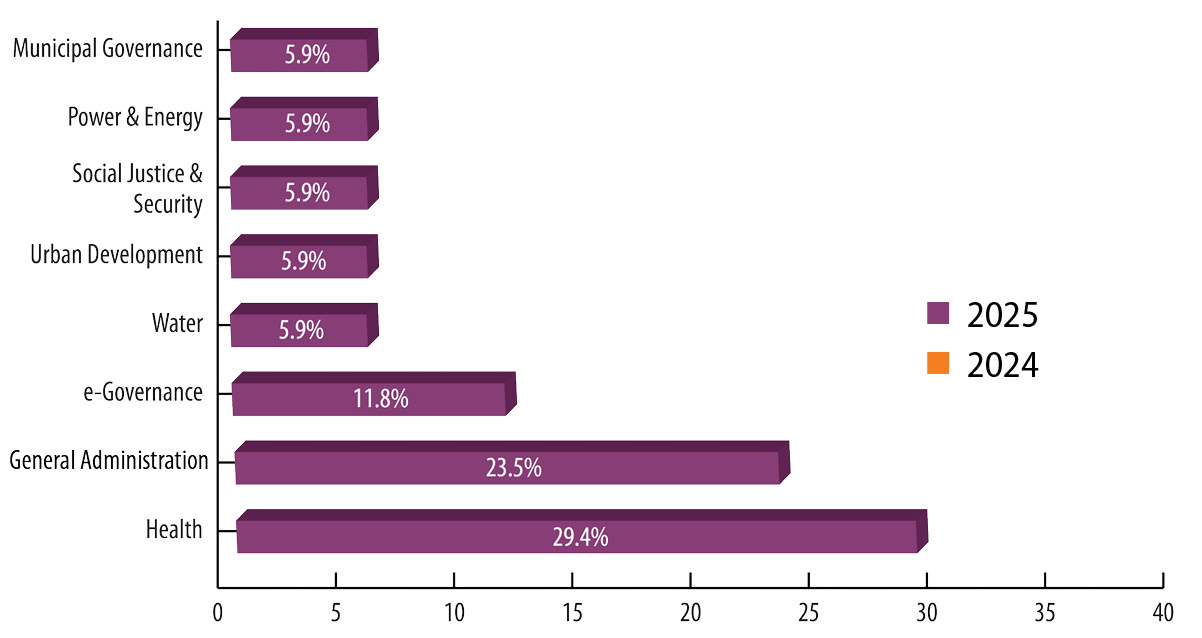
Digitised file movement systems, structured monitoring dashboards and time-bound service delivery frameworks have strengthened responsiveness. A large number of well-performing were evaluated from Health and General Administration departments. This indicates internal benchmarking and documentation of outcomes.
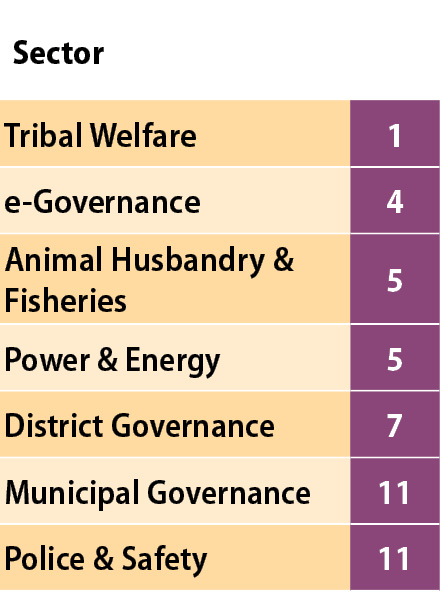
Sectors with Enhanced Focus – Kerala
When core systems function smoothly, sectoral delivery improves and Kerala’s broader 2025 performance reflects that synergy.
Reclaiming Leadership
Kerala has long been associated with strong public health indicators and in 2025 it reaffirmed that reputation by ranking 2nd nationally in Health.
The recovery reflects strengthened primary healthcare networks, enhanced disease surveillance systems and integrated digital health records. Telemedicine platforms and structured monitoring of maternal and child health indicators have improved accessibility and oversight. Health reform in Kerala is a continuum. The strong national standing underscores resilience in a sector that remains foundational to the state’s governance identity.
Kerala’s social harmony has been central to its development, with diverse communities living peacefully for generations. This stability fosters trust and economic progress. Despite challenges, the state continues to invest in infrastructure, education, healthcare and industry through innovative financing
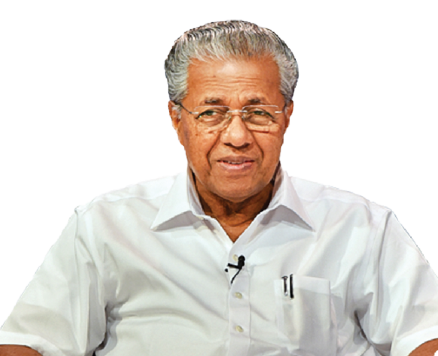
Pinarayi Vijayan Chief Minister, Kerala
Inclusion Reinforced
In Social Justice & Security, Kerala also ranks 2nd nationally, marking a significant comeback.Digitised beneficiary databases, transparent welfare disbursal mechanisms and structured outreach programmes have strengthened inclusion. Schemes targeting vulnerable populations are increasingly monitored through integrated systems, reducing duplication and improving accuracy.
The performance highlights Kerala’s long-standing emphasis on social equity, now reinforced with digital governance tools.
Systems Regaining Strength
Urbanisation presents ongoing challenges and Kerala’s recovery in Urban Development reflects renewed attention to municipal planning and infrastructure oversight.
Project Monitoring and Water Quality Monitoring System
Suraj Shaji
Mission Director State Mission Management Unit, AMRUT
Designed to overcome the pitfalls of manual tracking such as data fragmentation and delayed response to water contamination, the system centralises the oversight of water supply, sewage treatment and water body rejuvenation. By integrating real-time analytics and geospatial mapping, the initiative has transitioned Kerala’s urban governance from a reactive model to a proactive, data-driven framework that ensures transparency in every stage of project execution.
The technical core of the system utilises IoT-based smart sensors and GIS-enabled mapping to monitor water quality and project milestones simultaneously. This automation has significantly streamlined interdepartmental coordination between Urban Local Bodies (ULBs) and contractors. With AI-driven predictive analytics and automated fund management, the platform has cut contamination detection response times by 50% and reduced operational costs by 40%. Furthermore, the move to cloud-based document storage and digital workflows has nearly eliminated project delays caused by bureaucratic bottlenecks, ensuring that fund utilisation remains both optimised and auditable.
Digitised urban service tracking, waste management monitoring systems and structured project evaluation frameworks have strengthened local governance. The state’s ranking of 2nd nationally in Urban Development and Water signals progress in environmental management and service delivery.
Water management systems from supply tracking to conservation initiatives have benefited from improved coordination between departments and real-time monitoring tools.
Kerala demonstrates that governance excellence often lies in reinforcing the fundamentals, improving procedures, digitising delivery and restoring sectoral momentum
Digital Reinforcement
Kerala ranks 7th nationally in e-Governance and Power & Energy, reflecting steady performance and recovery.
The focus appears to be on refining existing systems rather than introducing disruptive reforms a strategy consistent with Kerala’s institutional maturity.
The cumulative trajectory from 2014 to 2025 reflects phases of fluctuation, but 2025 marks a year of consolidation and targeted improvement. While Kerala stands at 13th nationally, sectoral performance suggests upward movement.
The state has done remarkably well across various indicators, primarily being Health, e-Governance and Municipal Governance, all on the backing of technology
Telangana has embarked on a visionary journey to establish itself as a leader in Artificial Intelligence with a promise for inclusive growth and development. The state has consistently been at...