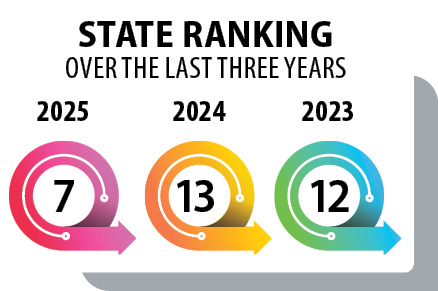
After three years outside the top tier, Rajasthan has made a decisive return. In the SKOCH State of Governance Report 2025, the state ranks 7th nationally, marking its re-entry into the top ten
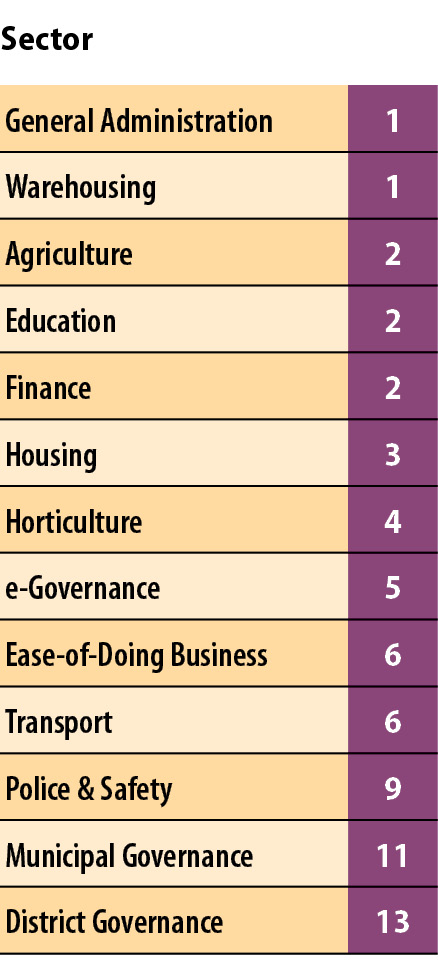
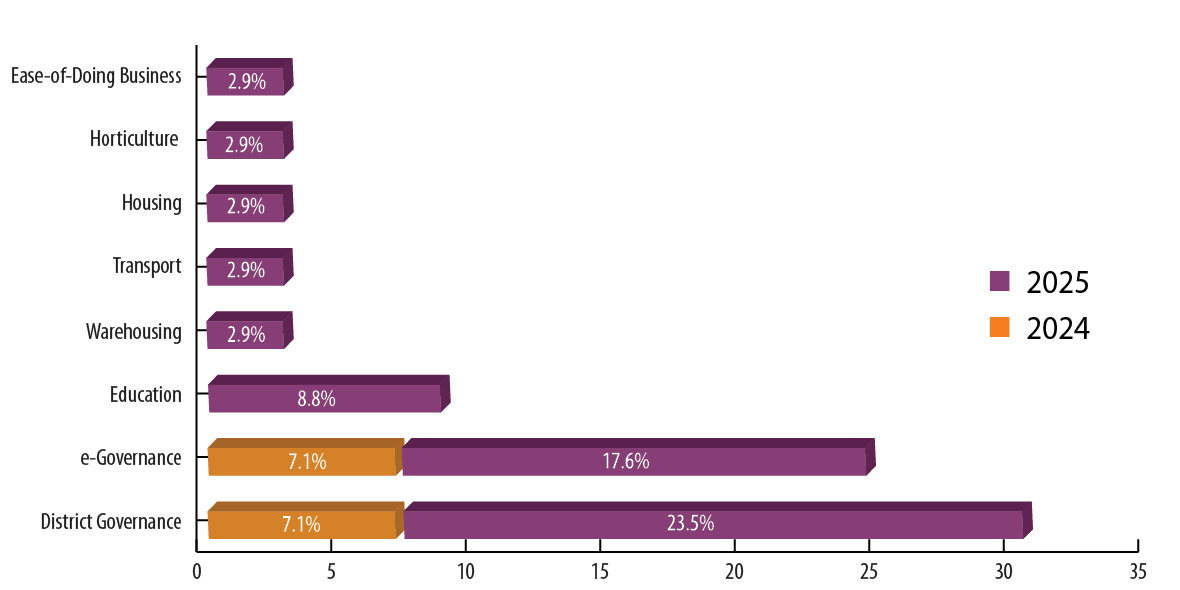
This comeback is not symbolic. It is grounded in numbers, sectoral breadth and visible sharpening of governance delivery. Across 13 categories, Rajasthan delivered strong performances. The pattern that emerges is one of recovery in some sectors and maximum improvement in others. A total of 34 well-performing projects qualified for deeper study this year.
Leading from the Front
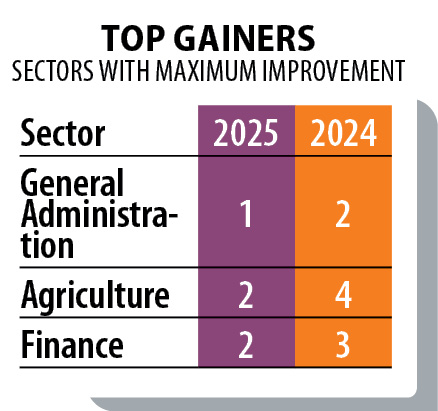
One of the achievements of 2025 is Rajasthan’s leadership nationally in General Administration. This category reflects the strength of core governance systems file movement digitisation, grievance redress frameworks, service delivery timelines and administrative transparency.
Projects in this domain demonstrate streamlined decision-making processes, digital workflow systems and improved citizen interface mechanisms. Strong performance here suggests that reform is embedded in the state’s administrative backbone rather than limited to sectoral schemes. When core systems are strengthened, sectoral delivery improves. Rajasthan’s broader 2025 performance supports that view.
Maximum Improvement
Rajasthan recorded maximum improvement nationally in Agriculture and Finance, securing second position in both categories in 2025. For a state where agriculture remains a key livelihood source, this rise is significant.
Agriculture-focused interventions include structured crop monitoring, digital extension services, irrigation-linked productivity drives and farmer-support initiatives aligned with climate variability. Data-backed implementation and better field-level coordination have strengthened outcomes.
In Finance, improvements are anchored in fiscal transparency, digital treasury systems and enhanced monitoring of fund flows. Real-time expenditure tracking and structured budget execution have improved resource allocation across departments. The combined progress in Agriculture and Finance signals coordinated reform where sectoral ambition is reinforced by fiscal discipline.
Sectors with Enhanced Focus – Rajasthan
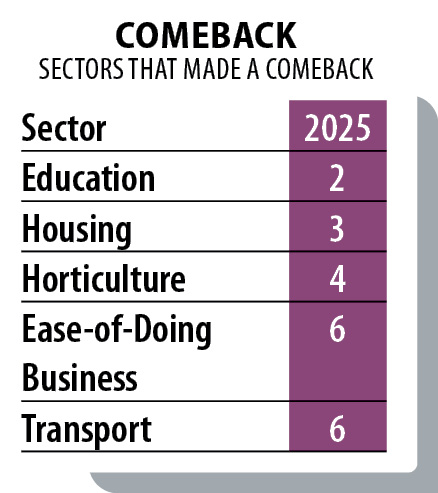
Education to Housing
Rajasthan’s return to the top ten is also shaped by recovery in key social and infrastructure sectors.
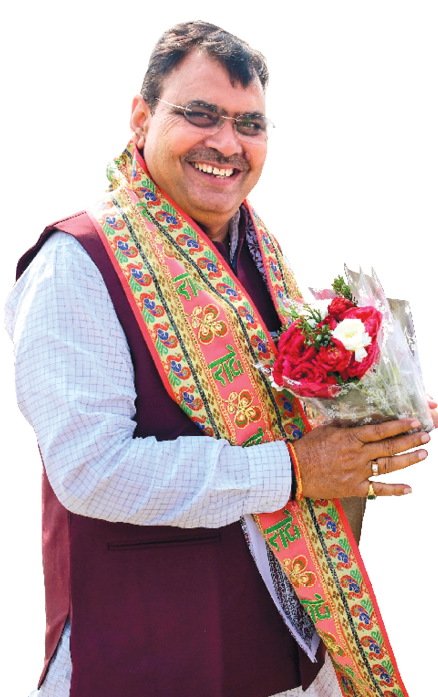
Rajasthan is set to play a crucial role in realising the vision of Viksit Bharat. The government has fostered an investment-friendly environment by encouraging innovation, ensuring Ease-of-Doing Business and implementing single-window clearance, creating a strong and supportive ecosystem for industrial growth
Bhajan Lal Sharma Chief Minister, Rajasthan
In Education, the state ranks second nationally in 2025. Digital classrooms, teacher capacity-building platforms and structured monitoring of learning outcomes have improved school-level performance.
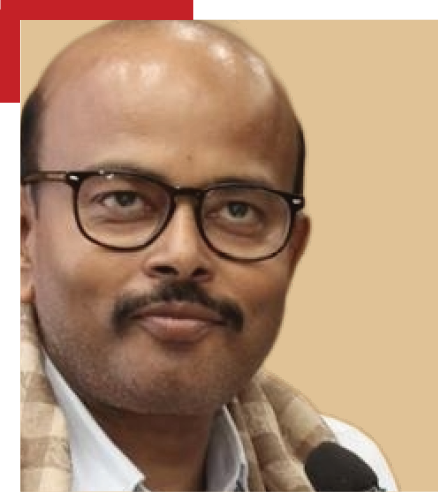
Shala Swasthya Parikshan
Krishna Kunal
Secretary School Education Department
Recognising the absence of a real-time student health monitoring system, this initiative aimed to bridge the gap between education and healthcare by leveraging teacher-led screenings and digital data collection. The 4.5 lakh teachers across the state conducted screenings for 75 lakh students, ensuring that undetected health conditions were identified early and treated through government health programmes like Ayushman Bharat and Rashtriya Bal Swasthya Karyakram (RBSK).
The initiative digitised health assessments, enabling teachers to screen students using an app-based, structured questionnaire with image-supported health indicators. The Shala Darpan platform was integrated for real-time data tracking, monitoring and follow-ups, making it a sustainable, long-term health surveillance system.
Over 90,000 children needing urgent surgeries were identified and 20 lakh students with medical concerns were referred to healthcare facilities.
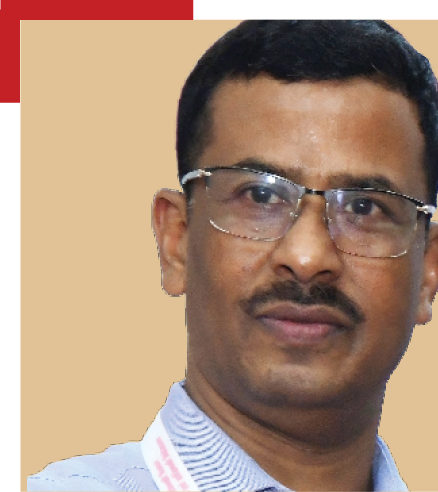
Raj KisanSathi
Chinmayee Gopal
Commissioner Department of Agriculture
The Raj KisanSathi project was envisioned in early 2020, with the objective to deliver Ease-of-Doing Farming (EoDF) for all farmers in the state. The fragmented system prior to 2020 required farmers to approach different departments physically for every license, subsidy or advisory service.
The first phase involved development of a core portal that allowed farmer registration through Jan Aadhaar, automatically linking land and demographic details via eDharti and IFMS integration. By mid-2021, the portal was fully operational with key services such as DBT for seed subsidies, licensing of fertiliser and pesticide dealers and real-time tracking of application status.
Over time, 11 mobile applications were developed for tasks ranging from seed certification and input quality control, to project verification, each enabled with GPS-tagging, digital signatures and photographic uploads.
In Housing, Rajasthan ranks third nationally, reflecting stronger beneficiary tracking, project completion monitoring and digitised oversight of affordable housing schemes. Geo-tagged monitoring systems have improved transparency and speed.
The state also made notable gains in Horticulture, securing fourth position nationally. Expansion of horticulture clusters, improved cold storage infrastructure and farmer-producer linkages.
Food and Nutritional Security Analysis (FNSA) Dashboard
Vinesh Singhvi
Director and Joint Secretary Directorate of Economics and Statistics
Historically, critical data on food access and nutrition were scattered across various departments, making it difficult for administrators to identify vulnerable regions or evaluate the impact of welfare programmes. This project centralises these indicators into a single, near-real-time platform, providing a comprehensive lens through which to view the state’s nutritional health.
The dashboard is built upon the four global pillars of food security: availability, accessibility, utilisation and stability. Despite initial hurdles, such as limited historical data and the need for rigorous security audits, the project successfully moved from conceptualisation in late 2023 to statewide implementation. By hosting the system on secure state servers, Rajasthan has ensured that its planning tools are both scalable and robust.
The FNSA Dashboard now serves as a foundational model for other sectors in Rajasthan. By consolidating complex data into actionable visual insights, the Directorate has empowered planners to design more effective interventions for millions of citizens.
Rajasthan’s governance story is one of return, not merely to a ranking bracket, but to a competitive rhythm where administrative reform, technological integration and sectoral breadth combine to reposition the state among India’s leading performers
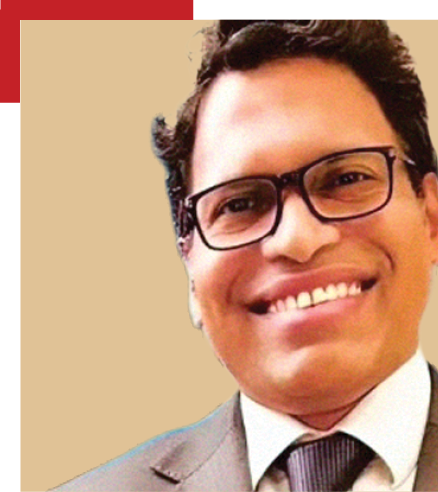
Samriddhi Apartment
Debasish Prusty
Chairman Rajasthan Housing Board
By focusing on the Middle-Income Group (MIG), the Rajasthan Housing Board sought to provide high-quality, affordable residential facilities that enhance daily living conditions and social inclusion within the region.
The project implementation comprised two distinct phases: Pocket-1, featuring a stilt-plus-six (S+6) configuration with units of 958.14 square feet and Pocket-2, a ground-plus-two (G+2) structure with larger units of 1,054.48 square feet. A defining achievement of this intervention was its cost-efficiency; the final cost for Pocket-1 and Pocket-2 flats was 31.14 lakhs and35.06 lakhs respectively, both representing significant savings from their initial tentative costings.
Despite facing implementation hurdles, including restricted movement zones for machinery, the need for complex multi-contractor coordination and supply-chain fluctuations for specialised materials, the project maintained high technical standards. The RHB utilised durable solutions like waterproofing membranes and concrete hardeners to ensure long-term performance and reduced maintenance needs.
Meanwhile, Transport and Ease-of-Doing Business have regained competitive standing. Digitised permit systems, infrastructure upgrades, single-window clearance mechanisms and time-bound approvals have strengthened regulatory efficiency. The comeback across these sectors suggests recalibration not isolated reform.
A Strong First
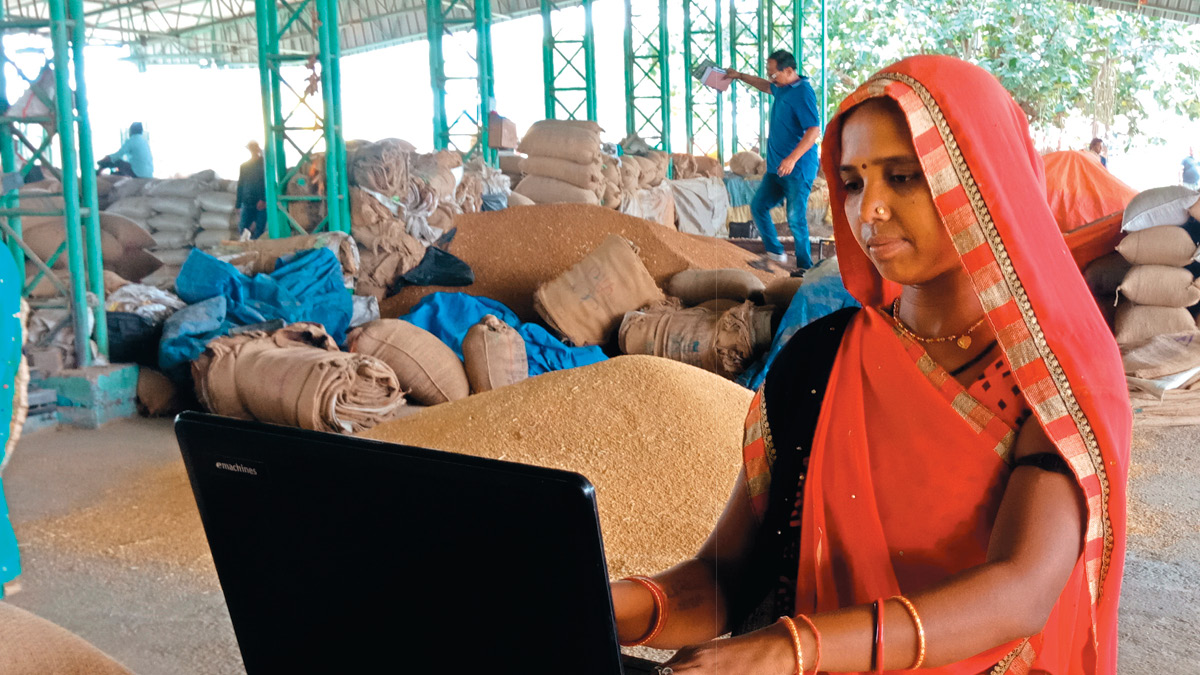
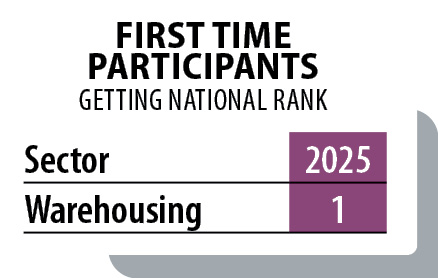
In a striking first-time performance, Rajasthan topped the Warehousing category nationally. Warehousing plays a critical role in agriculture, logistics and price stability.
Modern storage facilities, digital inventory management systems and improved supply chain coordination have strengthened post-harvest management. By reducing storage losses and improving commodity handling efficiency, the state has reinforced both farmer welfare and market stability. Securing leadership in this category in its first year of participation suggests reforms that were already deeply embedded.
Volume with Depth
Departments such as e-Governance, Police & Safety and District Governance submitted a large number of projects for evaluation this year. The volume of participation indicates active reform ecosystems across frontline departments.
In e-Governance, initiatives centre on digitised citizen services, online application platforms and data integration across departments. Police & Safety reforms include technology-enabled monitoring, strengthened emergency response systems and digital case tracking frameworks.
District Governance submissions highlight grassroots innovation real-time dashboards, improved grievance redress systems and convergence models linking welfare schemes. This breadth suggests that Rajasthan’s governance revival is not confined to state-level directives. Districts and frontline departments are driving change from within.
The state has done remarkably well across various indicators, primarily being Health, e-Governance and Municipal Governance, all on the backing of technology
Telangana has embarked on a visionary journey to establish itself as a leader in Artificial Intelligence with a promise for inclusive growth and development. The state has consistently been at...