Uttar Pradesh Governance With Scale, Speed and Staying Power
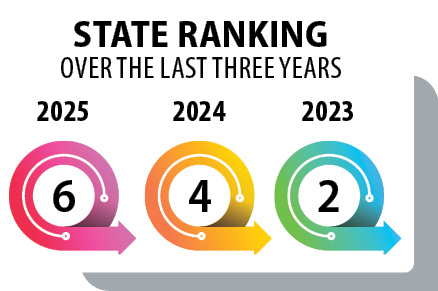
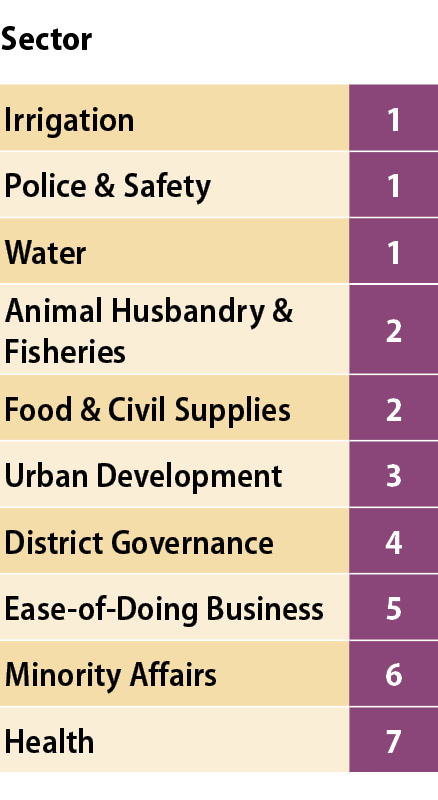
In the SKOCH State of Governance Report 2025, Uttar Pradesh secured an #6 position nationally, reinforcing its place among India’s leading states in governance performance. For a state of its size and administrative complexity, this is not merely a rank, it is evidence of systems that are becoming more accountable. A total of 23 well-performing projects qualified for deeper study this year.
In the SKOCH State of Governance Report 2025, Uttar Pradesh secured an #6 position nationally, reinforcing its place among India’s leading states in governance performance. For a state of its size and administrative complexity, this is not merely a rank, it is evidence of systems that are becoming more accountable. A total of 23 well-performing projects qualified for deeper study this year.
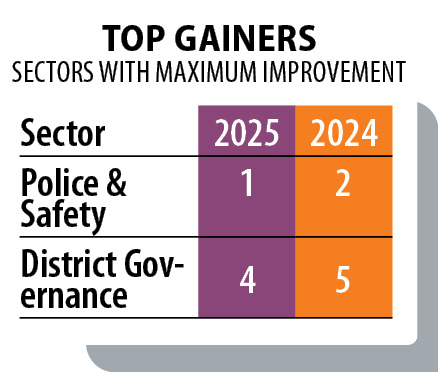
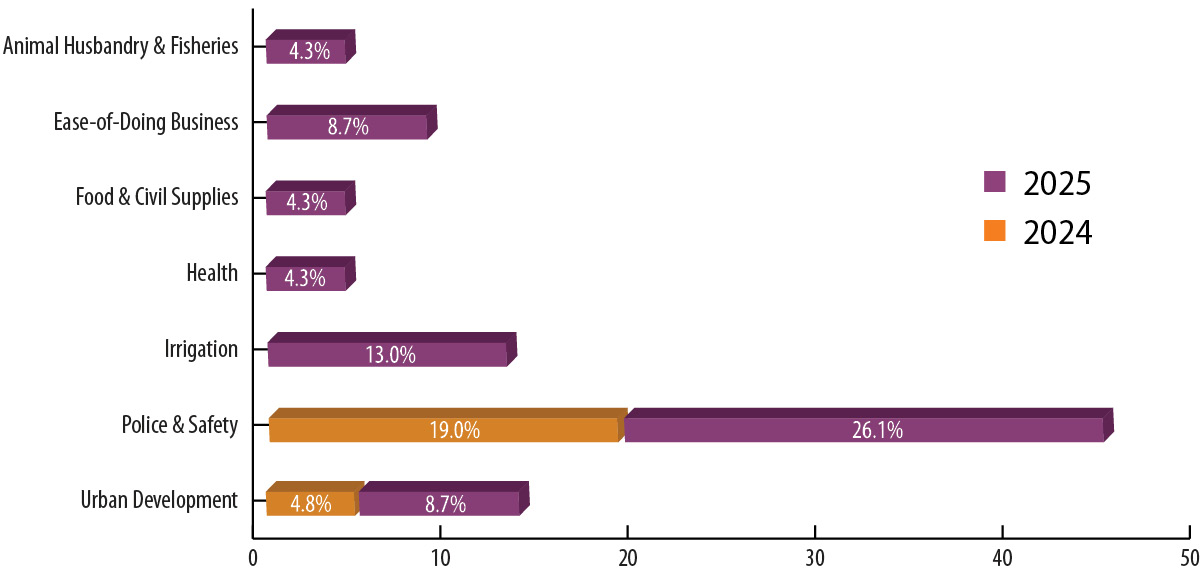
The 2025 story is not about a single flagship announcement. It is about steady gains across sectors and a growing culture of project-based governance notably from District Governance and Police & Safety – sectors that directly impact citizens.
Securing the Foundations
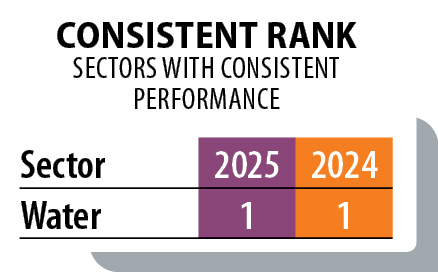
Water continues to be Uttar Pradesh’s strongest pillar. The state has maintained national leadership in water governance, demonstrating sustained investment in drinking water coverage, conservation efforts and rural infrastructure.
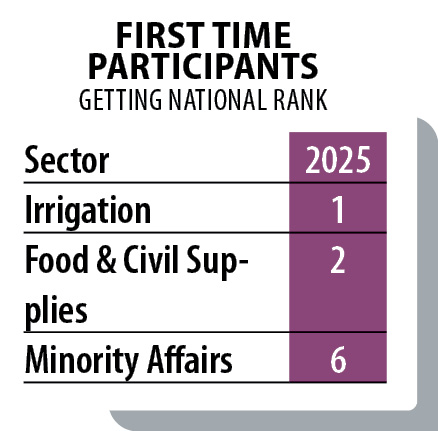
Large-scale piped water supply expansions, rejuvenation of traditional water bodies and structured groundwater management initiatives have strengthened water security. In irrigation where the state participated in the national assessment for the first time Uttar Pradesh emerged at the top. That debut success reflects years of groundwork: canal modernisation, digitised monitoring of water release schedules and expanded minor irrigation assets.
From water leadership to policing reform, from district resurgence to first-time category breakthroughs, Uttar Pradesh’s 2025 governance performance tells the story of a state that has learned to compete with itself and win
Systems That Respond
Among the most notable is the Meta Suicidal Alert initiative, an intervention that integrates social media monitoring with emergency response systems. Under this initiative, potential self-harm signals detected on social media platforms trigger alerts to state control rooms. Police units are then mobilised in real-time to trace, locate and intervene before harm occurs. The project merges artificial intelligence tools with human responsiveness turning digital distress signals into actionable rescue operations.
Real Test of Delivery
Improvement in District Governance reflects sharper frontline administration. This category often reveals whether policy intent translates into citizen benefit and Uttar Pradesh has strengthened its standing here compared to previous years.
Several district-led initiatives illustrate this shift. Digital grievance redress systems are reducing response time. Convergence models are linking health, nutrition and welfare databases for better beneficiary tracking. Real-time dashboards allow district officials to monitor scheme implementation daily rather than quarterly.
The state is moving fast towards a trillion-dollar economy, driven by clear policies, clean intent and effective financial management. Strong fiscal discipline has transformed Uttar Pradesh from a bottom-ranked state to one of the top performers in the country over the past nine years
Yogi Adityanath Chief Minister, Uttar Pradesh
Strengthening Rural Livelihoods
Sectors with Enhanced Focus – Uttar Pradesh
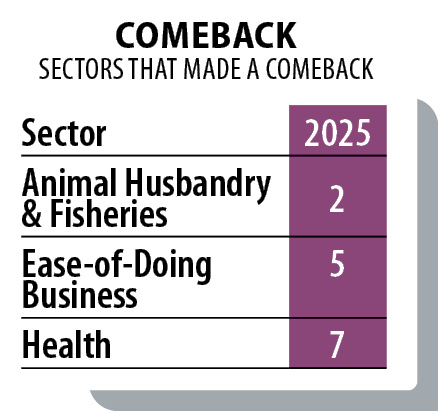
In Animal Husbandry & Fisheries, Uttar Pradesh has emerged as one of the top-performing states nationally. Expansion of dairy networks, mobile veterinary outreach services and fishery cluster development have diversified rural income streams.
Cold-chain investments and cooperative-based procurement systems are helping producers access markets more efficiently. When combined with irrigation and water reforms, these interventions form a cohesive rural development framework one that reduces vulnerability and broadens income opportunities.
Namami Gange, State Mission for Clean Ganga
Sakharam Sadashiv Gaonkar
Project Director State Mission for Clean Ganga
Covering 1,025 km of the river’s total length, the mission’s impact in Uttar Pradesh is critical, as it dictates the environmental health of the entire downstream segment flowing through Bihar and West Bengal. Historically, the river faced severe degradation from untreated sewage and industrial effluents, leading to biodiversity loss, health risks and diminished economic potential for river-dependent communities.
To tackle these challenges, SMCG UP adopted a robust engineering and management framework. Utilising Hybrid Annuity (HAM) and DBOT models, the state established decentralised sewage treatment plants (STPs), modular facilities and common effluent treatment plants (CETPs) with 15-year operation and maintenance cycles. A significant shift in strategy occurred by moving beyond simple infrastructure expansion. Lessons from past failures led to a comprehensive river basin management approach, addressing systemic weaknesses in urban waste management, environmental regulation and institutional capacity. The river’s water quality has improved significantly to Priority Class V, with Biological Oxygen Demand (BOD) levels now maintained below 6 ppm across the state.
Uttar Pradesh’s governance narrative is defined by three qualities: scale, integration and continuity. It is the story of a large state that has learned to operationalise reform across layers from irrigation canals to police control rooms, from district dashboards to welfare databases
Business Climate and Health Systems
Ease-of-Doing Business remains a strong area for the state. Digitised land records, time-bound approvals, single-window clearance systems and investor facilitation platforms have streamlined administrative procedures. The emphasis is now on predictability and efficiency rather than merely policy announcements.
Kashi Strategy Against Malnourishment
Himanshu Nagpal
Chief Development Officer Varanasi
At the core of the initiative was a ten-pronged approach addressing both immediate and underlying causes of malnutrition. Accurate identification was ensured through intensive training of Anganwadi workers and near-universal measurement of children using the POSHAN Tracker. Supplementary nutrition was strengthened through the “Abhinav Pehel” programme, providing multivitamin syrup, iron-folic acid, deworming and millet-based foods.
Over 2,700 nutritional gardens were developed and six Take Home Ration plants operated by women’s Self-Help Groups produced fortified foods, generating livelihoods alongside nutrition security. Behavioural change campaigns involving elder women, SHGs, ‘Buddy Mothers,’ and recognition through Healthy Kids Certificates helped improve exclusive breastfeeding rates by 30 per cent and strengthened parental engagement. SAM prevalence declined from 13.7 per cent in 2020 to .13 per cent by September 2024.
Ease-of-Doing Business remains a strong area for the state. Digitised land records, time-bound approvals, single-window clearance systems and investor facilitation platforms have streamlined administrative procedures
In Health, expanded primary healthcare centres, telemedicine platforms and integrated disease surveillance systems have strengthened service delivery. District-level health dashboards track maternal and child health indicators more closely, improving responsiveness at the grassroots. These reforms reflect a shift from reactive governance to system-based management.
Recruitment of 60,244 Constables
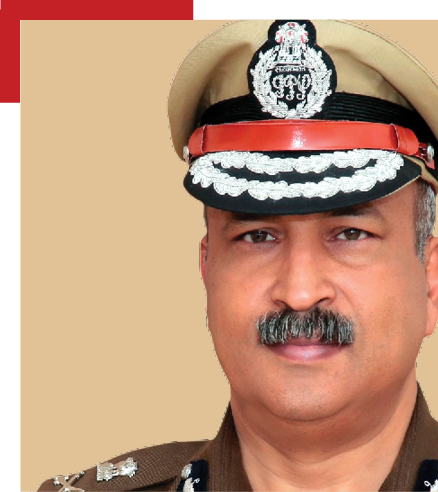
Rajeev Krishna
Director General of Police Uttar Pradesh Police
The UP Police Recruitment and Promotion Board (UPPRPB) 2024 constable recruitment drive stands as a landmark in transparent governance, successfully navigating the complexities of hiring for 60,244 vacancies from a pool of nearly 48 lakh applicants. Following a period of national scrutiny over paper leaks and cheating rings, this initiative was designed to move beyond traditional exam management toward a high-security, technology-driven and “zero-error” framework.
By exclusively utilising government-aided institutions and imposing strict geographical limits on the location of centres, the Board ensured a controlled and supervised environment that prioritised administrative integrity over mere logistical convenience. AI-powered CCTV systems monitored all 16,400 exam rooms, providing real-time anomaly detection to central, district and board-level headquarters. Candidate identity was secured through a robust trifecta of biometric verification, facial recognition and Aadhaar linkage.
Design, Development & Deployment of 3D Urban Spatial Model
Akshat Verma
Municipal Commissioner Varanasi Smart City
The project was initially scheduled for completion by October 2024 but was extended to December to resolve integration complexities. By this stage, web and mobile GIS applications, dashboards and specialised modules were developed. These included urban planning, flood management, solid waste, road network, waterworks, crowd control and crime management tools. Key datasets such as land use maps and pipeline networks were integrated for decision-making.
In January 2025, after user acceptance testing, the system went live and was deployed at the Kashi Integrated Command and Control Centre. This marked India’s first Digital Twin initiative led by a municipal body for a heritage city, providing a scalable and replicable model for other Smart Cities.
The project established Varanasi as a pioneer in digital governance. Future plans include expanding into tax mapping, pollution monitoring, smart mobility and health emergency planning.
The cumulative trajectory of the past decade suggests that departments are internalising competition and documentation. Projects are being designed with measurable outcomes in mind
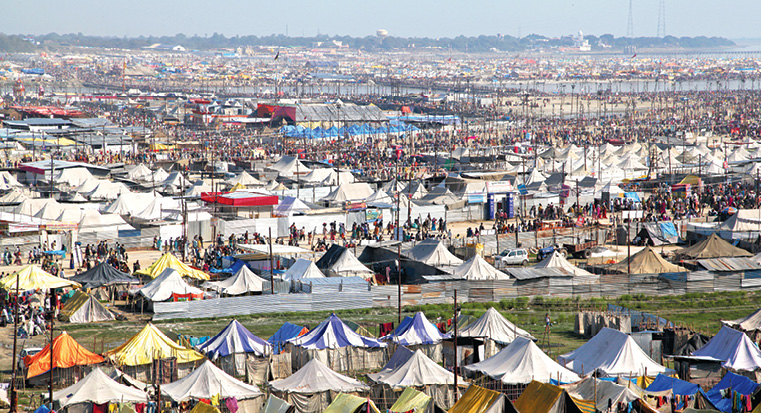
One of the governance exercises for Uttar Pradesh has been the management of the Mahakumbh, the world’s largest congregation of faith. Organising such a massive gathering is not merely an event-management task; it is a full-spectrum governance challenge involving law enforcement, sanitation, water supply, health services, traffic management and disaster preparedness.
Mahakumbh-2025 Integrated Command and Control Center (ICCC)
Bhanu Bhaskar
Additional Director General Uttar Pradesh Police
Tasked with managing approximately 66 crore pilgrims over a 45-day period in a 4,000-hectare temporary city, the ICCC transitioned Prayagraj from a reactive to a proactive governance model. By integrating AI, data analytics and a unified communication backbone, the project provided a centralised brain for security, crowd control and emergency response, ensuring that the vast influx of people did not overwhelm the state’s administrative and policing infrastructure.
The ICCC utilised a network of 2,750 AI-enabled cameras and drones to monitor real-time crowd density and predict potential “choke points.” Predictive algorithms were deployed to detect wrong-way movements and overcrowding, triggering immediate alerts to 57 temporary police stations. A Jal Police module utilised underwater cameras and drones to secure the Sangam River dips. The system featured facial recognition technology to assist in lost-and-found operations, reuniting thousands of pilgrims with their families.
Mahakumbh-2025 Integrated Command and Control Center (ICCC)
Bhanu Bhaskar
Additional Director General Uttar Pradesh Police
Tasked with managing approximately 66 crore pilgrims over a 45-day period in a 4,000-hectare temporary city, the ICCC transitioned Prayagraj from a reactive to a proactive governance model. By integrating AI, data analytics and a unified communication backbone, the project provided a centralised brain for security, crowd control and emergency response, ensuring that the vast influx of people did not overwhelm the state’s administrative and policing infrastructure.
The ICCC utilised a network of 2,750 AI-enabled cameras and drones to monitor real-time crowd density and predict potential “choke points.” Predictive algorithms were deployed to detect wrong-way movements and overcrowding, triggering immediate alerts to 57 temporary police stations. A Jal Police module utilised underwater cameras and drones to secure the Sangam River dips. The system featured facial recognition technology to assist in lost-and-found operations, reuniting thousands of pilgrims with their families.
Meta Suicidal Alert
Meta Suicidal Alert initiative, launched by the Uttar Pradesh Police in March 2022, represents a groundbreaking shift in modern policing, moving from reactive enforcement to proactive, life-saving intervention. Recognising that individuals in acute psychological distress often broadcast their intent on social media platforms like Facebook and Instagram, the UP Police partnered with Meta to create a real-time detection and response network. This digital-first strategy addresses the critical “golden hour” of crisis, ensuring that signals of distress are not lost in the vastness of the internet but are instead converted into immediate, localised rescue operations.
The initiative operates through a highly coordinated technical and human pipeline. When Meta’s algorithms flag suicide-related content, an alert is instantly transmitted to a dedicated 24/7 desk at the Police Headquarters in Lucknow. Integrated with the Special Task Force (STF) servers for real-time location tracing, the system identifies the victim’s precise coordinates and relays them to the nearest district police. Local officers then execute an emergency “reach-and-rescue” mission. Between January 2023 and August 2025, the initiative achieved a remarkable impact, successfully rescuing 1,338 individuals from 1,335 alerts, averaging 55 lives saved per month.
The cumulative trajectory suggests that departments are internalising competition and documentation. Projects are being designed with measurable outcomes in mind. Districts are innovating. Systems are being digitised. Monitoring has become more continuous.
The state has done remarkably well across various indicators, primarily being Health, e-Governance and Municipal Governance, all on the backing of technology
Telangana has embarked on a visionary journey to establish itself as a leader in Artificial Intelligence with a promise for inclusive growth and development. The state has consistently been at...